Document tracking

First Aid/CPR

For organizations that need their teams certified in both first aid and CPR, the combined First Aid/CPR certification is the most practical and efficient path forward. It covers both skill sets in a single course, simplifies credential management, and ensures your team is prepared to respond to a full range of workplace emergencies. This guide covers what the combined certification includes, who needs it, and how to track expiration dates.

What Is First Aid/CPR Combined Certification?

First Aid/CPR combined certification is a single credential that verifies an individual has been trained in both first aid emergency response and cardiopulmonary resuscitation (CPR), including the use of an automated external defibrillator (AED). Rather than completing two separate courses, participants learn both skill sets in one comprehensive training program.

What the Training Covers

The combined certification typically includes:

  • First aid skills — Wound care, burn treatment, splinting fractures, managing allergic reactions, treating heat- and cold-related emergencies, recognizing signs of stroke and diabetic emergencies, and responding to poisoning and choking
  • CPR skills — Performing chest compressions, delivering rescue breaths, and providing CPR for adults, children, and infants
  • AED use — Operating an automated external defibrillator during a cardiac emergency
  • Bloodborne pathogens awareness — Understanding infection control when providing care (included in many combined courses)

Issuing Authorities

Combined First Aid/CPR certification is offered by the same nationally recognized organizations that certify each skill individually:

  • American Red Cross — Offers the "First Aid/CPR/AED" course, one of their most popular programs
  • American Heart Association (AHA) — Provides the "Heartsaver First Aid CPR AED" course for workplace and community settings
  • Health & Safety Institute (HSI/ASHI) — Offers combined first aid, CPR, and AED training tailored to various industries
  • National Safety Council (NSC) — Provides combined courses with a workplace safety focus

Who Is Required to Have It?

Many of the same professionals who need either first aid or CPR certification find that their employer or regulatory body actually requires both. The combined certification is commonly required or preferred for:

  • Construction workers and site supervisors — OSHA standards require both first aid and CPR training for designated responders on job sites
  • Childcare and daycare staff — State licensing agencies in nearly every state require pediatric first aid and CPR certification
  • School teachers, coaches, and administrators — Many states mandate combined first aid/CPR certification for education professionals
  • Manufacturing and warehouse workers — Designated safety responders in industrial settings
  • Corporate workplace responders — Employees designated as on-site first aid and CPR providers under OSHA's general industry standard
  • Fitness professionals — Personal trainers, coaches, and recreation staff
  • Camp counselors and outdoor recreation staff — Often required by state regulations and organizational policies

How to Obtain the Combined Certification

Combined First Aid/CPR/AED courses are available in several formats:

  • In-person — Full classroom instruction with hands-on practice, typically 5 to 8 hours
  • Blended learning — Online knowledge modules completed at your own pace, followed by a shorter in-person skills session (usually 2 to 3 hours)
  • Online-only — Available for general awareness, but most OSHA-regulated workplaces and state licensing agencies require a hands-on skills assessment

Validity Period

The combined First Aid/CPR certification is typically valid for two years from the date of completion. Both components share the same expiration date, which is one of the key advantages of the combined approach — you only have one date to track per person instead of two. Renewal courses are available and are shorter than the initial certification, provided you recertify before the credential expires.

Why First Aid/CPR Combined Certification Matters for Your Organization

Compliance and Legal Requirements

For many organizations, maintaining employees with combined First Aid/CPR certification is a regulatory obligation. OSHA's standards for general industry (29 CFR 1910.151) and construction (29 CFR 1926.50) require trained first aid providers at worksites lacking nearby medical facilities, and OSHA recommends that first aid training include CPR. Several industry-specific OSHA standards, including those for logging (29 CFR 1910.266), explicitly require CPR as part of first aid training.

State regulations add additional requirements. Childcare facilities in most states must have staff certified in both pediatric first aid and CPR. Schools and recreational programs often face similar mandates. The combined certification satisfies both requirements simultaneously, simplifying your compliance documentation.

Operational Impact

Having team members who are trained in both first aid and CPR means your organization can respond effectively to a broader range of emergencies. A worker who can treat a laceration and also perform CPR provides far more comprehensive coverage than one trained in only a single discipline. This dual capability is especially important in remote job sites, after-hours operations, and settings where emergency medical services may take longer to arrive.

Risk of Expiration

When combined certifications expire, your organization faces compounded risk:

  • Dual compliance gaps — A single expired credential means you have lost both a first aid responder and a CPR provider
  • OSHA citations — Inspectors check for both first aid and CPR training compliance
  • Insurance implications — Workers' compensation and liability insurers may scrutinize certification records after an incident
  • Safety exposure — Without trained responders, injuries that could have been managed on-site may escalate, leading to worse outcomes and longer recovery times

Common Scenarios for Tracking First Aid/CPR Combined Certification Expiration Dates

HR Managers Onboarding New Employees in Safety-Sensitive Roles

When a new hire joins a role that requires combined First Aid/CPR certification, HR needs to verify the employee's current credential, record its expiration date, and set up tracking for renewal. If the new hire does not yet hold the certification, HR must schedule training during the onboarding period and ensure it is completed before the employee begins unsupervised work. With multiple hires throughout the year, these dates accumulate quickly.

Construction Project Managers Ensuring Permit and Inspection Readiness

Before a construction project can proceed, safety documentation must be in order. This includes having certified first aid and CPR responders identified and their credentials verified. During project inspections, inspectors may ask for proof of current certification. A project manager who can produce up-to-date records instantly is far better positioned than one scrambling to locate certification cards.

Childcare Compliance Officers Preparing for Unannounced Inspections

State childcare licensing agencies conduct both scheduled and surprise inspections. One of the most commonly checked items is staff certification in pediatric first aid and CPR. Compliance officers need to know at all times which staff members are current, which are approaching expiration, and whether renewal training has been scheduled. A single expired certification discovered during an inspection can trigger corrective action.

Corporate Safety Teams Managing Multi-Location Workforces

Organizations with employees across multiple offices, warehouses, or facilities need to ensure adequate first aid and CPR coverage at each location. Safety teams need centralized visibility to confirm that every location has the required number of certified responders and that no one's credentials are about to expire. Without centralized tracking, gaps in coverage often go unnoticed until an incident or audit reveals them.

Fitness and Recreation Directors Overseeing Seasonal Staff

Fitness centers, recreation programs, and summer camps often employ seasonal or part-time staff who must hold combined First Aid/CPR certification. With high turnover and short employment windows, directors need an efficient system for verifying incoming certifications, tracking expiration dates, and coordinating group renewal training before each season begins.

How First Aid/CPR Combined Certification Benefits Your Company and Employees

For the Company

  • Simplified compliance — One certification satisfies both first aid and CPR requirements, reducing the number of credentials to track
  • Cost efficiency — Combined courses are typically less expensive than purchasing first aid and CPR training separately
  • Comprehensive emergency coverage — Every certified employee can respond to a wider range of emergencies
  • Audit readiness — A single expiration date per person simplifies record-keeping and reporting
  • Reduced liability — Properly trained responders help minimize the severity of workplace incidents and the associated legal exposure

For Employees

  • Career flexibility — Combined certification meets the requirements for a broader range of roles and industries
  • Time savings — One course instead of two means less time away from work
  • Greater confidence — Knowing how to handle both injuries and cardiac emergencies makes employees feel prepared for anything
  • Professional credibility — A combined credential from a recognized provider (AHA, Red Cross) strengthens an employee's professional profile

For Clients and Customers

  • Peace of mind — Clients, parents, and customers are reassured knowing that staff are trained in comprehensive emergency response
  • Quality and safety assurance — Current combined certifications demonstrate a strong commitment to safety standards
  • Trust — Organizations that invest in thorough safety training earn deeper trust from the communities they serve

How to Track First Aid/CPR Combined Certification Expiration Dates

One of the advantages of the combined certification is that it simplifies tracking — you have one expiration date per person instead of two. But with growing teams, multiple locations, and varying certification dates, even this simplified tracking can become complex.

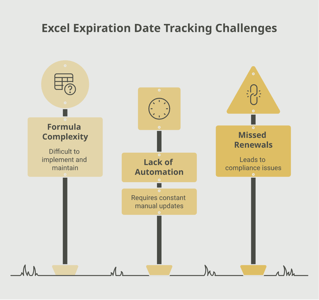
Challenges of Manual Tracking

Many organizations still rely on spreadsheets, shared calendars, or individual managers to keep track of certifications. The common problems include:

  • No automated alerts when expirations approach, relying instead on someone remembering to check
  • Difficulty seeing the big picture across departments, shifts, or locations
  • Spreadsheet errors — wrong dates, deleted rows, outdated versions
  • Time-consuming manual reporting when auditors or inspectors request documentation
  • No accountability trail showing when reminders were sent and whether they were acted upon

Benefits of Automated Tracking

Automated expiration tracking transforms certification management from a reactive scramble into a proactive, organized process:

  • Automated renewal reminders — Customizable notifications sent to employees and managers at the intervals you choose (30 days, 60 days, 90 days before expiration)
  • Centralized record-keeping — All certification data in one secure, accessible platform, replacing scattered files and spreadsheets
  • Real-time dashboards — Instant visibility into who is current, who is expiring soon, and who has lapsed
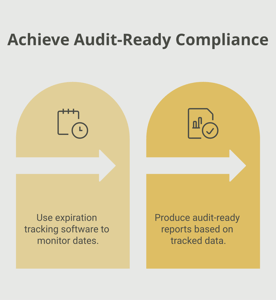
  • Audit-ready reports — Generate compliance documentation in seconds, not hours
  • Scalability — Whether you manage certifications for 10 people or 10,000, the system adapts to your needs

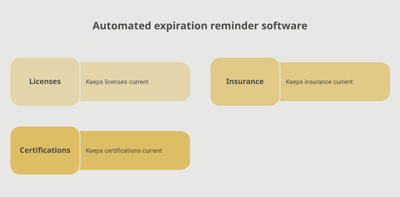
Expiration Reminder provides all of these capabilities, purpose-built for organizations that need to track certification expiration dates across teams, locations, and credential types. It replaces the manual work with automated, reliable tracking so that nothing slips through the cracks.

Key Takeaways

  • First Aid/CPR combined certification covers both first aid emergency response and CPR/AED skills in a single course, simplifying training and credential management.
  • The combined certification is typically valid for two years and is offered by the American Red Cross, AHA, HSI, and NSC.
  • OSHA requires trained first aid providers on worksites without nearby medical facilities, and CPR training is recommended or required alongside first aid in many industry-specific standards.
  • The combined approach saves time and money compared to taking separate first aid and CPR courses, and produces a single expiration date that is easier to track.
  • Industries with the highest demand include construction, childcare, education, manufacturing, fitness, and corporate workplace safety.
  • Expired combined certifications create a dual compliance gap, removing both first aid and CPR coverage simultaneously.
  • Automated tracking systems eliminate the risks of manual tracking and provide proactive reminders, centralized records, and instant audit reports.

Frequently Asked Questions

What is the difference between combined First Aid/CPR certification and separate certifications?

The combined First Aid/CPR certification covers both skill sets in a single course and produces one credential with one expiration date. Separate certifications require two distinct courses, which may have different expiration dates. The combined approach is generally more time-efficient and cost-effective, and it simplifies credential tracking since you only have one date to monitor per person.

How long does the combined First Aid/CPR certification last?

The combined certification is typically valid for two years from the date of completion, consistent with the individual validity periods for both first aid and CPR certifications from organizations like the American Red Cross and American Heart Association. Some employers or state agencies may require annual refresher training in addition to the formal two-year certification cycle.

What happens if my combined certification expires?

If your combined First Aid/CPR certification expires, you may need to complete the full initial training course rather than a shorter renewal class. For employees in roles that require both certifications, an expired combined credential means you are no longer qualified to serve as a first aid or CPR responder until you are recertified. Your employer may also face compliance issues if required coverage is not maintained.

How long does it take to complete a combined First Aid/CPR course?

Initial combined First Aid/CPR/AED courses typically take 5 to 8 hours for in-person classes. Blended learning formats allow you to complete online modules at your own pace, with an in-person skills session of 2 to 3 hours. Renewal courses for those recertifying before expiration are generally shorter, around 3 to 5 hours.

Does OSHA require combined First Aid/CPR certification?

OSHA's general industry standard (29 CFR 1910.151) requires trained first aid providers at worksites without nearby medical facilities and recommends CPR training as a component of first aid. Some industry-specific OSHA standards, such as logging (29 CFR 1910.266), explicitly require CPR training alongside first aid. While OSHA does not mandate a specific combined course, taking a combined certification is the most efficient way to meet both requirements.

Is online combined First Aid/CPR certification accepted by employers?

Most employers and regulatory agencies require a hands-on skills assessment as part of the certification process. Online-only courses are generally not accepted for OSHA compliance, childcare licensing, or healthcare employment. Blended learning courses, which combine online instruction with an in-person skills component, are widely accepted and offer flexibility while meeting regulatory requirements.

How much does combined First Aid/CPR certification cost?

Combined First Aid/CPR/AED courses typically cost between $50 and $200 per person, depending on the provider and format. This is usually less than the combined cost of taking separate first aid and CPR courses. Group training rates are often available for organizations certifying multiple employees, which can further reduce the per-person cost.

How far in advance should you renew a combined certification?

Start the renewal process 60 to 90 days before your expiration date. This provides enough time to find a course, register, and complete training while your current certification is still valid. For organizations coordinating group renewals, beginning three to four months in advance is recommended to secure instructor availability and accommodate scheduling across teams.

Conclusion

The combined First Aid/CPR certification offers one of the most practical and efficient ways to ensure your team is prepared for workplace emergencies. By covering both first aid and CPR skills in a single course with a single expiration date, it reduces training time, cuts costs, and dramatically simplifies the credential tracking process.

But even with simplified tracking, staying on top of expiration dates across a growing team requires more than good intentions and a spreadsheet. Automated tracking tools like Expiration Reminder help you centralize certification records, send proactive renewal alerts, and generate compliance reports — so you can focus on running your organization instead of chasing paperwork.

Your team's safety is worth the investment in proactive management. With the right certification and the right tracking system, you can ensure that every member of your organization is always ready to respond, and that compliance is never a concern.

Make sure your company is compliant

Say goodbye to outdated spreadsheets and hello to centralized credential management. Avoid fines and late penalties by managing your employee certifications with Expiration Reminder.
Other Documents in this category

No items found.

Read our latest blog posts

#Compliance
Read time:
15
min
How Barcode Scanning Transforms Expiration Date Management

How Barcode Scanning Transforms Expiration Date Management

When Manual Tracking Becomes a Liability

Sarah had worked as the inventory coordinator at a mid-sized hospital for seven years. She prided herself on her detailed spreadsheets, color-coded tabs, and meticulous record-keeping. Every Monday morning, she arrived early to manually check expiration dates on surgical supplies, pharmaceuticals, and sterilization equipment across three storage rooms.

Then came the day that changed everything.

During a routine inspection, auditors discovered $47,000 worth of expired surgical supplies that had been logged as "in rotation" in Sarah's spreadsheet. The formula she'd relied on for years had a hidden error—it calculated 30 days from the wrong column. Some items had been expired for months. The hospital faced fines, had to dispose of perfectly good supplies due to documentation gaps, and Sarah spent three sleepless nights reconciling every line in her tracking system.

Sound familiar? You're not alone. Studies show that 94% of business spreadsheets contain errors, many of which go undetected until they create real problems. But there's a better way—one that removes the manual burden and virtually eliminates tracking errors.

Barcode scanning for expiration date management isn't just about speed. It's about creating a reliable, auditable system that protects your organization from waste, compliance violations, and the stress of wondering whether you caught everything.

The Real Cost of Expired Inventory

Before we dive into solutions, let's understand what's really at stake when expiration tracking fails.

Healthcare's $25 Billion Problem

The healthcare industry wastes $25.7 billion annually on supply chain inefficiencies, with product expiration averaging 8-10% of total supply spend. For a hospital spending $100 million annually on medical supplies, that's $8-10 million in products that expire before being used.

Some analyses reveal even more concerning figures: as much as 30% of every hospital's on-hand inventory is bound straight for the trash. That's not just money—it's resources, staff time, and opportunity costs that could have gone toward patient care.

The pattern extends beyond healthcare. In manufacturing and distribution, holding onto obsolete inventory can cost 25% per year in storage, insurance, and depreciation. Every expired item occupies valuable warehouse space that could house sellable products.

Beyond Financial Loss: Compliance and Safety Risks

Expired inventory creates risks that go far beyond the price tag.

In healthcare, using or distributing expired pharmaceuticals can trigger patient safety incidents, regulatory violations, and accreditation issues. With the FDA's Drug Supply Chain Security Act (DSCSA) requirements tightening—small dispensers face a November 27, 2026 deadline for full compliance—the stakes have never been higher.

Construction companies face similar pressures. An expired certificate of insurance (COI) can halt projects, trigger contract violations, and expose firms to liability. Food service operations risk health code violations, product recalls, and reputation damage.

Manual tracking simply can't keep pace with these demands. When you're managing hundreds or thousands of items, each with different expiration dates, lot numbers, and storage locations, spreadsheets become a liability rather than a tool.

How Barcode Technology Solves Expiration Tracking Challenges

Barcode scanning fundamentally changes how organizations track expiration dates—shifting from reactive checking to proactive management.

Understanding GS1 Barcode Standards

The global standard for barcode-based expiration tracking is GS1, a system that encodes multiple data points into a single scannable code.

GS1 uses Application Identifiers (AI) to structure data. The key identifier for expiration dates is AI (17), followed by the date in YYMMDD format. For example, a product expiring on March 15, 2027, would be encoded as 17270315.

This standardization means that any GS1-compliant scanner can read and interpret expiration data consistently, regardless of manufacturer or product type. The barcode can also include additional identifiers:

One important recent change: GS1 standards no longer allow using '00' as a placeholder for the day field in expiration dates as of January 2025. Healthcare manufacturers now must specify exact expiration days, improving precision and reducing ambiguity.

Types of Barcodes for Expiration Data

Different industries use different barcode formats based on their specific needs.

GS1-128 (Code 128)

This linear barcode is common in logistics and warehousing. When formatted with GS1 Application Identifiers, Code 128 can carry expiration dates, batch numbers, and other supply chain data. It's readable by standard handheld scanners and works well for larger packaging.

GS1 DataMatrix

This two-dimensional barcode is the standard in healthcare and pharmaceuticals. DataMatrix stores expiry dates, batch numbers, serial IDs, and GTIN in a small, square format that fits on even tiny packaging like medication vials. The 2D format is more resilient to damage and can be read from any angle.

DataMatrix is particularly important for compliance. GS1 DataMatrix fulfills medicines traceability regulations in more than 75 countries worldwide and is central to DSCSA requirements.

QR Codes

While less common for regulated products, QR codes are gaining traction in food service, retail, and consumer-facing applications. They can encode expiration dates alongside URLs, product information, and usage instructions.

What Information Can Barcodes Capture?

Beyond expiration dates, barcode scanning creates a rich data ecosystem for inventory management.

When a team member scans a barcode, the system can automatically capture:

This data flows directly into your inventory management system, eliminating manual entry and creating an auditable trail of every item from receipt to use or disposal.

Implementing Barcode-Enabled Expiration Management

Successfully implementing barcode scanning requires planning, but the process is more straightforward than many organizations assume.

Choosing the Right Barcode System

Your choice depends on three key factors: industry requirements, volume, and existing infrastructure.

Compliance-Driven Industries

If you operate in healthcare, pharmaceuticals, or regulated food service, your barcode choices are often dictated by industry standards. Healthcare organizations should prioritize GS1 DataMatrix scanners and systems that support DSCSA compliance. Food service operations may need to support both GS1-128 for receiving and internal QR codes for prepared items.

Volume and Complexity

Small operations with a few hundred SKUs can start with basic handheld scanners paired with simple inventory software. Organizations managing thousands of items across multiple locations need enterprise solutions with real-time synchronization, batch scanning capabilities, and robust reporting.

Integration Requirements

The best barcode system is one that integrates seamlessly with your existing tools. Look for solutions that connect with your ERP, warehouse management system (WMS), or practice management software. Cloud-based platforms offer the advantage of real-time updates accessible from anywhere.

One often-overlooked consideration: mobile compatibility. Modern barcode scanning apps can turn smartphones into enterprise-grade scanners, reducing hardware costs while maintaining accuracy.

Integration with Inventory Management

Barcode scanning reaches its full potential when integrated with comprehensive inventory management.

Here's how a well-integrated system works in practice:

Receiving Process

When new inventory arrives, staff scan the barcode on each item or case. The system automatically captures the product details, lot number, and expiration date, then assigns it to a storage location. No manual data entry. No transcription errors.

Storage and Rotation

The system knows what's in each location and when it expires. It can automatically generate pick lists that follow FIFO or FEFO rules (more on this shortly), ensuring older items move first.

Usage and Dispensing

When staff scan items for use or sale, the system updates inventory in real-time and tracks which lot numbers were dispensed. This creates complete traceability—essential for recalls or compliance audits.

Alerts and Notifications

Instead of manually checking spreadsheets, stakeholders receive automated alerts when items approach expiration. These can be customized by product category, value threshold, or lead time needed for reordering.

FIFO vs FEFO: Picking the Right Rotation Strategy

Inventory rotation strategy determines how you prioritize which items to use first.

FIFO (First In, First Out)

FIFO moves the oldest inventory first, based on arrival date. This works well for non-perishable goods or situations where expiration dates are uniform. It's simple to implement and prevents inventory from aging indefinitely.

FEFO (First Expired, First Out)

FEFO prioritizes products with the earliest expiration dates first, regardless of when they arrived. This is critical for perishable goods, pharmaceuticals, and any inventory where expiration dates vary within the same product type.

Here's a real-world example: A hospital receives two shipments of the same surgical glove model on different days. The second shipment happens to have a shorter expiration window due to manufacturing dates. FIFO would use the older shipment first, potentially leading to waste. FEFO ensures the shorter-dated items are used first, maximizing utilization.

Best practices for FEFO implementation include:

Your inventory management system should support either strategy and automate picking recommendations based on your chosen approach.

Industry-Specific Applications

Different industries face unique expiration management challenges—and barcode scanning adapts to each.

Healthcare and Pharmaceutical Compliance

Healthcare organizations operate under some of the strictest expiration tracking requirements.

Tracking expiration dates is critical for patient safety, operational efficiency, and regulatory compliance, using methods such as barcode scanning, inventory management systems, and automated alerts.

The DSCSA regulations require full serialization and traceability. This means every prescription drug package must have a unique barcode that includes GTIN, serial number, lot number, and expiration date. Small dispensers have until November 27, 2026, to comply, making barcode implementation urgent for pharmacies and smaller healthcare facilities.

Beyond compliance, healthcare barcode systems improve patient safety. When each item is assigned a unique barcode containing product name, manufacturer, lot number, and expiration date, healthcare staff can verify medications at the point of care, reducing medication errors.

Food Service and Retail

Restaurants, grocery stores, and food distributors face constant pressure to minimize waste while maintaining food safety.

FEFO is majorly used in the food industry where expired dates are calculated based on batch-expired dates or shelf-life time. Barcode scanning enables automated FEFO rotation, ensuring items with the shortest shelf life move first.

Modern food safety apps leverage barcode scanning to track everything from receiving through preparation. Staff scan products upon delivery to log expiration dates, then the system alerts them as items approach their use-by dates. Some platforms include close to 3 million food barcodes in their databases and can scan multiple items in one pass, dramatically speeding up inventory checks.

For retail operations, barcode scanning reduces shrink (loss from expired products), improves stock rotation, and provides data for smarter purchasing decisions.

Manufacturing and Construction

Manufacturing and construction companies track expiration dates on certifications, safety equipment, chemicals, and materials.

In construction, barcode scanning helps track:

By implementing barcode scanning on equipment and materials, processes become fully auditable and items are traceable, helping deter theft and reduce loss and liability.

Manufacturing operations use barcode scanning to manage:

The common thread across industries is the need for accuracy, auditability, and automated alerts—exactly what barcode systems deliver.

Best Practices for Barcode Expiration Tracking

Implementing barcode technology is one thing. Getting your team to use it effectively is another.

Labeling and Scanning Workflows

Consistency starts with clear labeling standards.

Products should be marked with expiration dates, received dates, or lot numbers that make it obvious which items should move first. Pair this with clear signage in storage areas to help staff follow rotation rules without second-guessing.

If you manufacture or repackage products internally, invest in barcode label printers. Generate GS1-compliant labels that include all relevant data, ensuring compatibility with industry standards.

For scanning workflows, establish clear SOPs:

The goal is to make scanning a habitual part of every inventory interaction, not an occasional check.

Automated Alerts and Notifications

Spreadsheets are passive documents that sit on a shared drive or in the cloud, waiting for someone to open them and check for upcoming expirations—they don't send emails. Automated systems flip this dynamic entirely.

Set up tiered alerts based on your operational needs:

Customize alerts by product category or value threshold. A $50,000 medical device deserves earlier and more frequent alerts than a $5 office supply item.

Make sure alerts go to the right people. Inventory managers need comprehensive reports. Department heads might only need alerts for their specific areas. Purchasing teams need early warnings to adjust future orders.

Staff Training and Adoption

The most sophisticated barcode system fails if your team doesn't use it.

Train warehouse employees on FIFO/FEFO methods and the use of inventory management software to ensure smooth and efficient operations. Include hands-on practice with scanning equipment and clear explanations of why barcode tracking matters.

Focus on the "why" as much as the "how." When staff understand that barcode scanning prevents waste, reduces their own workload (no more manual spreadsheet updates), and protects the organization from compliance violations, adoption improves dramatically.

Start with a pilot program in one department or product category. Work out workflow kinks, gather feedback, and create internal champions who can help train others during rollout.

Overcoming Common Implementation Challenges

Even well-planned barcode implementations face predictable hurdles.

Challenge: Legacy products without barcodes

Solution: Use barcode label printers to create internal labels for existing inventory. Assign your own SKU-based barcodes that include expiration dates and lot numbers.

Challenge: Scanning errors or unreadable codes

Solution: Invest in quality scanners appropriate for your environment. 2D scanners handle damaged codes better than linear scanners. For warehouse environments, consider rugged devices designed for industrial use.

Challenge: Integration with existing systems

Solution: Choose inventory management platforms with robust APIs and pre-built integrations for common ERP and WMS systems. Cloud-based solutions often integrate more easily than legacy on-premise software.

Challenge: Staff resistance to new technology

Solution: Address concerns directly. Highlight time savings and reduced manual work. Involve frontline staff in the selection and testing process to build buy-in.

Challenge: Cost concerns

Solution: Calculate the ROI based on waste reduction and time savings. Most organizations report saving 5-15 hours per week after switching from spreadsheets to automated systems, plus the hard dollar savings from reduced expired inventory waste.

The Future of Expiration Management: AI and Automation

Barcode scanning is just the beginning. The next generation of expiration management systems incorporates artificial intelligence and predictive analytics.

AI-powered systems analyze historical usage patterns to predict which items are at risk of expiring. They can automatically suggest adjusting order quantities, transferring inventory between locations, or running promotions to move slower-selling items.

Computer vision technology is advancing rapidly. Some systems can now scan and extract expiration dates from printed text using smartphone cameras—no barcode required. While not yet as reliable as standard barcodes, this technology helps bridge gaps for legacy products and improves during receiving when suppliers use inconsistent labeling.

Integration with Internet of Things (IoT) devices adds another layer. Smart shelves with built-in scanners can automatically track inventory movement and alert staff when items approach expiration. Temperature sensors paired with barcode data ensure cold chain compliance for pharmaceuticals and perishables.

The throughline in all these innovations is automation. The future of expiration management removes manual checking, reduces human error, and gives organizations the visibility they need to make smarter decisions.

Take Control of Your Expiration Tracking Today

Manual expiration tracking doesn't scale. Spreadsheets create risk. Barcode scanning offers a proven path to automated, accurate, and audit-ready expiration management.

Whether you're managing pharmaceuticals in a hospital, food inventory in a restaurant, or construction materials on a job site, the principles remain the same: capture data automatically, enforce rotation rules systematically, and alert stakeholders proactively.

The technology exists. The standards are established. The ROI is clear.

The question isn't whether to implement barcode expiration management—it's when.

Ready to eliminate expiration tracking headaches and protect your organization from costly waste? Expiration Reminder combines barcode scanning, automated alerts, and intelligent reporting in one platform. Start a free trial today and experience the difference automation makes.

P.S. Every day you rely on manual tracking is another day your organization risks expired inventory waste, compliance violations, and operational disruptions. Barcode-enabled automation removes the guesswork and gives you peace of mind. Isn't it time to upgrade?

#Compliance
Read time:
16
min
The Real Cost of Missing a COI Renewal: Case Studies

The Cost of Missing a COI Renewal: Real-World Case Studies

The Fort Collins Renovation That Almost Wasn't Covered

Michael thought he had everything under control. The $900,000 retail renovation in Fort Collins was progressing smoothly. His builder's risk policy was set to expire June 30—plenty of time before the projected completion date.

Then a June hailstorm hit. Unexpected damage pushed the finish date to mid-August.

Michael caught the insurance expiration just in time and secured an extension. Two weeks before the revised completion date, thieves broke in overnight and stole $24,000 worth of copper wire and tools.

"If we'd missed that extension deadline, we would have eaten the entire loss," Michael recalls. "Twenty-four thousand dollars out of pocket because of an expired insurance certificate."

Michael was lucky. He caught the expiration before disaster struck. Many contractors and project managers aren't as fortunate.

COI mistakes cost contractors $25,000 or more annually. But those aggregated losses hide the real story—the individual incidents where a single expired certificate triggers five-figure costs, project shutdowns, and even six-figure liability claims.

Let's look at what actually happens when COI renewals slip through the cracks.

What Actually Happens When a COI Expires

An expired Certificate of Insurance isn't just an administrative oversight. It's a compliance failure with immediate, measurable consequences.

Immediate Project Impacts

The moment a COI expires, the affected vendor or subcontractor should be removed from the project site. Best practice dictates that construction managers never allow uninsured subs to remain on-site.

This means work stoppage. Equipment sits idle. Crews wait. Project timelines slip. And the clock is ticking on daily carrying costs that don't pause for paperwork problems.

project delays from certificate mistakes average $3,500 per day. For a three-day delay while waiting for updated documentation, that's over $10,000 in direct costs—before accounting for schedule compression expenses to make up lost time.

The Liability Transfer Problem

Here's what many people don't realize about expired COIs: when a third party's insurance lapses, the hiring party becomes responsible for any losses.

If a subcontractor's workers' compensation coverage has expired and someone gets injured, you're not dealing with their insurance company. You're potentially paying the claim directly.

can easily exceed $500,000, especially when property damage or personal injury is involved. The average cost of a construction claim involving uninsured subcontractors ranges from $75,000 to $150,000.

Contractual Consequences

Most construction contracts include specific insurance requirements and maintenance clauses. Allowing work to continue with expired coverage violates those contracts.

This violation can trigger default clauses, expose your organization to breach of contract claims, affect your standing with project owners and general contractors, and create problems for future project bids and bonding capacity.

Even if no incident occurs, the contract violation itself carries risk. Sophisticated owners conduct periodic insurance audits. Discovery of expired coverage—even historical—can lead to disputes, claims, and damaged relationships.

Case Study 1: The $47,000 Subcontractor Injury

A general contractor hired a subcontractor for a commercial building project. The subcontractor submitted a COI showing general liability coverage, and work began.

What Went Wrong

Three months into the project, a subcontractor's employee was injured on-site. The injury wasn't catastrophic—a fall resulting in a broken arm and shoulder damage—but it required medical treatment and time off work.

During the claim investigation, the general contractor discovered the subcontractor's general liability policy had expired six weeks earlier. The subcontractor had let coverage lapse due to cash flow issues and hadn't notified anyone on the project.

The Financial Breakdown

Without active insurance, the injured worker filed a claim against the general contractor. The total cost breakdown:

represents a relatively minor injury. Had the fall resulted in permanent disability or death, the numbers would have been exponentially higher.

What Could Have Prevented It

The general contractor had collected a COI at project start but hadn't implemented renewal tracking. The subcontractor's policy expired mid-project, and nobody caught it until the injury occurred.

Automated expiration tracking with 60, 30, and 15-day renewal alerts would have flagged the upcoming expiration. The contractor could have verified renewal or removed the uninsured subcontractor before the incident occurred.

Case Study 2: The Three-Day Project Shutdown

A drywall subcontractor arrived on-site Monday morning ready to start work on a commercial office renovation. The superintendent asked for their current COI before allowing them on-site—a standard safety check he conducted periodically.

The Discovery

The subcontractor's general liability insurance had expired the previous Friday. They'd missed the renewal deadline and were working to get coverage reinstated, but that process would take several days.

, the general contractor refused to let the crew on-site without valid insurance. Work stopped immediately.

The Domino Effect

The drywall delay triggered a cascade of schedule impacts:

Hidden Costs Beyond Delays

The direct delay cost at $3,500 per day totaled $10,500. But the full impact included:

For a three-day delay caused by an expired certificate, the actual cost exceeded $23,000. And this example represents a relatively minor incident—no injuries, no property damage, just a schedule disruption.

Case Study 3: The Connecticut Construction Fraud

A homeowner hired a contractor for an $84,000 residential renovation. The contractor provided what appeared to be legitimate credentials, including license and insurance information.

The Setup

Work began and progressed for several weeks. Then the contractor abruptly walked out on the project, leaving $61,000 in expenses and unfinished work.

The Fallout

When the homeowner tried to file a claim against the contractor's insurance, they discovered the coverage didn't exist. Further investigation revealed the contractor's license had expired ten years earlier.

illustrates the extreme end of COI fraud—completely fabricated credentials. But lesser versions occur regularly: expired policies, insufficient coverage limits, missing required endorsements, and named insured mismatches.

The homeowner eventually recovered some losses through legal action, but the process took years and cost significant legal fees.

Lessons for COI Verification

This case highlights why simply collecting a COI document isn't enough. Effective verification requires:

Manual verification of these details is time-consuming and often skipped. Automated systems can verify coverage in real-time, flagging discrepancies before work begins.

The Real Numbers: Annual Costs of COI Mistakes

Let's quantify what COI tracking failures actually cost construction companies and project managers annually.

Direct Financial Losses

contractors can eliminate $25,000 or more in annual losses by avoiding common COI errors. This figure includes:

These are the predictable, recurring costs—the death by a thousand cuts that comes from poor certificate management.

Insurance Premium Increases

Here's a hidden cost many organizations don't connect to COI management: contractors dealing with frequent COI corrections face insurance premium increases of 15-30% at renewal.

Why? Insurance companies view poor certificate management as a risk indicator. It suggests inadequate vendor screening and potential for uncovered claims. When carriers see patterns of expired certificates or insurance gaps, they price that risk into your premiums.

For a contractor paying $100,000 annually in premiums, a 20% increase means $20,000 in additional costs—year after year.

Administrative Burden

compliance teams can spend 100-200 hours per year chasing vendors for missing or updated COIs.

Calculate that burden at even a modest hourly rate:

That's just for the tracking and follow-up work—before accounting for the value of higher-level work those team members could be doing instead.

Liability Exposure

The numbers cited so far represent predictable, recurring costs. The real financial risk comes from liability exposure when incidents occur with uninsured or underinsured vendors.

average $75,000-$150,000. But serious incidents can reach much higher.

Consider these documented settlement amounts from construction injury cases:

While not all these cases involved expired COIs specifically, they illustrate the financial exposure construction companies face when proper insurance coverage isn't in place.

The Six-Figure Settlements Construction Companies Want to Avoid

Let's be clear about what's at stake. A single expired certificate can trigger six-figure liability.

When an uninsured subcontractor's employee is seriously injured, you're not dealing with a nuisance claim. You're facing potential exposure that can threaten your business.

Consider this scenario: A subcontractor with lapsed workers' compensation coverage has an employee fall from scaffolding. The worker suffers permanent disability. The lawsuit names your company as the general contractor.

Your exposure includes:

These aren't hypothetical numbers. Construction industry data shows that inadequate COI management can cost companies millions when claims materialize.

The frustrating part? This exposure is entirely preventable. Automated tracking systems catch expiring certificates before they lapse, eliminating the coverage gap that creates liability exposure.

Prevention: How Automated Tracking Eliminates These Risks

Every case study we've examined shares a common thread: the COI lapse went unnoticed until it was too late. An automated approach prevents these scenarios from occurring.

Proactive Renewal Reminders

The most important feature of any tracking system is proactive notification. Automated alerts notify both your team and the vendor well before certificates expire—typically 60, 30, and 15 days out.

This advance warning provides time to:

The Fort Collins renovation we discussed? That contractor caught the expiration because he maintained a tracking calendar. With automated reminders, he wouldn't have needed to remember—the system would have alerted him automatically.

Verification Before Work Begins

The three-day shutdown scenario happened because the expired coverage wasn't discovered until the crew arrived on-site. Effective tracking systems flag expiring certificates before vendors arrive.

send automatic renewal requests to vendors 60 days before expiration. If the vendor doesn't respond or can't provide updated coverage, you know weeks in advance—not when they're standing at the gate ready to work.

Centralized Documentation

The Connecticut fraud case illustrates why centralized, accessible documentation matters. When questions arise—during audits, investigations, or disputes—you need instant access to insurance records.

Cloud-based tracking systems maintain complete history: when certificates were collected, who approved them, what renewals occurred, and what follow-up happened. This documentation protects your organization and demonstrates good faith compliance efforts.

Audit-Ready Compliance

Insurance audits are stressful when you're scrambling to compile documentation from spreadsheets, email folders, and file cabinets. With centralized tracking, you can export comprehensive compliance reports in minutes.

that automated tracking improves compliance rates from 40-60% to over 90%. That's the difference between hoping you're covered and knowing you're covered.

Implementation Guide: Protecting Your Organization

Ready to eliminate the risk of expired COI renewals? Here's your step-by-step plan.

1. Conduct a current state audit

Review your last 12 months of projects. How many COI expirations occurred during active work? How many near-misses happened? What did delays or complications cost you? Understanding your risk exposure justifies investment in better systems.

2. Calculate your real costs

Add up direct costs from COI-related issues: delays, expedited processing, disputes, premium increases, and administrative time. Most organizations underestimate these costs until they calculate them systematically. The total usually exceeds $25,000 annually.

3. Define your insurance requirements clearly

Create standardized insurance requirements for different vendor categories. What coverage types do you require? What limits? What endorsements? Clear requirements make verification straightforward and reduce ambiguity.

4. Establish verification workflows

Decide when and how certificates will be collected and verified. Best practice is collection before contract execution and verification before work begins, with renewal tracking throughout the engagement.

5. Implement automated tracking

Choose a platform that fits your needs. If you're managing numerous expiration types beyond just COIs, systems like Expiration Reminder provide flexibility to track any document with a deadline—insurance certificates, licenses, permits, certifications, and equipment inspections—all in one place.

6. Train your team and communicate with vendors

Everyone involved needs to understand the process. Train project managers on verification requirements. Communicate with vendors about submission procedures. Clear expectations prevent confusion and delays.

7. Monitor compliance metrics

Track key indicators: vendor compliance rate, average time to secure updated certificates, number of expired certificates discovered during projects, and cost savings from avoided incidents. These metrics demonstrate ROI and identify areas for improvement.

8. Refine and optimize continuously

Review your process quarterly. What's working well? Where do certificates still slip through? What vendor categories create most problems? Continuous improvement turns a good process into a great one.

Key Takeaways

Financial Impact

  • COI mistakes cost contractors $25,000+ annually through direct losses, with individual incidents ranging from $24,000 to over $150,000
  • Insurance premiums can increase 15-30% due to poor certificate management
  • Project delays from expired certificates average $3,500 per day
  • Administrative burden: 100-200 hours annually spent chasing missing or outdated COIs

Real Risks of Expired COIs

  • When a subcontractor's insurance lapses, the hiring party becomes liable for losses
  • Construction claims involving uninsured subcontractors average $75,000-$150,000
  • Serious incidents can result in six-figure settlements, with some documented cases exceeding $2 million
  • Expired COIs trigger immediate work stoppages, project delays, and contractual violations

Common Problem Scenarios

  • Subcontractor injuries occurring after coverage lapses expose general contractors to full liability
  • Mid-project insurance expirations create cascading schedule delays affecting multiple trades
  • Fraudulent or fabricated certificates go undetected without proper verification
  • Manual tracking systems fail to catch expirations until it's too late

Prevention Through Automation

  • Automated tracking improves compliance rates from 40-60% to over 90%
  • Proactive renewal reminders (60, 30, and 15 days out) prevent coverage gaps
  • Real-time verification catches discrepancies before work begins
  • Centralized documentation provides audit-ready compliance records

Bottom LineThe cost of implementing automated COI tracking is minimal compared to the risk of a single uninsured incident. Most organizations underestimate their exposure until they calculate losses systematically.

Frequently Asked Questions

Q: What should we do if we discover a vendor's insurance expired while they were working on our project?

Take immediate action: remove the vendor from the site until coverage is restored, document the gap period precisely, notify your insurance carrier and legal counsel about the exposure, review whether any incidents occurred during the lapsed period, and verify new coverage thoroughly before allowing work to resume. Even if no incident occurred, you may have contractual obligations to report the lapse to project owners or other stakeholders.

Q: Can we be held liable for a subcontractor's actions even when they have valid insurance?

Yes, depending on the circumstances. General contractors can still face liability claims even when subcontractors carry insurance, particularly under premises liability, direct negligence, and vicarious liability theories. However, proper insurance requirements and additional insured endorsements provide significant protection. The real danger comes when you think a subcontractor has coverage but they don't—then you're almost certainly facing liability without any insurance protection between you and the claim.

Q: How often should we verify that certificates of insurance are still valid?

Best practice is continuous monitoring through automated tracking rather than periodic manual checks. Certificates should be collected before work begins, tracked throughout the engagement with renewal alerts 60, 30, and 15 days before expiration, and reverified if any coverage concerns arise. Waiting for annual or quarterly audits leaves too much exposure window. Organizations using automated systems typically maintain 90%+ compliance compared to 40-60% compliance with manual tracking.

Q: What's the difference between collecting a COI and actually verifying coverage?

Collecting a COI means you have a document—but that document might show expired coverage, insufficient limits, missing endorsements, or even fraudulent information. Verification means confirming the policy is currently active, coverage amounts meet your requirements, required endorsements are in place, the named insured matches the entity performing work, and the certificate was issued by a legitimate insurance agency. The Connecticut case study illustrates why collection alone isn't enough—the contractor had provided insurance information, but it was completely fraudulent.

Q: Our company is small and we only work with a handful of subcontractors. Do we really need automated tracking?

The risk isn't proportional to the number of vendors—it's proportional to the potential exposure. A single uninsured incident can cost $75,000-$150,000 or more, regardless of how many total vendors you work with. Even small operations benefit from automated reminders that prevent that one critical expiration from slipping through. If you're managing fewer than 20 vendors with stable relationships, a simple expiration tracking system provides protection at minimal cost. The question isn't about company size—it's about whether you can afford the five or six-figure cost when a certificate lapses unnoticed.

Q: What happens to our insurance premiums if we have claims involving uninsured subcontractors?

Your premiums will likely increase significantly—potentially 15-30% or more depending on claim severity. Insurance carriers view claims involving uninsured parties as evidence of inadequate risk management and vendor screening. This suggests higher likelihood of future claims. Beyond premium increases, you may face non-renewal if the carrier decides you represent too much risk. Multiple incidents involving uninsured subcontractors can make you difficult to insure at any price. This is why preventing coverage lapses through automated tracking actually protects your insurability and keeps premiums stable.

#Compliance
Read time:
15
min
How to Track Vendor Insurance Without Excel (2026 Guide)

How to Track Vendor Insurance Certificates Without Excel

The Friday Afternoon Fire Drill

Sarah had just settled into her desk Friday morning when her phone rang. The construction project manager's voice was tight with urgency: "We need to verify all subcontractor COIs before Monday's site inspection. Can you send me the current list?"

Her stomach dropped. She opened the tracking spreadsheet—last updated three weeks ago. Scrolling through 87 vendors, she spotted expiration dates in red. Some cells were blank. Others had notes like "waiting on email" or "check with Dave."

What should have been a five-minute task turned into an all-day scramble. Digging through email threads. Calling vendors. Discovering two subcontractors with lapsed coverage who'd been working on site all week.

If this scenario feels familiar, you're not alone. According to industry experts, one full-time person is required for every 1,500 certificates of insurance properly tracked. Yet most organizations still rely on Excel spreadsheets that can't keep pace with the complexity of modern vendor networks.

The good news? There are practical alternatives that reduce errors, save time, and ensure nothing slips through the cracks.

Why Excel Falls Short for Certificate of Insurance Tracking

Excel isn't a bad tool. It's just the wrong tool for managing certificates of insurance at scale. Here's why the limitations matter more than you might think.

The Scalability Problem

—maybe 20 or 30 vendors maximum. But as your vendor network grows, the spreadsheet quickly becomes unwieldy.

You're copying data from PDF certificates into cells. Checking coverage limits against requirements. Color-coding expiration dates. Adding notes about follow-ups. The more comprehensive your tracking, the more time you spend maintaining it.

that what begins as a simple project can snowball into a time-intensive process that's impossible to scale. Organizations add more people and more spreadsheets, which leads to documents being lost or misplaced and increased chances for errors.

Manual Data Entry Creates Error Risk

Every time you manually transcribe information from a COI, you risk introducing errors. Wrong coverage amounts. Transposed policy numbers. Misread expiration dates.

These aren't just administrative inconveniences. A compliance gap could expose your organization to significant liability if an incident occurs with an underinsured or uninsured vendor.

The more data you copy from certificates, the better tracking you get—but it also takes longer and increases mistake risk. It's a frustrating trade-off that doesn't have to exist.

No Automated Renewal Alerts

Perhaps Excel's biggest limitation: it can't proactively notify you when certificates are about to expire.

You can set up conditional formatting to highlight dates. You can create reminder systems. But you still need to check the spreadsheet regularly. Miss a weekly review, and certificates expire without warning.

, by contrast, send renewal alerts automatically—often to both your team and the vendor. This shift from reactive to proactive management is the difference between scrambling and planning.

Missing Document Storage Integration

Excel tracks data, not documents. You need a separate system—shared drives, email folders, physical files—to store the actual certificates.

When someone asks for proof of coverage, you're searching through folders to match the certificate with the spreadsheet entry. Best practices recommend a central repository where data and corresponding COIs are stored together, making retrieval instant and audit preparation straightforward.

Understanding Certificate of Insurance Requirements

Before exploring alternatives, let's establish what you're actually tracking and why it matters.

What Is a COI and Why It Matters

A Certificate of Insurance is a document that proves a vendor or contractor carries specific insurance coverage. It typically includes general liability, workers' compensation, auto insurance, and umbrella policies.

, where safety risks are highest, proper insurance documentation protects you from liability when incidents occur. If a subcontractor's employee is injured on your site and their workers' comp coverage has lapsed, you could face costly claims and legal exposure.

COIs aren't just paperwork. They're risk transfer documents that confirm vendors can financially cover potential losses related to their work.

Common Coverage Requirements for Vendors

Coverage requirements vary by industry and risk level, but typical minimums include:

often need higher limits—$5,000-$50,000+ in annual premiums—while service vendors might carry basic coverage for $500-$2,000 per year.

You also need to verify additional requirements like named insured endorsements, waiver of subrogation clauses, and primary coverage designations. These details matter tremendously if a claim occurs.

The Cost of Compliance Gaps

What happens when tracking fails? The consequences range from operational disruptions to serious financial and legal exposure.

often achieve only 40-60% compliance rates. That means nearly half their vendors may have expired, insufficient, or missing coverage.

When an uninsured vendor causes property damage or injury, your organization becomes the insurance policy of last resort. You're exposed to claims, litigation costs, and reputational damage that proper verification would have prevented.

Better Ways to Track Vendor Insurance Certificates

Let's explore practical alternatives that solve Excel's limitations while fitting different organizational needs and budgets.

Method 1: Dedicated COI Tracking Software

Purpose-built COI tracking platforms are designed specifically for insurance certificate management. They automate the most time-consuming aspects of compliance tracking.

How they work:

These systems let you upload vendor information and insurance requirements. Vendors receive automated requests for certificates. The platform extracts data from submitted COIs, verifies coverage against requirements, stores documents centrally, and sends renewal reminders automatically.

after implementing these systems while improving compliance rates from the low 40s to over 90%.

Method 2: Integrated Compliance Management Platforms

Some organizations benefit from broader compliance platforms that handle multiple credential types—not just insurance certificates.

These systems track COIs alongside business licenses, professional certifications, safety training records, and regulatory permits. Everything lives in one platform with unified expiration tracking.

How they work:

You define requirements for each vendor or credential type. The system tracks expiration dates across all document categories. Automated reminders go out before deadlines. You generate audit reports that show compliance status across your entire vendor network.

Best for:

Method 3: Expiration Tracking Systems

For organizations that need flexibility beyond just COI tracking, expiration tracking platforms offer a middle path. These systems are built around the concept of deadline management rather than insurance-specific workflows.

How they work:

You can track any document or credential with an expiration date—insurance certificates, business licenses, permits, certifications, contracts, equipment inspections. The system sends customizable reminders to responsible parties, maintains document archives, and provides visibility across all upcoming deadlines.

automate deadline tracking across your entire organization. You eliminate the spreadsheet chaos while maintaining a single source of truth for all expiration dates.

When Simple Solutions Still Work

Honesty matters here: not everyone needs sophisticated software. If you're managing fewer than 20 vendors with stable insurance requirements and infrequent changes, a well-maintained spreadsheet might still suffice.

The key word is "well-maintained." That means weekly reviews, documented processes, and backup systems when the responsible person is unavailable.

smaller businesses with limited COIs may find Excel adequate. But the moment tracking becomes burdensome or compliance gaps emerge, it's time to evaluate alternatives.

Key Features to Look for in a Tracking System

Whether you choose dedicated COI software or a broader expiration tracking platform, these features separate effective solutions from inadequate ones.

Automated Expiration Alerts

This feature is non-negotiable. The system should automatically notify you and the vendor well before certificates expire—typically 60, 30, and 15 days out.

and avoids compliance issues that could result in financial penalties or project shutdowns. You shift from reactive scrambling to proactive planning.

Look for customizable reminder schedules. Different vendor relationships might need different notification timelines.

Centralized Document Storage

All certificates should be stored in one secure, searchable location. When someone needs proof of coverage, you locate it in seconds, not minutes or hours.

Cloud-based storage means access from anywhere. Version control ensures you always reference the current certificate, not an outdated copy.

Verification Workflows

The best systems help you verify that submitted certificates actually meet your requirements. This might include:

that manual review can miss when you're rushed or reviewing dozens of certificates.

Audit Trail and Reporting

When audits happen—and they will—you need instant proof of compliance. Look for systems that maintain complete history: when certificates were submitted, who reviewed them, what exceptions were approved, and how quickly vendors responded to renewal requests.

One-click compliance reports save hours during audits. Instead of compiling spreadsheets and searching for documents, you export a comprehensive report showing current compliance status across your vendor base.

Implementation Checklist: Moving Beyond Excel

Ready to transition away from spreadsheet tracking? Here's your step-by-step implementation plan.

1. Audit your current process

Document exactly what you're tracking now. How many vendors? What coverage types? Who's responsible for follow-up? What takes the most time? Understanding your current state helps you choose the right solution and measure improvement.

2. Define your insurance requirements

Create a master list of coverage requirements by vendor category. What limits do you require? What endorsements are mandatory? Having this documented makes configuration easier and ensures consistency.

3. Research and evaluate solutions

Based on your vendor volume and complexity, narrow down to 2-3 platforms. Request demos. Ask about data migration. Understand pricing. Check integration capabilities with your existing systems.

4. Start with a pilot group

Don't migrate everything at once. Choose 20-30 vendors for initial implementation. Work through the process, identify gaps, and refine workflows before full rollout.

5. Migrate vendor data systematically

Plan data migration carefully. Most platforms can import spreadsheet data, but verification is essential. Use this as an opportunity to clean up outdated information and confirm current coverage.

6. Communicate with vendors

Let vendors know about the change. Many will appreciate simplified certificate submission processes. Provide clear instructions and support during transition.

7. Train your team

Even user-friendly platforms require training. Ensure everyone understands how to request certificates, review submissions, and run reports. Document processes for future team members.

8. Monitor and optimize

Track key metrics after implementation: compliance rates, time spent on tracking, vendor response times, and audit readiness. Use these insights to continuously improve your process.

Real Results from Automated COI Tracking

What happens when organizations move beyond Excel? The improvements are measurable and significant.

jumping from compliance rates in the low 40s to over 90% after implementing automated tracking. That means the majority of vendors maintain current, adequate coverage rather than just half.

Time savings are equally impressive. Teams spending 20+ hours weekly on COI tracking reduce this to just a few hours. That's time redirected to higher-value work rather than administrative follow-up.

Error rates drop dramatically. Automated data extraction from certificates eliminates transcription mistakes. Verification workflows catch missing endorsements or inadequate limits before approval.

Perhaps most importantly, audit preparation transforms from a stressful scramble to a simple report export. Organizations report passing compliance audits with minimal preparation time because documentation is always current and accessible.

Getting Started: Your Next Steps

If Excel tracking has become burdensome—or if compliance gaps keep you awake at night—here's what to do next.

For immediate improvement:

Start by documenting your current process and pain points. How much time do you spend on COI tracking weekly? How often do certificates expire without warning? Where do compliance gaps appear most frequently?

This assessment clarifies whether you need purpose-built COI software or a broader expiration tracking solution.

For comprehensive solutions:

If you're tracking numerous credential types beyond just insurance certificates, consider platforms designed for general expiration management. Expiration Reminder helps you track any document with a deadline—insurance certificates, licenses, permits, certifications, contracts, and inspections—all in one centralized system.

The platform automates reminders, maintains document archives, and provides visibility across your entire organization. You eliminate spreadsheet chaos while ensuring nothing expires unnoticed.

For quick wins:

Even if you're not ready for new software, you can improve Excel tracking immediately:

These improvements won't solve scalability problems, but they reduce immediate risk while you evaluate long-term solutions.

Key Takeaways

The Excel Problem

  • Excel becomes unmanageable as vendor networks grow beyond 20-30 vendors
  • Manual data entry creates significant error risk with coverage amounts, policy numbers, and expiration dates
  • No proactive automation means certificates can expire without warning between manual reviews
  • Separating tracking data from actual document storage creates inefficiencies

Why COI Tracking Matters

  • Certificates of Insurance are risk transfer documents that protect organizations from liability when vendor incidents occur
  • Organizations using spreadsheets often achieve only 40-60% compliance rates, leaving nearly half their vendors with expired, insufficient, or missing coverage
  • Compliance gaps expose organizations to claims, litigation costs, and reputational damage

Better Tracking Solutions

  • Dedicated COI software automates certificate requests, data extraction, verification, and renewal reminders
  • Integrated compliance platforms track multiple credential types (licenses, certifications, permits) alongside insurance certificates
  • Expiration tracking systems offer flexibility for any document with a deadline, not just insurance-specific workflows

Essential Features to Prioritize

  • Automated expiration alerts (typically 60, 30, and 15 days before expiration)
  • Centralized, searchable document storage accessible from anywhere
  • Verification workflows that flag coverage gaps automatically
  • Audit trails and one-click compliance reports

Measurable Results

  • Organizations report compliance rates jumping from the low 40s to over 90%
  • Time spent on tracking drops from 20+ hours weekly to just a few hours
  • Audit preparation transforms from stressful scrambles to simple report exports

Frequently Asked Questions

Q: How many vendors can I realistically manage with Excel before needing dedicated software?

Most experts agree that Excel becomes unmanageable beyond 30-50 vendors. If you're spending more than 5 hours weekly on COI tracking, or if compliance gaps are appearing regularly, you've outgrown spreadsheets. The transition point varies based on vendor turnover rates and your insurance requirements complexity, but consistent missed renewals or error-prone data entry are clear signals that it's time to upgrade.

Q: What's the typical cost difference between Excel tracking and COI software?

Excel appears free, but the hidden costs add up quickly. Calculate time spent on tracking at your hourly rate—often 15-20 hours weekly—plus the cost of compliance gaps and potential liability exposure. Most COI tracking platforms cost $100-500 monthly depending on features and vendor volume. The ROI is usually positive within the first few months when you factor in time savings alone, not to mention risk reduction and improved compliance rates.

Q: Can automated systems integrate with our existing contractor management or project management software?

Many modern COI tracking platforms offer integration capabilities through APIs or built-in connectors. The level of integration varies by platform—some offer deep two-way sync with popular contractor management systems, while others provide basic data export. During evaluation, ask specifically about integration with your current tools. Even without direct integration, most platforms offer data export and import functionality that reduces duplicate entry across systems.

Q: How do we get vendors to cooperate with a new COI submission process?

Clear communication is key. Most vendors actually appreciate simplified submission processes compared to emailing PDFs and waiting for confirmation. Provide advance notice about the change, explain the benefits for them (fewer follow-up requests, automatic renewal reminders), and offer support during transition. Many platforms allow vendors to submit certificates directly through a portal, which is often easier than their current process. Start with your most cooperative vendors to work out any kinks before rolling out to everyone.

Q: What happens if a certificate expires and we don't catch it in time?

The immediate response is to suspend work with that vendor until coverage is restored and verified. Depending on your contract terms and the nature of the work, you may face project delays, need to source emergency replacements, or assume temporary liability risk. This is precisely why automated alerts are so valuable—they prevent this scenario by notifying both you and the vendor 60, 30, and 15 days before expiration. Having documented proof of your tracking and notification attempts also protects you if incidents occur during brief lapses.

Q: Should we track only insurance certificates, or should we include other vendor credentials in the same system?

If you're already managing multiple credential types—business licenses, safety certifications, professional registrations, permits—using one platform for all expiration tracking creates significant efficiency gains. You eliminate multiple spreadsheets and disconnected reminder systems. However, if insurance certificates are truly your only tracking need, purpose-built COI software may be more cost-effective. Assess your complete compliance picture before deciding. Organizations managing diverse credential types typically see greater ROI from unified expiration tracking platforms that handle any document with a deadline.