Umbrella Liability Insurance
If a single lawsuit could exceed the limits of your general liability or commercial auto policy, the gap above those limits is where your business is most exposed. Umbrella liability insurance is the policy that sits above your primary coverage and pays the costs that would otherwise come out of operating cash. It is the most cost-effective way to lift overall liability protection — and one of the most overlooked policies on the renewal calendar.
This article explains what umbrella liability insurance actually is, who needs it, how it differs from excess liability, how renewal cycles work, and what happens when a policy lapses. We will then walk through the scenarios where tracking the policy expiration date matters most, and the simplest way to keep every layer of liability coverage current.
By the end you will know exactly how this policy fits into your insurance stack and how to make sure it never quietly drops off when you need it most.
What Is Umbrella Liability Insurance?
Umbrella liability insurance is a commercial insurance policy that provides additional liability coverage above the limits of your primary liability policies. It "sits on top of" your general liability, commercial auto liability, and (often) employer's liability — extending the limits of those underlying policies so a major claim does not exhaust them.
The policy is issued by a commercial insurance carrier. Common carriers writing commercial umbrella coverage include Liberty Mutual, The Hartford, Travelers, CNA, Chubb, Zurich, and a long list of specialty insurers. Coverage limits typically range from $1 million up to $15 million or higher, and many small businesses can add a $1 million umbrella for roughly $40 per month per million of coverage — modest cost for meaningful protection.
Here is how it works in practice. Suppose your general liability policy has a $1 million per-occurrence limit and a customer sues for $2 million in covered damages after a serious incident. Your general liability policy pays the first $1 million; your umbrella policy then steps in to pay the remaining $1 million up to the umbrella's limit. Without the umbrella, that second million would come from the business.
It is important to understand the difference between umbrella liability and excess liability — terms that are sometimes used interchangeably but technically differ. Excess liability is "following form" coverage: it strictly mirrors the terms of the underlying policy and only pays when that one specific policy hits its limit. Umbrella liability is broader: it sits above multiple underlying policies (general liability, auto liability, employer's liability) and can sometimes provide coverage where the underlying policy is silent, subject to a separate retention.
Umbrella policies are typically written for one-year terms and renewed annually alongside the underlying policies they extend. Pricing depends on industry, revenue, the underlying limits being extended, claims history, and the requested umbrella limit.
Why Umbrella Liability Insurance Matters for Your Organization
Most underlying liability policies cap out at $1 million or $2 million in per-occurrence coverage. That sounds like a lot — until you look at jury verdicts in serious bodily injury, vehicle accident, or premises liability cases. Multimillion-dollar verdicts and settlements are common, particularly in cases involving long-term injury, multiple plaintiffs, or commercial vehicle accidents. When a single loss exceeds primary limits, the excess judgment becomes a direct claim against the business's assets.
The leverage on premium is the part most business owners do not realize. Going from a $1 million underlying limit to a $5 million combined limit (with a $4 million umbrella on top of $1 million primary) usually costs far less than buying $5 million in primary coverage directly. That is the math that makes umbrella coverage the standard recommendation for any business with meaningful liability exposure.
Umbrella coverage also unlocks contracts that smaller policies cannot. Many enterprise customers, government contracts, municipal projects, and large commercial leases require contractors and vendors to carry a minimum total liability limit — often $5 million or more — which only an umbrella can deliver cost-effectively. Without the umbrella, the business cannot satisfy the proof of insurance requirement and effectively cannot bid on the work.
The consequences of a lapse are particularly painful with umbrella coverage because the policy is invisible most of the time. Underlying claims that stay within primary limits never touch the umbrella, which lulls some businesses into thinking the policy is unused. The day a serious claim arrives and the umbrella has lapsed, the gap above primary limits becomes a direct hit to the balance sheet.
Common Scenarios for Tracking Umbrella Liability Insurance Expiration Dates
Tracking the umbrella policy looks different depending on the structure of the underlying insurance program. Here are the scenarios where staying ahead of the renewal date matters most.
Businesses with Commercial Vehicles or Fleet Operations
Any business that operates company vehicles — delivery services, contractors, mobile services, fleet operators — carries higher liability exposure than most. Auto accident verdicts can quickly exhaust a $1 million commercial auto policy, especially in cases involving serious injury or multiple vehicles. Umbrella coverage is the standard answer, and the renewal date typically aligns with the auto policy. Tracking both dates together prevents one from lapsing while the other renews.
Contractors Bidding on Larger Projects
General contractors, electrical contractors, plumbing contractors, and similar trades often need $5 million or $10 million in total liability to qualify for commercial, municipal, or institutional work. The umbrella is the lever that makes those higher limits affordable. A missed renewal can disqualify the contractor from bidding on a project — or worse, terminate an in-progress contract that requires continuous coverage.
Businesses with Physical Premises and Public Traffic
Restaurants, retail stores, hospitality businesses, recreational facilities, and entertainment venues all face premises liability risk that can blow through primary limits when a serious incident occurs. The umbrella turns a primary $1 million general liability into a $5 million combined limit — the kind of coverage that lets the business survive a worst-case slip-and-fall claim.
Businesses with Higher Employment Risk
Companies with significant payrolls, multiple locations, or higher-risk operations often extend their umbrella above employer's liability coverage as well. While workers' compensation is the primary response to employee injuries, employer's liability handles related lawsuits (consequential damages, third-party-over claims, loss of consortium). The umbrella sits above employer's liability and protects against the unusual but expensive claim that exceeds the underlying limit.
Professional Service Firms with Hybrid Exposure
Service businesses that also have offices, employees, and occasional client visits often carry general liability, auto liability, and an umbrella — separate from their professional liability program. Coordinating renewal dates across this stack of policies, while issuing certificates to clients and landlords, is a multi-step tracking exercise. A central record of all renewal dates and all certificates keeps the process from becoming chaotic.
How Umbrella Liability Insurance Benefits Your Company and Employees
For the business, the umbrella is the financial backstop that protects everything you have built. A single catastrophic claim — a serious vehicle accident, a multi-plaintiff premises liability case, a high-dollar verdict — can be the kind of loss a business does not recover from. The umbrella turns that scenario from existential to manageable. It also unlocks the ability to bid on larger contracts and lease larger spaces, both of which typically require higher combined liability limits than primary policies can deliver alone.
For employees, the umbrella reduces the personal exposure that can come with serving on behalf of the business. Drivers operating company vehicles, technicians working in client locations, and service personnel interacting with the public all benefit from knowing the business carries enough coverage to fund a defense and pay a serious judgment without putting the company at risk.
For clients, landlords, and contracting partners, the umbrella is the policy that lets you meet their coverage requirements. Many sophisticated buyers and lessors will not contract with a vendor that does not carry adequate combined liability limits. Showing up to a procurement conversation with a $5 million or $10 million umbrella in place is the simplest way to qualify.
How to Track Umbrella Liability Insurance Expiration Dates
The hardest thing about tracking umbrella coverage is that it never sits alone. The umbrella's coverage depends on the underlying policies remaining active and meeting their minimum required limits. A lapse on the primary general liability or auto policy can create coverage problems on the umbrella even if the umbrella itself is current. That means three or four renewal dates need to stay coordinated, not just one.
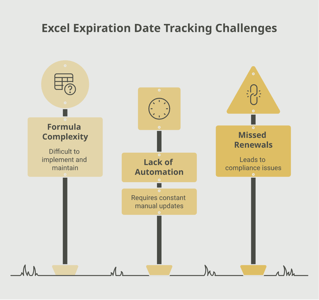
Most businesses start with broker emails and a calendar. That works until the broker emails get filtered, the calendar owner changes, or one underlying policy moves to a different carrier with a different renewal date. The moment the dates fall out of sync, the risk of a coverage gap goes up sharply. Add in certificates of insurance issued to landlords, clients, and contracting partners — each with its own expiration tied to the policy — and the manual tracking pile grows quickly.
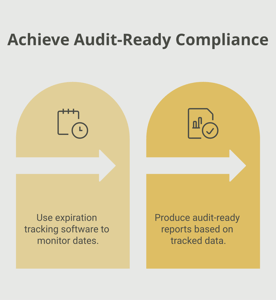
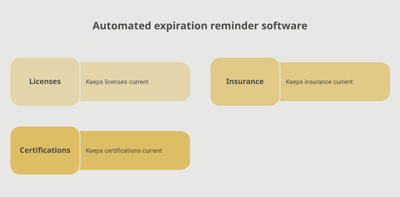
Automated credential tracking is built for exactly this multi-policy situation. A platform like Expiration Reminder lets you upload every policy in the liability stack — general liability, commercial auto, employer's liability, and the umbrella — with its own renewal date and reminder schedule. You can attach certificates of insurance for each third party, see the entire program in one view, and trigger reminders 90, 60, and 30 days before each renewal to both the operations lead and the broker. Audit-ready reports show every policy, every limit, every endorsement, and every approaching expiration.
If you are building a tracking discipline across your full insurance program, our broader take on compliance tracking and why reminders matter covers the principles. The umbrella is the policy most likely to be forgotten because it pays the least often — which is exactly why tracking it deserves attention.
Key Takeaways
- Umbrella liability insurance provides additional liability coverage above the limits of your primary policies (general liability, commercial auto, employer's liability).
- It is a cost-effective way to lift combined liability limits — often around $40 per month per million of additional coverage.
- "Umbrella" is broader than "excess" liability: umbrella can extend over multiple underlying policies and may cover some gaps, while excess strictly mirrors a single underlying policy.
- Many enterprise contracts, government projects, and commercial leases require minimum combined liability limits that only an umbrella can deliver economically.
- Annual renewal is standard, and the umbrella's date should be coordinated with the underlying policies it sits above.
- A lapse leaves the business directly exposed to any claim that exceeds primary limits — and the umbrella's "invisibility" makes lapses easier to overlook.
- Automated credential tracking gives you one source of truth for every policy in the liability stack.
Frequently Asked Questions
What happens if an umbrella liability policy expires?
Coverage above your primary policies stops on the expiration date. Any claim that exceeds your underlying limits during the gap becomes a direct exposure to the business. Existing claims for incidents during the policy period generally remain covered (umbrella is typically occurrence-based), but new incidents during the gap are uninsured at the umbrella layer. A lapse can also breach contracts that require minimum combined limits.
How long does it take to renew an umbrella policy?
For straightforward renewals, a few days to a couple of weeks. The carrier needs current information on the underlying policies (limits, endorsements, claims activity) and a snapshot of business operations. If you are shopping carriers, adding new exposures, or have had a significant claim, plan for 30 to 60 days. Start the conversation at least 60 to 90 days before expiration.
Who is required to have umbrella liability insurance?
Umbrella coverage is rarely required by law, but it is frequently required by contracts. Commercial leases, enterprise customer agreements, government projects, and large construction contracts often specify combined liability minimums that effectively require an umbrella. Any business with vehicles, premises traffic, or higher payroll usually carries one as a standard risk management practice.
How far in advance should I start the renewal process?
For routine renewals, 30 to 45 days is workable. For coordinated renewals across the full liability stack (general liability, auto, umbrella), 60 to 90 days is more comfortable. Renewing the underlying policies and the umbrella in sync prevents misalignment that can affect coverage.
Can I operate without umbrella coverage if my underlying policies are active?
You can, but you are accepting that any loss exceeding the underlying limit comes directly from the business. For low-risk operations with strong primary limits, that may be a reasonable choice. For most businesses with vehicles, premises traffic, or employees, the price-to-protection ratio of an umbrella makes carrying one the default recommendation.
What is the difference between umbrella and excess liability?
Excess liability is "following form" — it pays after a single underlying policy is exhausted and uses the exact same terms. Umbrella is broader: it sits above multiple underlying policies (general liability, auto, employer's liability) and may sometimes provide coverage where the underlying policy is silent, subject to a self-insured retention. In practice, umbrella is the more common choice for small and mid-sized businesses.
Does the umbrella cover the same claims as my primary policies?
Mostly yes, but with conditions. The umbrella generally responds to claims that would have been covered by the underlying policies if those policies had higher limits. It does not extend over policies that are not included in the umbrella's schedule (for example, professional liability and cyber liability typically require their own excess coverage). Review the umbrella's declarations to confirm which underlying policies it sits above.
How much umbrella coverage does my business need?
That depends on the size of your business, the seriousness of your exposures, the contracts you need to satisfy, and your tolerance for risk above primary limits. A common starting point is a $1 million umbrella on top of $1 million primary limits for smaller businesses, scaling up to $5 million or $10 million for businesses with significant vehicle or premises exposure. Your broker can model scenarios based on industry verdict trends.
Conclusion
Umbrella liability insurance is the policy that does its most important work in the moments you hope never arrive — the catastrophic claim, the multimillion-dollar verdict, the contract requirement that asks for limits your primary policies cannot reach alone. It is one of the highest-leverage decisions in commercial insurance because the cost is modest and the protection is meaningful.
Keeping the umbrella current alongside the underlying policies it sits above is a small administrative discipline with outsized consequences. Automated reminders, centralized policy storage, and audit-ready reporting let you treat the full liability stack the way you treat the rest of your operating rhythm — something you stay on top of without thinking about it daily.
If your business carries any meaningful liability exposure, the umbrella is the layer that protects everything you have built. Keeping it active is one of the simplest, highest-leverage habits in commercial risk management — and one of the easiest to put on autopilot.
Make sure your company is compliant
Say goodbye to outdated spreadsheets and hello to centralized credential management. Avoid fines and late penalties by managing your employee certifications with Expiration Reminder.