

How to Standardize Contract Templates for Compliance: A Step-by-Step Guide
A procurement manager at a regional logistics company thought she had a solid handle on vendor contracts. Each department used its own version of the services agreement—slightly tweaked over the years to suit their preferences. When the legal team ran an audit ahead of an acquisition, they found 23 different contract variants in circulation. Several were missing indemnification clauses. Two had auto-renewal terms that had silently triggered, locking the company into agreements that were no longer favorable. One had a data handling clause that was flatly non-compliant with current privacy regulations.
That scenario plays out in organizations of every size. The solution isn’t more lawyers reviewing every contract—it’s learning how to standardize contract templates for compliance so that the right language is baked in from the start and every agreement follows the same reliable structure.
This guide walks you through why standardization matters, where most organizations go wrong, and a practical framework for building a contract template system that holds up under scrutiny.
Why Contract Template Standardization Is a Compliance Issue, Not Just a Legal One
When people hear “contract standardization,” they often think of it as a legal efficiency project. And while it does reduce drafting time significantly—some organizations report a 50% reduction in drafting and review time after standardizing their templates, according to Sirion—the compliance implications are just as significant.
The Hidden Financial Risk of Non-Standard Contracts
Research consistently shows that poor contract management costs businesses real money. According to PandaDoc, organizations can lose up to 9% of revenue due to poor contract management practices. That figure encompasses missed renewals, unfavorable auto-renewal terms, non-compliant clauses that create liability, and inconsistent terms that get challenged in disputes.
Non-standard contract language creates a specific kind of risk: it introduces variability that is difficult to audit, monitor, or enforce at scale. When each department uses a slightly different version of the same agreement, you have no single source of truth for what your company’s obligations actually are.
Regulatory Exposure
Laws and regulations evolve constantly. A clause that was compliant three years ago may now be problematic. GDPR violations alone have resulted in over $3 billion in penalties globally, according to HyperStart. If your contract templates have not been updated to reflect current data protection, labor, or industry-specific regulations, every contract signed from those templates carries that compliance gap.
The Auto-Renewal Trap
Auto-renewal clauses are among the most dangerous provisions in non-standardized contracts. When they appear inconsistently—in some contract versions but not others—they are easy to miss. Organizations that don’t track contract expiration dates often discover auto-renewals only after they’ve triggered, locking them into unwanted agreements. Standardized templates give you a known, consistent renewal structure that you can actually track.
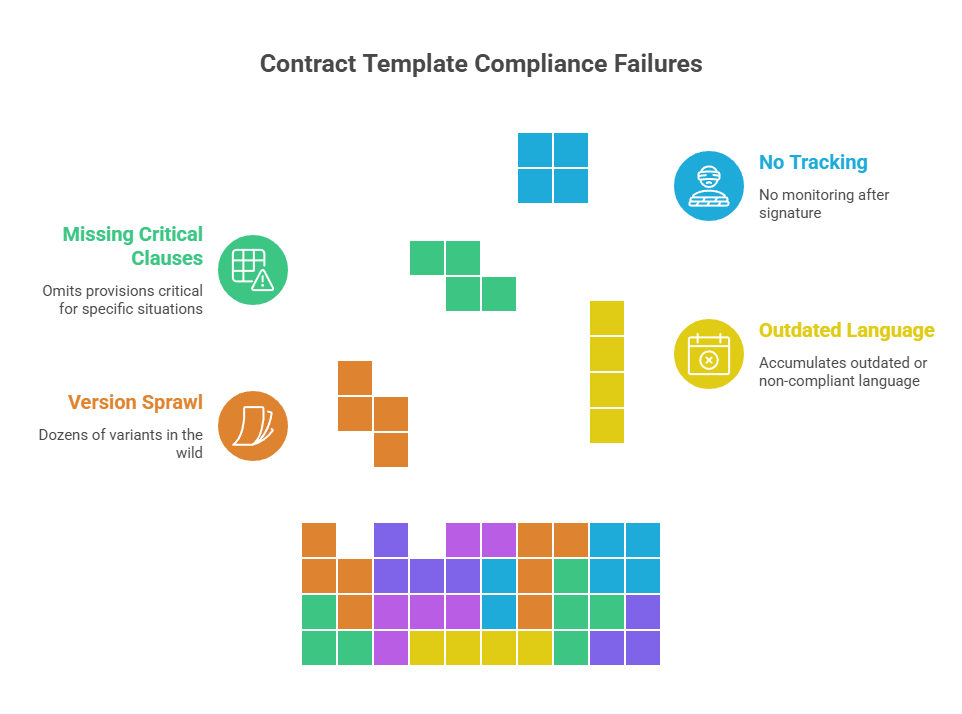
The Four Most Common Contract Template Compliance Failures
Before building a better system, it helps to understand exactly where the current one breaks. Most organizations struggle with the same four failure points.
1. Version Sprawl
Over time, well-meaning teams make small edits to templates—removing a clause that seemed overly restrictive, adding language from a specific negotiation, updating payment terms. Without governance, each of these edits creates a new informal version. Within a few years, the “standard” contract template has dozens of variants in the wild, none of which are actually standard.
2. Outdated Language
Contract templates that aren’t reviewed on a regular schedule accumulate outdated or non-compliant language. State-specific requirements change. Data protection regulations tighten. Industry standards are updated. The template that was legally sound when it was drafted may now be a liability if it hasn’t been reviewed since.
3. Missing Critical Clauses
Generic templates applied across multiple use cases often omit provisions that are critical for specific situations. A services agreement might be missing the confidentiality provisions needed when the vendor handles sensitive data. A subcontractor agreement might lack the insurance requirements necessary to protect the organization from liability. These gaps often only become apparent when something goes wrong.
4. No Tracking of Contract Lifecycles
Even well-written templates don’t protect you if no one is monitoring what happens after signature. Contracts with fixed terms expire. Contracts with auto-renewal clauses renew silently. Service level commitments need periodic review. Without a system to track these lifecycle events, you are flying blind after execution.
How to Standardize Contract Templates for Compliance: 7 Steps
Here is a practical roadmap for building a contract template system that serves your compliance needs.
Step 1: Inventory Your Existing Contract Types
Start by cataloging the types of contracts your organization uses regularly. Common categories include vendor agreements, customer agreements, employment contracts, subcontractor agreements, NDAs, licensing agreements, and partnership agreements. For each category, gather all current versions in use and identify where language has drifted from the intended standard.
Prioritize based on volume and risk. Agreements that are signed frequently or carry significant financial and legal obligations should be standardized first.
Step 2: Involve Legal and Compliance Early
Template standardization is not a project that legal should receive at the end. Bring legal and compliance stakeholders in at the beginning to review current templates for outdated language, missing clauses, and regulatory gaps. They should also establish which clauses are non-negotiable (the “standard” elements that should never change) and which are permissible to customize within defined parameters.
According to SpotDraft, effective standardization requires clear guidelines for what may be modified and what must stay fixed—so that sales, procurement, and operations teams can work efficiently without inadvertently creating compliance exposure.
Step 3: Build a Pre-Approved Clause Library
Rather than leaving teams to craft language from scratch when standard terms don’t fit a situation, build a library of pre-approved clause alternatives. For example, if your standard payment terms are net-30 but some vendor relationships require net-45, create a pre-approved net-45 variant that legal has already reviewed. Teams can select from the library without legal review, while anything outside the library still requires approval.
This approach preserves flexibility without sacrificing compliance. It also dramatically reduces the time legal spends reviewing contracts, since most of the language has already been cleared.
Step 4: Establish a Governance Process for Template Updates
A standardized template is only as good as its maintenance process. Establish a clear owner for each template type—typically a member of the legal or compliance team—who is responsible for reviewing it on a defined schedule. Annual reviews are the minimum; quarterly reviews are preferable for templates that touch heavily regulated areas.
Use version control so that all contracts signed under a specific template version can be identified. When a template is updated, archive the old version and note the effective date of the new one. This makes it straightforward to identify which agreements may be affected by a regulatory change and need review.
Step 5: Create a Centralized Template Repository
Templates should live in one authoritative location, not in personal drives, department folders, or email chains. A central repository ensures that everyone is using the current, approved version. Access controls can restrict who can edit master templates while allowing anyone to download the latest version for use.
Label templates clearly with version numbers and effective dates. Include a brief description of what each template is designed for and any notes on permitted customization.
Step 6: Train the Teams Who Use the Templates
Standardization fails when the people using templates don’t understand the purpose of the key clauses or when modifications are appropriate. Brief training—even a one-page guide per template type—goes a long way toward reducing the ad-hoc edits that create version sprawl. People are far less likely to remove a clause when they understand why it’s there.
Step 7: Track Every Contract After Execution
Standardized templates solve the problem of what goes into a contract. But you also need a system to track what happens after it’s signed. Every executed contract should be recorded with its key dates: effective date, expiration date, renewal notice deadline, and any periodic review obligations.
This is where many organizations fall short. They invest in template standardization but leave post-execution tracking to spreadsheets and individual inboxes. The result is missed renewal windows, auto-renewals that trigger without review, and compliance obligations that slip past their deadlines.
Expiration Reminder gives your team a centralized place to log every contract with its critical dates, configure automated renewal reminders, and generate audit-ready reports showing the status of your entire contract portfolio. You can start a free trial and see how automated tracking closes the gap between great templates and executed compliance. See how contract renewal tracking works.
What Good Contract Template Governance Looks Like in Practice
Here’s a quick snapshot of what a mature contract template compliance program looks like day-to-day:
- A team member in procurement needs a vendor services agreement. They go to the central repository, download the current version, and complete the deal-specific fields.
- If they need to offer net-45 payment terms instead of the standard net-30, they select the pre-approved net-45 clause from the clause library—no legal review needed.
- After execution, the agreement is logged in the contract tracking system with its expiration date and a 90-day renewal reminder assigned to the procurement lead and their manager.
- When legal updates the template to reflect a new data privacy regulation, the repository is updated and the old version is archived. A note is sent to the procurement team about the change.
- At renewal time, the procurement lead receives an automated reminder with enough lead time to review the relationship, negotiate new terms if needed, and sign before the old agreement lapses.
That process reduces legal review time, eliminates surprise renewals, and keeps your contract portfolio consistently compliant—without adding administrative overhead to every team member involved.
Implementation Checklist: Standardizing Your Contract Templates
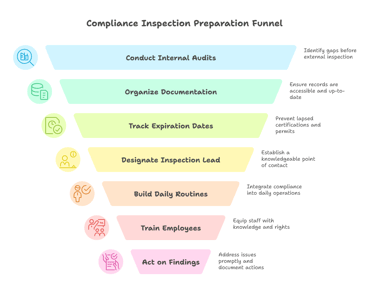
- Catalog all contract types in use across the organization, including any informal variants.
- Pull together all current versions of each contract type and identify language drift from the intended standard.
- Engage legal and compliance to review current templates for outdated or non-compliant language.
- Define which clauses are mandatory and which may be modified within pre-approved parameters.
- Build a pre-approved clause library for common variation scenarios (payment terms, confidentiality, liability caps, etc.).
- Assign a named owner to each template type, responsible for scheduled reviews and updates.
- Create a centralized, version-controlled repository for all master templates with clear access controls.
- Develop brief user guides for each template type explaining key clauses and permissible modifications.
- Set up a post-execution tracking system to record contract expiration dates and configure automated renewal reminders.
- Schedule template reviews on a calendar—at minimum annually, more frequently for high-risk contract types.
Key Takeaways
- Poor contract management can cost organizations up to 9% of their annual revenue through missed renewals, unfavorable auto-renewals, and non-compliant terms.
- Contract template standardization is as much a compliance issue as a legal efficiency project—outdated or non-standard language creates direct regulatory exposure.
- Version sprawl is the most common failure mode: well-intentioned edits accumulate over time, leaving dozens of unofficial variants in circulation.
- A pre-approved clause library gives teams flexibility while keeping legal review requirements to a minimum and compliance risk under control.
- Template governance requires named owners, scheduled review cycles, and version control—not just a one-time cleanup exercise.
- Even perfect templates don’t protect you if contract lifecycles aren’t tracked; post-execution date tracking and automated reminders are essential companions to template standardization.
- Centralized repositories with clear access controls ensure everyone always uses the current, approved version—not an old variant from someone’s desktop.
Frequently Asked Questions
How often should contract templates be reviewed for compliance?
At minimum, annually. For templates covering heavily regulated areas—data privacy, employment, financial services—quarterly reviews are preferable. Any time a relevant law or regulation changes, affected templates should be reviewed and updated before the change takes effect. Setting a calendar reminder for annual template reviews is a simple practice that prevents a lot of downstream compliance exposure.
Who should own contract template governance?
Typically, the legal or compliance team holds primary ownership over template content. However, governance works best when it is collaborative: legal owns the mandatory clauses, while the business units that use the templates most frequently provide input on practical usability. Procurement, HR, finance, and operations all have legitimate perspectives on what works in practice.
What is the difference between a clause library and a contract template?
A contract template is the full agreement framework for a specific contract type—the structure, standard language, and mandatory provisions. A clause library is a collection of pre-approved alternative clauses for situations where the standard template language needs to flex. Together they give you a compliant foundation with controlled flexibility, so teams aren’t starting from scratch or going rogue with unapproved edits.
How do I handle contracts signed under an outdated template?
Start by identifying which executed contracts were signed under the old version and what the key differences are between that version and the current one. For contracts coming up for renewal, the renewal is an opportunity to bring the agreement current. For longer-term contracts mid-cycle, legal should assess whether the gap creates active compliance risk or is best addressed at renewal. Maintaining version records makes this analysis much faster.
Does standardization mean every contract looks identical?
No. Standardization means that the legally required and compliance-critical elements are consistent, while deal-specific terms (pricing, scope, duration, specific service levels) remain negotiable. The pre-approved clause library handles most common variation scenarios without requiring custom legal review. The goal is consistency where it matters, with flexibility where it doesn’t create risk.
What happens to compliance if a contract auto-renews without review?
Auto-renewals that trigger without review can lock your organization into agreements that no longer reflect your compliance requirements, pricing expectations, or vendor performance standards. In some cases, auto-renewed contracts that carry non-compliant language effectively extend the period of exposure without anyone’s active decision. This is why post-execution tracking with renewal reminders is just as important as the template itself.
Ready to close the gap between great templates and executed compliance? Start a free trial of Expiration Reminder and get every contract renewal date tracked and reminded—automatically.
P.S. The biggest risk in contract compliance isn’t bad drafting—it’s losing track of what you’ve signed and when it needs attention. Automated expiration tracking is the simplest way to make sure no renewal window slips past unnoticed.

-1.png?width=400&height=300&name=69a9a1304b174916d7412fc6__-%20visual%20selection%20(1)-1.png)