Public Liability Insurance
If a customer slips on a wet floor in your store, a contractor accidentally damages a client's property, or a member of the public is hurt at one of your events, the bill for medical care, repairs, and legal defense can climb fast. Public liability insurance is the policy that stands between your business and that bill. It is the most common type of business liability coverage in the world — and one of the easiest to let lapse if nobody is watching the calendar.
This article explains what public liability insurance actually covers, how it differs from general liability and product liability, who needs it, and how renewal cycles work. We will then walk through the everyday scenarios where tracking the policy expiration date matters, and the simplest way to keep your coverage active without scrambling at the last minute.
By the end you will know exactly what this policy does, what it does not do, and how to make sure your business never operates a single day without it.
What Is Public Liability Insurance?
Public liability insurance is a form of business insurance that covers third-party bodily injury and property damage caused by your business operations, your employees, or the spaces you occupy. In the United States, the same coverage is most commonly called general liability insurance — and the two terms are often used interchangeably. Outside the U.S. (in the UK, Australia, and much of the Commonwealth), "public liability" is the standard term.
The policy is issued by a commercial insurance carrier. There is no single regulator the way there is for licenses; coverage is sold through brokers and agents who represent carriers like Travelers, Liberty Mutual, The Hartford, Chubb, Progressive, and many specialty insurers focused on particular industries.
A typical public liability policy responds to claims involving:
- Bodily injury to a customer, visitor, vendor, or member of the public (the classic slip-and-fall example)
- Property damage to someone else's property caused by your business operations
- Personal injury claims such as libel or slander tied to your business activities
- Legal defense costs for covered claims, even when the claim ultimately has no merit
The policy does not cover injuries to your own employees (workers' compensation handles that), damage to your own property, professional service errors (that is what professional liability insurance is for), or intentional acts.
Most public liability policies are written on an occurrence basis, meaning the policy responds to claims arising from incidents that happened during the policy period — even if the claim is filed years later. That structural difference is why public liability is generally simpler to manage than claims-made coverage. Annual renewal is the norm, with coverage limits commonly ranging from $1 million per occurrence with a $2 million aggregate at the entry level, up to $5 million or more for higher-risk businesses.
To get a policy, businesses provide carriers with basic information about operations, revenue, locations, and claims history. Pricing depends on industry risk, revenue, payroll, location, and the chosen limits.
Why Public Liability Insurance Matters for Your Organization
Public liability is the single most-purchased commercial insurance policy in the world for a reason: the risks it covers are universal. Any business with a physical location that customers visit, any contractor who works on a client's property, any vendor who sets up at events, any event organizer who brings the public together — all face the realistic possibility of an injury or property damage claim. Without coverage, the business pays everything out of pocket.
A single slip-and-fall claim can easily reach $50,000 by the time medical bills, lost wages, and legal defense are tallied. A property damage claim involving a fire, water leak, or vehicle incident can land in the six or seven figures. For most small and mid-sized businesses, an uninsured loss of that size is existential.
Public liability is also often a contractual requirement. Commercial landlords typically require tenants to carry coverage with the landlord named as additional insured. Customers and clients — particularly larger organizations, municipalities, and event venues — request a current proof of insurance certificate before allowing a contractor on site. Trade associations and licensing boards sometimes require minimum coverage for membership or registration.
The consequences of a lapse cascade quickly. A landlord can declare a tenant in breach. A client can suspend or terminate a service contract. An event organizer can refuse access to the venue. And any incident that happens during the gap is uninsured — even if the policy is reinstated the next day.
Common Scenarios for Tracking Public Liability Insurance Expiration Dates
Tracking this policy looks different depending on the type and size of the business. Here are the most common situations where staying ahead of the renewal date matters most.
Retail Stores, Restaurants, and Customer-Facing Businesses
Brick-and-mortar businesses live with the slip-and-fall risk every day. A spilled drink, an icy entrance, a loose floor mat — small details that can become large claims. Public liability is usually bundled into a Business Owner's Policy (BOP) alongside property insurance, but the renewal date is still a single calendar event that must not be missed. A simple reminder 60 and 30 days before expiration gives the owner time to review limits, shop the market if needed, and renew without gaps.
Construction and Trade Contractors
General contractors, electricians, plumbers, HVAC technicians, and other trades carry public liability because property damage during a job is a routine risk. Most general contractors will not let a subcontractor on site without a current certificate of insurance naming the GC as additional insured. Tracking the policy expiration date, the certificate expiration date, and the additional insured endorsement is a three-part discipline that protects the trade business's pipeline.
Event Planners, Caterers, and Mobile Vendors
Mobile and pop-up businesses often face short-term insurance requirements driven by the venue. A wedding venue may require a current certificate for the caterer; a city festival may require all food trucks to provide coverage proof before issuing permits. Tracking both the underlying policy and the specific event certificates prevents last-minute scrambles that can cost a booking.
Property Managers and Commercial Landlords
Property managers juggle a master public liability policy plus tracking of tenant policies. A commercial lease typically requires tenants to maintain their own coverage and provide certificates naming the landlord as additional insured. Managing 50 or 100 tenant certificates manually is a real burden — and a missed lapse can leave the property unprotected when an incident happens.
Nonprofits and Membership Organizations
Nonprofits running public events, youth programs, or community activities almost always carry public liability. Many funders, partners, and venue providers require proof of coverage as a condition of working together. Keeping the policy current and certificates updated is part of grant compliance for many funded programs.
How Public Liability Insurance Benefits Your Company and Employees
For the business, public liability is the financial backstop that lets you operate with confidence. You can welcome customers into your space, send contractors into client homes, or host an event with thousands of attendees knowing that a single bad day will not end the business. The policy also satisfies the most common contractual requirement that landlords, clients, and venues impose, opening doors to opportunities that would otherwise be closed.
For employees, the policy reduces the personal anxiety that comes with public-facing work. A barista who breaks a customer's laptop, a delivery driver who scrapes a parked car, a service technician who chips a homeowner's tile — none of these need to become individual disasters because the company carries proper coverage. The policy also funds legal defense, which protects employees who get pulled into a lawsuit alongside the business.
For customers, the policy is a quiet promise that you are responsible enough to be in business. They may never look for proof, but knowing a business is insured shapes the trust that underpins every transaction.
How to Track Public Liability Insurance Expiration Dates
Most small businesses start by trusting the broker to remind them. Most of the time, it works — until the broker's email goes to spam, the renewal contact changes jobs, or the policy auto-renews at a premium nobody noticed. By the time the issue surfaces, the gap has already happened.
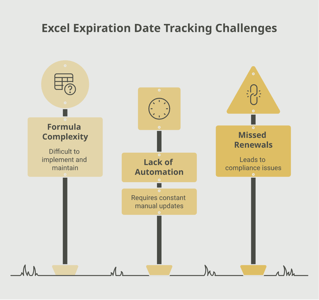
The next step is usually a spreadsheet. A single policy, one date, simple enough. Then the business adds a second location with a different policy, a client requires a separate certificate, a trade association requires its own proof — and the spreadsheet starts to multiply. Certificates of insurance have their own expiration dates that often differ from the policy itself. Each renewal kicks off a wave of certificate re-issues that may need to go to dozens of parties.
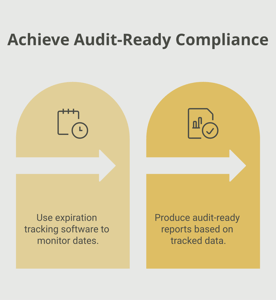
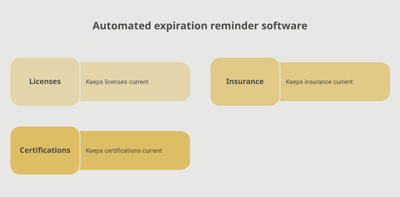
Automated credential tracking is built for exactly this pattern. A platform like Expiration Reminder lets you upload the policy declaration page, set the renewal date, and configure reminders at 90, 60, and 30 days. You can attach certificates of insurance for each landlord, client, and venue, and re-issue them in bulk at renewal. The platform generates audit-ready reports that show every active policy, every outstanding certificate, and any document approaching expiration — all in one place.
If you are juggling multiple types of business insurance, our broader take on compliance tracking and why reminders matter covers the principles that apply across coverage types. The small investment in tooling pays for itself the first time it prevents a single missed renewal.
Key Takeaways
- Public liability insurance covers third-party bodily injury and property damage caused by your business operations, employees, or premises.
- In the United States, "public liability" and "general liability" are usually the same policy under different names.
- Most policies are written on an occurrence basis, meaning coverage responds to incidents during the policy period regardless of when the claim is filed.
- Typical coverage limits start at $1 million per occurrence with a $2 million aggregate; higher-risk businesses carry $5 million or more.
- Annual renewal is the norm, and a lapse can trigger contract breaches with landlords, clients, and venues.
- Certificates of insurance issued to third parties have their own expiration dates that need separate tracking.
- Automated credential tracking gives you one source of truth for the policy, its certificates, and its renewal reminders.
Frequently Asked Questions
What happens if a public liability insurance policy expires?
Coverage stops immediately on the expiration date. Any incident that occurs after the policy expires is uninsured, even if a new policy starts the next day. Existing claims for incidents that happened during the policy period generally remain covered, because most policies are occurrence-based. Beyond the coverage gap, a lapse can violate lease agreements, client contracts, and venue requirements.
How long does it take to renew a public liability policy?
If your business profile is steady, renewal takes a few days — your broker confirms the information, the carrier issues the renewal, and you receive updated documents. If you are shopping carriers, adding locations, or have a recent claim, plan for two to four weeks. Start the renewal conversation at least 30 to 60 days before expiration.
Who is required to have public liability insurance?
Strictly speaking, public liability is rarely required by law in the U.S., but it is almost universally required by commercial leases, client contracts, vendor agreements, and venue contracts. Construction and trade businesses, retail and hospitality businesses, event-related businesses, and nonprofits that host the public effectively need it to operate. In some countries, public liability is required for specific industries by statute.
How far in advance should I start the renewal process?
For routine renewals, 30 to 45 days is plenty. For more complex situations — new locations, claims activity, higher limits, or carrier shopping — 60 to 90 days is more comfortable. Brokers typically reach out a few weeks before expiration, but proactive reminders prevent surprises.
Can I operate a business with an expired public liability policy?
Legally, in most U.S. jurisdictions, yes. Practically, no — any commercial lease, client contract, or venue agreement that requires coverage will treat the lapse as a breach, and any incident during the gap is uninsured. The risk far outweighs any short-term savings.
What is the difference between public liability and general liability?
In the United States, they are usually the same policy. "Public liability" is the older term and is still common internationally; "general liability" is the standard U.S. industry term. Both cover third-party bodily injury, property damage, and personal injury claims arising from business operations.
Does public liability insurance cover my employees?
No. Injuries to your own employees are covered by workers' compensation insurance, not public liability. Public liability covers third parties — customers, visitors, vendors, members of the public — and damage to property that belongs to someone other than your business.
Why do landlords and clients ask for certificates of insurance?
A certificate of insurance (COI) is documentary proof that your policy is active and meets the contract's coverage requirements. Landlords, clients, and venues request COIs to confirm that you have the coverage you promised. Each COI has its own expiration date, so they must be re-issued every time the underlying policy renews.
Conclusion
Public liability insurance is the foundation of business risk management — quiet, unsexy, and absolutely essential. It is the policy that lets you open your doors to customers, send people onto job sites, and host the public at your events without holding your breath every day. The decision to maintain coverage continuously is one of the simplest, highest-leverage decisions you make as a business owner.
Tracking the policy and its certificates does not need to be a chore. Automated reminders, centralized document storage, and audit-ready reports let you treat insurance the way you treat the rest of your operating rhythm — something you stay on top of without thinking about it daily.
If your business interacts with the public in any way, public liability is your safety net. Keeping it active is one of the most consequential administrative habits you can build, and one of the easiest to put on autopilot.
Make sure your company is compliant
Say goodbye to outdated spreadsheets and hello to centralized credential management. Avoid fines and late penalties by managing your employee certifications with Expiration Reminder.