Professional Liability Insurance
If you sell advice, expertise, or professional services, you have probably been told you need professional liability insurance — and you may also have heard it called errors and omissions, E&O, or malpractice coverage. The terminology gets confusing fast, and the policies themselves come with quirks that general business insurance does not have. One of the biggest quirks: when a policy expires, the consequences can stretch back months or years.
This article explains what professional liability insurance actually is, who needs it, how renewal cycles work, and what happens when a policy lapses (spoiler: more than you would expect). We will also walk through the common scenarios where tracking the expiration date matters most, and the simplest way to keep every policy, every certificate, and every renewal in one place.
By the end, you should have a clear picture of how this coverage protects your business — and how to make sure it never quietly slips out from under you.
What Is Professional Liability Insurance?
Professional liability insurance, also known as errors and omissions (E&O) insurance, is a specialized form of business insurance that protects professionals against claims of negligence, mistakes, or failures in the services they provide. If a client alleges that your professional advice or work caused them financial harm — whether the mistake was real or only alleged — this policy helps cover legal defense costs, settlements, and judgments up to the policy limit.
The policy is issued by a commercial insurance carrier. There is no single "issuing authority" the way there is for licenses. Common carriers in the United States include Chubb, Hiscox, Travelers, The Hartford, CNA, and a long list of specialty insurers focused on particular professions.
In legal and medical fields, this coverage is usually called malpractice insurance. In tech, consulting, real estate, and insurance, it is more often called E&O. Some states and licensing boards require certain professionals to carry it — lawyers, real estate agents, and physicians in particular. Even when it is not legally required, enterprise customers, government contracts, and investors frequently make it a condition of doing business.
Professional liability is almost always written as a claims-made policy. That is a crucial detail. A claims-made policy responds to claims that are filed while the policy is active, not claims tied to when the actual work was performed. Two dates control whether a claim is covered: the policy's effective dates and the policy's retroactive date (the earliest date a covered act could have occurred). Let a policy lapse, and you can lose the ability to defend against claims for work you did while you were properly insured.
Most policies run for one year and must be renewed before expiration to maintain continuous coverage. Some carriers offer multi-year options, but annual renewal is standard. Pricing depends on the profession, revenue, claims history, and chosen limits.
Why Professional Liability Insurance Matters for Your Organization
A single lawsuit alleging professional negligence can easily reach six or seven figures by the time legal defense, settlement, and court costs are tallied — even when the claim has no merit. Defending an unfounded claim still requires attorneys, expert witnesses, and time. Without professional liability coverage, those costs come straight out of operating cash.
For regulated professions, the stakes are higher. Many state bar associations require attorneys to carry minimum E&O coverage or to disclose its absence. Real estate brokers in some states must carry policies as a condition of licensure. Healthcare practitioners face hospital privileging requirements that mandate active malpractice coverage. A lapse in these contexts can mean an immediate inability to practice, on top of the financial exposure.
For service businesses that contract with larger organizations, professional liability is often built right into the master services agreement. Enterprise clients routinely require contractors to maintain a minimum of one or two million dollars in coverage, name the client as an additional insured, and provide a current certificate of insurance (proof of insurance) on file. Let the policy lapse, and the contract may be suspended until coverage is restored.
The trickiest part is what happens with the retroactive date. When you renew a claims-made policy on time, the retroactive date stays put and you maintain coverage for any covered work done since that date. When you let the policy lapse and have to buy a new one, the new carrier typically resets the retroactive date — meaning years of past work can suddenly become uninsured. That is an exposure most professionals do not realize they have until a claim arrives.
Common Scenarios for Tracking Professional Liability Insurance Expiration Dates
Tracking this policy looks different depending on the size and structure of the practice. Here are the scenarios where staying ahead of the renewal date matters most.
Solo Consultants and Independent Professionals
A solo consultant — a marketing strategist, an IT consultant, a freelance accountant — usually owns one policy and renews it once a year. The risk is simple: the calendar reminder gets snoozed, the policy lapses, and a client claim arrives during the gap. With no policy in force, defense costs come out of pocket. Setting a clear reminder 60 and 30 days before expiration is the simplest hedge.
Law Firms, Accounting Practices, and Architecture Studios
Partner-led practices typically hold one firm-wide policy that covers every professional in the firm. When the policy renews, every partner and associate is affected. The firm's office manager or operations lead is usually responsible for the renewal — and for distributing updated certificates of insurance to the clients who request them. A central tracker that flags the renewal, the new certificate, and any client COI deliveries keeps the whole process clean.
Insurance Agencies and Real Estate Brokerages
Insurance brokerages and real estate firms often face two layers: their own E&O policy plus the requirement that each licensed agent maintain individual coverage. Some firms cover all agents under a master policy; others require agents to maintain their own. In either case, tracking each agent's coverage status — alongside their license renewal — protects the brokerage from being held responsible for an under-insured representative.
Technology and SaaS Companies Contracting With Enterprise Clients
Tech companies and SaaS vendors that sell into mid-market and enterprise accounts almost always carry tech E&O (sometimes combined with cyber liability). Procurement teams at the buying company will request a current certificate before contract signing and again at renewal. Letting the policy lapse can trigger an immediate breach-of-contract notice. A centralized record of policy dates plus certificate copies makes the procurement back-and-forth painless.
Healthcare Practitioners and Group Practices
Physicians, nurse practitioners, dentists, and allied health professionals carry malpractice insurance individually, while group practices typically hold an entity-level policy on top. Hospital credentialing committees require proof of active coverage at every credentialing cycle. A missed renewal can mean a temporary loss of hospital privileges — a costly disruption that the entire practice feels.
How Professional Liability Insurance Benefits Your Company and Employees
For the firm, an active professional liability policy provides financial protection against the kind of claim that could otherwise wipe out a year of operating profit (or worse). It enables you to compete for contracts that require coverage, satisfies regulatory and licensing requirements where they apply, and lets you respond to a difficult client situation with experienced legal counsel funded by the carrier rather than your own checkbook.
For the professionals on your team, the policy provides peace of mind. Knowing that an honest mistake or a misunderstood email will not become a personal financial disaster lets people do their best work without second-guessing every recommendation. For licensed professionals, continuous coverage also preserves the long retroactive date that protects against late-filed claims tied to work done years earlier.
For clients, the policy is a signal of professionalism. Many sophisticated buyers will not engage a service provider that does not carry adequate professional liability coverage — it is the baseline trust signal that says the provider has the means to stand behind their work.
How to Track Professional Liability Insurance Expiration Dates
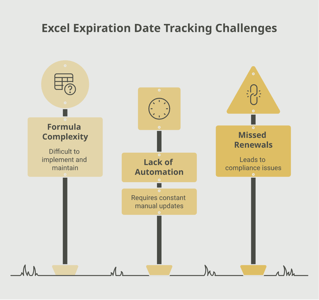
Most firms keep insurance dates in two places: the broker's email and somebody's calendar. That worked when there was one policy per business. It stops working as soon as you add a second policy, a second location, or a third client that needs a fresh certificate every quarter.
The deeper problem with manual tracking is that the policy is not the only document with a date. Each certificate of insurance issued to a client has its own expiration tied to the policy. Each endorsement (a contract amendment to the policy) has its own paperwork. Each client may have specific requirements — additional insured, waiver of subrogation, primary and non-contributory wording. A single missed detail can hold up a contract.
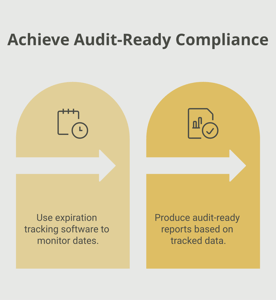
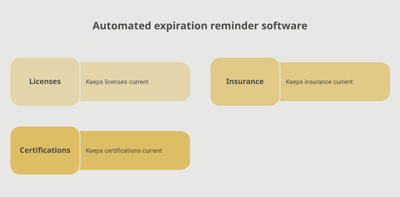
Automated credential tracking solves both halves of the problem. A platform like Expiration Reminder lets you upload the policy declaration page, set the expiration date, and configure reminders 90, 60, and 30 days in advance — to both the operations lead and the broker. You can attach certificates of insurance for each client, run a single audit report that shows the status of every policy across the business, and confidently respond to procurement teams who want proof in 24 hours.
If you want a broader take on building a tracking discipline, our guide on compliance tracking and why reminders matter walks through the principles that apply to insurance and licenses alike. The investment is small; the protection is meaningful.
Key Takeaways
- Professional liability insurance (also called E&O) protects professionals against claims of negligence, mistakes, or service failures.
- It is almost always written as a claims-made policy, meaning continuous coverage matters more than coverage during the work itself.
- Letting the policy lapse can reset the retroactive date and erase coverage for past work — one of the most painful gaps in insurance.
- Many regulated professions and enterprise contracts require active coverage as a baseline condition.
- Annual renewal is the norm; price varies by profession, revenue, claims history, and limits.
- Tracking the policy is only half the job — certificates of insurance and contract endorsements each have their own renewal cadence.
- Automated credential tracking gives you one source of truth for policies, certificates, and renewal reminders.
Frequently Asked Questions
What happens if a professional liability insurance policy expires?
When a claims-made policy expires without renewal, coverage stops immediately for any new claims filed after the expiration date. Even if the underlying work was done while you were insured, a claim filed during the gap may not be covered. The other risk is that buying a fresh policy later typically resets the retroactive date, removing coverage for past work entirely. Continuous coverage is the safest path.
How long does it take to renew a professional liability policy?
If your business and risk profile have not changed materially, renewal can take just a few days — your broker requests updated information, the carrier confirms terms, and a new policy is issued. If you have new lines of business, a recent claim, or are switching carriers, the process can take three to six weeks. Start the renewal conversation 60 to 90 days before expiration.
Who is required to have professional liability insurance?
Requirements vary by state, profession, and contract. Lawyers, real estate agents, certain healthcare professionals, and licensed financial advisors are required to carry coverage (or disclose its absence) in many states. Even when not required by law, enterprise customers, government contracts, and venture investors frequently make active coverage a condition of working together.
How far in advance should I start the renewal process?
For straightforward renewals, 30 to 60 days is plenty. For complex situations — new exposures, a claim during the policy period, or shopping carriers — 90 days is more comfortable. Insurance brokers will usually reach out proactively, but waiting on them is risky. Trigger the reminder on your own calendar.
Can I work with an expired professional liability policy?
Technically, yes — but doing so exposes you to uninsured liability for any claim filed during the gap, and many client contracts treat a coverage gap as a breach. For regulated professions, working without active coverage may also violate licensing rules. Treat any lapse as urgent.
What is a retroactive date and why does it matter?
The retroactive date is the earliest date for which a claims-made policy will respond to a covered claim. As long as you renew continuously with the same retroactive date, you maintain coverage for all eligible past work. Let the policy lapse and switch carriers, and the new policy typically uses the new effective date as the retroactive date — leaving years of past work uninsured.
What is the difference between professional liability and general liability?
General liability covers bodily injury and property damage to third parties — a customer who trips in your office, for example. Professional liability covers financial harm caused by your professional services — a client who claims your advice cost them money. Most professional service businesses need both.
Do I need professional liability if I already have general liability?
In most cases, yes. General liability does not cover claims arising from professional advice, work product, or service failures. If you provide expertise to clients, professional liability is the policy that responds to the kind of claim general liability excludes.
Conclusion
Professional liability insurance is one of those policies that sits quietly in the background — until the day a client decides they are unhappy with your work. By then, whether the policy is in force, whether the retroactive date is intact, and whether the certificate of insurance is current decides how the next several months unfold. The cost of getting this right is small compared to the cost of getting it wrong.
The good news is that tracking insurance does not have to consume operational bandwidth. Automated reminders, centralized policy storage, and audit-ready reporting let you treat coverage the same way you treat any other professional obligation — something you stay on top of without thinking about it daily.
If you provide expertise to clients, professional liability is your safety net. Keeping it current is one of the most consequential administrative tasks in your business — and one of the easiest to put on autopilot.
Make sure your company is compliant
Say goodbye to outdated spreadsheets and hello to centralized credential management. Avoid fines and late penalties by managing your employee certifications with Expiration Reminder.