A Statutory Employee is a worker who is treated as an employee for Social Security and Medicare tax purposes but as an independent contractor for income tax withholding. The IRS designates specific job categories as statutory employees when they meet certain conditions, allowing them to file taxes differently than standard employees or independent contractors.
Common statutory employees include certain delivery drivers, life insurance sales agents, home workers, and traveling salespeople.
Simplify credential management
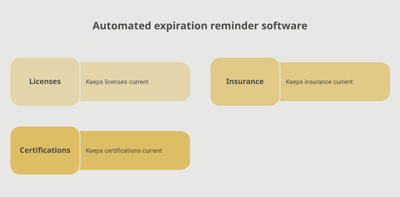
Tracking employee certifications and licenses doesn't have to be complicated. Expiration Reminder helps you send automated notification and keep your company compliant.
.png?width=2520&height=1800&name=67a0f630d9bbadc84df0deb5_AI_Scanner_1%20(1).png)
Key Facts
- Dual Tax Status: Statutory employees pay Social Security and Medicare taxes like employees but are responsible for their own income tax, typically through estimated payments.
- W-2 Classification: Employers must issue a W-2 with the “Statutory Employee” box (Box 13) checked instead of a 1099.
- Eligible Roles: Common examples include commission-based life insurance agents, route drivers, and home-based workers using employer-supplied materials.
- Business Deductions: Statutory employees can deduct work-related expenses on Schedule C, similar to independent contractors.
- Must Meet Conditions: To qualify, the worker must perform all services personally, not have a substantial investment in equipment, and have work that is integral to the business.
1. What taxes does a statutory employee pay?
They pay Social Security and Medicare taxes through employer withholding but must pay their own federal and state income taxes.
2. How is a statutory employee different from a regular employee?
Unlike regular employees, statutory employees don’t have federal income tax withheld and can deduct job expenses on Schedule C instead of Schedule A.
3. What form does a statutory employee receive?
A W-2 form with the “Statutory Employee” checkbox marked in Box 13.
4. Do statutory employees qualify for benefits?
Typically no, unless the employer voluntarily offers them. Their classification doesn’t entitle them to benefits like health insurance or retirement plans by default.
5. Can someone be misclassified as a statutory employee?
Yes, if they don’t meet the IRS’s specific criteria. Misclassification can lead to penalties for the employer.
Make sure your company is compliant
Say goodbye to outdated spreadsheets and hello to centralized credential management. Avoid fines and late penalties by managing your employee certifications with Expiration Reminder.