FTE, or Full-Time Equivalent, is a unit of measurement used to represent an employee's workload in a way that makes workloads comparable across various employment types. One FTE equals the workload of a full-time employee, typically based on a 40-hour workweek. Employers, especially in budgeting, staffing, and compliance with labor laws (like the Affordable Care Act), use FTEs to calculate the total number of full-time equivalent employees, even if the workforce includes part-time, seasonal, or variable-hour workers.
Simplify credential management
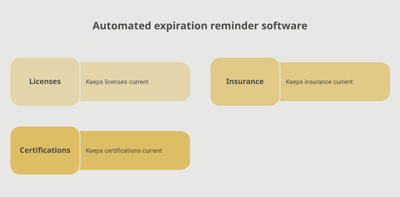
Tracking employee certifications and licenses doesn't have to be complicated. Expiration Reminder helps you send automated notification and keep your company compliant.
.png?width=2520&height=1800&name=67a0f630d9bbadc84df0deb5_AI_Scanner_1%20(1).png)
Key Facts
- Definition: One FTE usually equals one employee working 40 hours per week (2,080 hours annually).
- Calculation: Total hours worked by all employees ÷ Full-time hours (for example, 2,080 per year) = FTEs.
- Use Cases: Workforce planning, ACA compliance, benefits eligibility, grant applications, budgeting, and financial analysis.
- ACA Compliance: Businesses with 50+ FTEs are considered Applicable Large Employers (ALEs) and must provide health insurance.
- Includes Part-Time Work: Two part-time employees working 20 hours each/week = 1 FTE.
1. What does FTE stand for?
FTE stands for Full-Time Equivalent and is used to measure an employee’s workload relative to a standard full-time schedule.
2. How do you calculate FTE?
Add the total number of hours worked by all employees in a period and divide by the number of hours considered full-time (for example, 40 hours/week or 2,080 hours/year).
3. Why is FTE important for employers?
FTE helps employers manage staffing levels, budget effectively, determine benefits eligibility, and comply with laws like the Affordable Care Act (ACA).
4. Is a part-time employee considered in FTE calculations?
Yes. Part-time hours are converted into a fraction of an FTE. For example, an employee working 20 hours/week is 0.5 FTE.
5. How many hours equal 1.0 FTE?
Generally, 1.0 FTE equals 40 hours per week or 2,080 hours per year (52 weeks × 40 hours).
Make sure your company is compliant
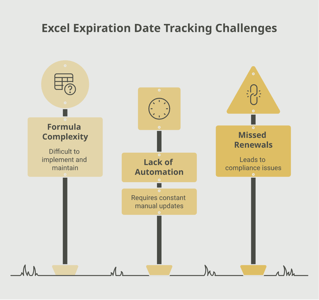
Say goodbye to outdated spreadsheets and hello to centralized credential management. Avoid fines and late penalties by managing your employee certifications with Expiration Reminder.