Introduction
If your data center runs on VMware — vSphere, vCenter, NSX, vSAN, or the broader Cloud Foundation stack — the license picture has changed more in the last two years than in the prior decade. Broadcom's acquisition of VMware ended perpetual licensing, consolidated the product portfolio, raised minimum core requirements, and introduced explicit late-renewal penalties. Keeping current matters more than ever.
This article explains what a VMware license is in the current Broadcom era, what changed, what the renewal options look like now, and what happens when subscriptions lapse. You will also see the most practical way to track VMware licenses across one cluster or many.
For most virtualization teams, the renewal itself is straightforward once the terms are negotiated. The hard part is the calendar — knowing when subscriptions come due, when core counts need recalibration, and when the 20% late-renewal penalty starts ticking.
What Is a VMware License?
A VMware license is a paid subscription that authorizes the use of VMware software for a defined term. Under Broadcom's licensing changes (which took effect in 2024 and continue through 2026), VMware is now a subscription-only product line.
According to Broadcom's licensing transition documentation, the major changes are:
- No new perpetual licenses — sales of perpetual licenses ended in early 2024. Existing perpetual license holders can continue using their licenses but cannot add new hosts or increase core counts without subscription.
- Product consolidation — the former portfolio of ~168 SKUs collapsed into four primary products: VMware Cloud Foundation (VCF), VMware vSphere Foundation (VVF), VMware vSphere Standard (VVS), and VMware vSphere Essentials Plus (VVEP).
- Minimum core counts — all new VMware products require a minimum of 72 cores per purchase or license, up from the previous 16-core minimum.
- Late-renewal penalty — a 20% surcharge applies if a subscription expires before being renewed.
- Mandatory support tied to subscriptions — support and maintenance are bundled into the subscription rather than purchased separately.
Subscription terms are typically 1 or 3 years, with multi-year terms often discounted. Renewal is processed through Broadcom-authorized partners and through the Broadcom support portal for entitlement application.
Existing support contracts on legacy perpetual licenses continue to be honored until their natural term ends, but renewals on those legacy contracts are being phased out.
Why VMware Licenses Matter for Your Organization
VMware license currency protects against three concrete risks: subscription lapse penalties, support unavailability, and operational disruption.
The 20% late-renewal penalty is a new and notable risk. If a subscription lapses and you try to renew after expiry, the renewal cost includes a surcharge. For environments with multi-hundred-core VMware footprints, this surcharge is meaningful.
From a support standpoint, a lapsed subscription means no Broadcom TAC access during incidents and no further patch/CVE updates until renewal. For workloads that rely on continuous vSphere availability, this is operationally serious.
From an operational standpoint, the new minimum-core rules mean that adding capacity to an existing environment must be done in 72-core increments — capacity planning is no longer as granular as it was.
For organizations evaluating alternatives (Hyper-V, Nutanix, KVM, public cloud), the calendar matters even more. Migration timelines must account for the current subscription expiration date and the cost of the late-renewal penalty if migration runs long.
Common Scenarios for Tracking VMware License Expiration Dates
Enterprise Data Center Virtualization
Enterprises running vSphere across dozens or hundreds of hosts must track core counts, subscription terms, and renewal dates. The post-Broadcom model has driven many organizations to reassess their VMware footprint.
Multi-Cluster, Multi-Site Operations
Organizations with multiple VMware clusters across data centers, branch sites, or colocation facilities need centralized license tracking — particularly with the new 72-core minimums affecting how each environment is sized.
Managed Service Providers and Hosting
MSPs and hosting providers running VMware for customers face multiplied complexity. Customer SLAs typically require active VMware support, and renewals must be coordinated across many tenants.
Migration-in-Progress Environments
Many organizations are evaluating or executing migrations away from VMware (to Hyper-V, Nutanix, KVM, OpenStack, or public cloud) in response to Broadcom's licensing changes. These environments need careful renewal management — paying for a renewal you would not have wanted, or missing one and triggering the late-renewal penalty.
Compliance-Driven Industries
Healthcare, finance, government, and other regulated industries need active VMware support as part of broader change-management and operational discipline.
How VMware License Tracking Benefits Your Organization and Operations Teams
A reliable tracking program produces measurable benefits.
For the company, current subscriptions avoid the 20% late-renewal penalty, preserve support access, and ensure the environment stays patchable. They also support clean audit posture.
For operations and virtualization teams, the renewal calendar becomes predictable. Migration evaluations can happen with adequate lead time. Capacity recalculations against 72-core minimums can be planned rather than scrambled.
For finance, accurate license tracking supports better budgeting and stronger negotiating posture at renewal time.
How to Track VMware License Expiration Dates
The Broadcom support portal shows entitlements for active subscriptions. Partners (resellers authorized for Broadcom/VMware) typically reach out 90–120 days before renewal.
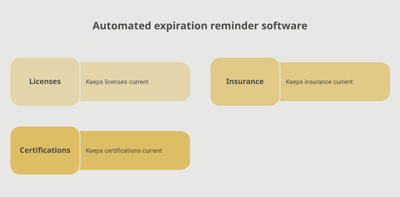
A dedicated tracking platform like Expiration Reminder stores each VMware subscription with its product (VCF, VVF, VVS, VVEP), core count, expiration date, supporting purchase order, and responsible owner. Reminders fire automatically before expiration.
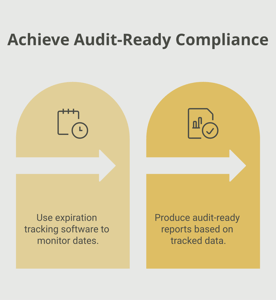
Key features include automated reminders at multiple intervals (120, 90, 60, 30 days — VMware renewals often need lead time for capacity recalculation and migration evaluation), document storage for contracts and entitlement records, dashboard views by environment, product, or expiry window, audit-ready reports for compliance and finance, and the ability to log new expiration dates in one step.
Key Takeaways
- VMware is now subscription-only under Broadcom — perpetual license sales ended in early 2024.
- The portfolio consolidated to four primary products: VCF, VVF, VVS, and VVEP.
- All new licenses require a minimum 72 cores per purchase.
- A 20% late-renewal penalty applies if subscriptions are renewed after expiry.
- Support is now bundled into the subscription rather than purchased separately.
- Existing perpetual support contracts are honored until natural term but renewals are phased out.
- Automated tracking with reminders is essential to avoid the late-renewal surcharge.
Frequently Asked Questions
Can I still buy perpetual VMware licenses?
No. Broadcom ended perpetual license sales in early 2024. All new purchases are subscription-only.
What are the four current VMware products?
VMware Cloud Foundation (VCF), VMware vSphere Foundation (VVF), VMware vSphere Standard (VVS), and VMware vSphere Essentials Plus (VVEP). The previous ~168 SKUs collapsed into this short list.
What is the late-renewal penalty?
If a subscription lapses and is renewed after expiry, a 20% surcharge applies to the renewal cost. The penalty is a strong incentive to renew on time.
What is the 72-core minimum?
All new VMware license purchases require a minimum of 72 cores per purchase or license, up from the previous 16-core minimum. This affects both initial purchases and capacity expansions.
What happens to my existing perpetual licenses?
They continue to work; you can still use them for existing hosts and core counts. However, you cannot add new hosts or increase core counts without purchasing a subscription, and renewing support on perpetual licenses is being phased out.
How long are VMware subscriptions?
Typically 1 or 3 years. Multi-year terms often include discounts.
Where can I see my VMware entitlements?
In the Broadcom support portal, under your account's subscription and entitlement views.
Can I migrate off VMware to avoid these changes?
Many organizations are evaluating migration to Hyper-V, Nutanix, KVM, OpenStack, or public cloud. Migration planning must account for the current VMware subscription expiration to avoid the late-renewal penalty if the migration runs long.
Conclusion
VMware licensing has changed dramatically under Broadcom — perpetual licensing is gone, the portfolio is simpler but more rigid, and the late-renewal penalty makes the calendar matter more than it did before. The substantive work — evaluating the new bundles, recalculating core counts, considering alternatives — sits with virtualization and infrastructure teams. The administrative work — knowing every subscription's expiration date and acting before the 20% penalty kicks in — is where most teams now need help most.
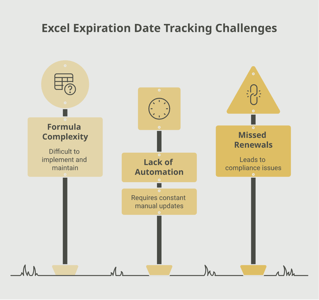
If your team tracks VMware subscriptions through the Broadcom portal, partner emails, or a spreadsheet, you already know how easy it is for a renewal to land before you are ready. A purpose-built tracking platform like Expiration Reminder centralizes every subscription, sends reminders before each expiration date, stores the supporting documents, and produces audit-ready reports the moment anyone asks.
Plan the renewals, avoid the penalties, and let the system handle the calendar.