Trade License: What It Is, Who Needs It & How to Track Expiration Dates
What Is a Trade License?
A trade license is a government-issued credential that authorizes an individual to perform work in a specific skilled trade. Common trades that require licensure include electrical work, plumbing, HVAC (heating, ventilation, and air conditioning), fire protection, gas fitting, and elevator installation. The license confirms that the holder has met education, experience, and examination requirements established by the state, county, or municipality that issues it.
Types of Trade Licenses
Trade licenses are typically organized into tiers that reflect increasing levels of skill and responsibility:
- Apprentice License — Allows an individual to perform trade work under the direct supervision of a licensed journeyman or master. Usually tied to an active apprenticeship program.
- Journeyman License — Granted after completing an apprenticeship or meeting equivalent experience requirements (typically three to five years) and passing a trade-specific examination. A journeyman can work independently but generally cannot pull permits or supervise apprentices without additional authorization.
- Master License — The highest tier, requiring additional experience beyond journeyman status (often two to four more years) and a more comprehensive exam. Master licensees can pull permits, supervise other tradespeople, and operate their own contracting businesses in most jurisdictions.
- Contractor License — Required in many states for individuals or companies that contract directly with property owners. May be a general contractor license or a specialty contractor license tied to a specific trade classification (for example, California's C-10 for electrical, C-36 for plumbing, or C-20 for HVAC).
Issuing Authorities
Trade licenses are issued at the state, county, or municipal level, and requirements vary significantly by jurisdiction. Some states regulate trades through a single state licensing board, while others delegate authority to local jurisdictions. For example, California's Contractors State License Board (CSLB) administers contractor licenses statewide, while Texas does not have a state-level general contractor license, leaving regulation to cities and counties.
Validity and Renewal Cycles
Most trade licenses are valid for one to four years, with two-year renewal cycles being the most common. Renewal typically requires completing continuing education (CE) hours, paying a renewal fee, and in some cases demonstrating continued work experience. CE requirements range from 3 to 24 hours per renewal cycle depending on the state and trade. Renewal fees generally range from $50 to $300, though some master and contractor licenses carry higher fees.
Why Trade Licenses Matter for Your Organization
For construction firms, property management companies, facility maintenance teams, and any organization that employs or contracts with skilled tradespeople, trade license compliance is not optional. Here is why it demands your attention.
Legal Compliance and Permitting
Most jurisdictions require that permitted work be performed by or under the supervision of a licensed tradesperson. If your organization pulls permits for electrical, plumbing, or HVAC work, the performing tradesperson's license must be current at the time the work is completed and inspected. An expired license can void the permit, requiring rework and re-inspection at your expense.
Financial Risk
Penalties for unlicensed trade work are substantial and vary by state. In California, performing work without a valid contractor license is a misdemeanor punishable by fines up to $5,000 and up to six months in jail for repeat offenses. In Florida, unlicensed contracting can carry fines up to $10,000 per offense. Even in states with lighter penalties, the indirect costs—project delays, permit revocation, and contract disputes—can be significant.
Insurance and Bonding
Most commercial general liability and workers' compensation policies require that employees performing licensed trade work hold valid credentials. If a worker with an expired license causes property damage or is injured on the job, your insurer may deny the claim on the grounds that the work was performed by an unqualified individual. Surety bonds, which are often required for contractor licenses, may also be impacted if the underlying license lapses.
Client and Contract Requirements
General contractors, property owners, and government agencies routinely require proof of current trade licenses as a condition of contract award or subcontractor approval. An expired license can disqualify your firm from bidding on new work and may constitute a breach of existing contracts, exposing you to termination and potential damages.
Common Scenarios for Tracking Trade License Expiration Dates
Trade license tracking is a challenge because of the sheer variety of jurisdictions, trades, and renewal timelines involved. Here are five scenarios where proactive tracking is essential.
1. Construction Companies Managing Field Crews
A mid-size electrical contractor employs 40 journeyman and master electricians across three states. Each state has different renewal cycles, CE requirements, and fee schedules. The operations manager needs to know, at a glance, which licenses are expiring in the next 90 days so the company can schedule CE courses, submit renewal applications, and ensure no technician is dispatched to a jobsite with an expired credential.
2. HR Departments Onboarding Skilled Workers
When a new plumber or HVAC technician joins your team, HR must verify that their trade license is current and enter the expiration date into the company's tracking system. Without a centralized process, license data ends up scattered across personnel files, email threads, and individual managers' spreadsheets. When renewal time comes, no single person has a complete picture of what is due and when.
3. General Contractors Verifying Subcontractor Compliance
A general contractor on a commercial building project uses six specialty subcontractors—electrical, plumbing, HVAC, fire sprinkler, elevator, and roofing. Before each subcontractor begins work, the GC must verify that the performing tradesperson's license is current in the jurisdiction where the project is located. If a subcontractor's license expires mid-project, the GC bears compliance risk and may need to halt that portion of the work.
4. Facility Management Teams Overseeing Maintenance Staff
A hospital or university campus employs in-house maintenance technicians who hold trade licenses in plumbing, electrical, and HVAC. The facility manager is responsible for ensuring that all licensed staff maintain current credentials so that routine maintenance and emergency repairs can proceed without compliance issues. With multiple trades and staggered expiration dates, manual tracking quickly becomes unwieldy.
5. Government Agencies and Licensing Boards Conducting Audits
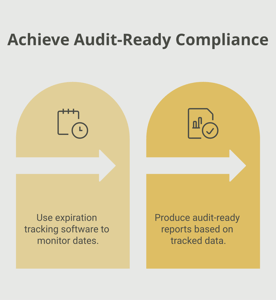
Some states conduct random audits of licensed tradespeople to verify compliance with CE requirements and renewal deadlines. If your organization receives an audit notice, you need to produce documentation showing that every licensed worker met their obligations on time. Organizations that cannot provide this documentation quickly may face fines, license suspensions, or debarment from public projects.
How Trade Licenses Benefit Your Company and Employees
Benefits for the Organization
- Bid eligibility — Current trade licenses keep your firm qualified to bid on public and private projects that require licensed tradespeople
- Regulatory compliance — Avoids fines, stop-work orders, and permit revocations that disrupt project timelines and budgets
- Insurance protection — Ensures that claims arising from licensed trade work are covered under your general liability and workers' compensation policies
- Client confidence — Demonstrates professionalism and commitment to quality workmanship, strengthening relationships with property owners and general contractors
Benefits for Employees
- Career mobility — A current trade license is a portable credential that opens doors with employers across the country
- Higher earning potential — Licensed journeymen and master tradespeople command significantly higher wages than unlicensed workers
- Professional development — CE requirements ensure that licensed tradespeople stay current with evolving codes, materials, and best practices
- Job security — Employers prioritize workers who maintain their credentials, reducing the risk of layoff during downturns
Benefits for Clients and the Public
- Safety assurance — Trade licenses confirm that the person working on your building's electrical, plumbing, or HVAC systems has demonstrated competency
- Code compliance — Licensed work is more likely to meet or exceed building codes, reducing the risk of costly corrections or safety hazards
- Consumer protection — Licensing boards provide a mechanism for filing complaints against incompetent or dishonest practitioners
How to Track Trade License Expiration Dates
The biggest challenge with trade license tracking is the diversity of requirements across jurisdictions and trades. A single organization may need to monitor electrician licenses in three states, plumbing licenses in two counties, and HVAC contractor licenses at the state level—each with different renewal dates, CE requirements, and fee schedules. Here is how to approach it.
The Spreadsheet Problem
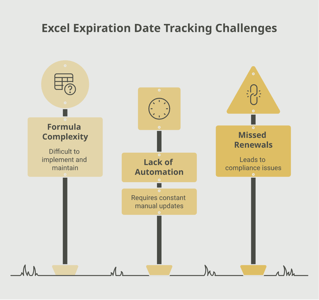
Many organizations start with a spreadsheet that lists each employee's name, trade, license number, issuing jurisdiction, and expiration date. This works when you have five or ten licensed workers. At 30 or more, the spreadsheet becomes a liability. Rows get accidentally deleted. Expiration dates are entered incorrectly. Nobody remembers to check the spreadsheet until it is too late. And when the person who maintained the spreadsheet leaves the company, institutional knowledge walks out the door.
A Better Approach: Centralized, Automated Tracking
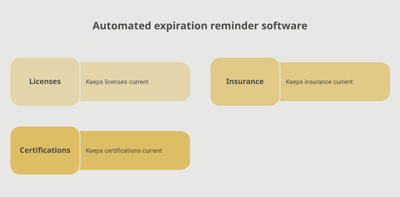
Automated expiration tracking platforms solve the spreadsheet problem by providing a single source of truth with built-in reminder workflows. With a tool like Expiration Reminder, you can store every trade license in one centralized system, configure tiered notifications (for example, 90 days, 60 days, 30 days, and 7 days before expiration), and run compliance reports showing which licenses are current, expiring soon, or already lapsed. The system sends reminders to both the license holder and their supervisor, so renewal responsibility is shared and nothing slips through the cracks.
Best Practices for Trade License Tracking
- Capture license data at the point of hire and verify it against the issuing authority's online database
- Set reminder timelines that account for CE completion, application processing, and any required inspections
- Track not just the expiration date but also CE hours completed, renewal fees paid, and any disciplinary actions
- Include subcontractor and vendor licenses in your tracking system, not just employee credentials
- Designate a single owner (such as a compliance coordinator) responsible for monitoring the system and escalating upcoming expirations
Key Takeaways
- Trade licenses are government-issued credentials required for skilled tradespeople in electrical, plumbing, HVAC, and other construction-related disciplines.
- Most trade licenses are valid for one to four years, with two-year renewal cycles being the most common, and renewal requires continuing education and fees.
- Penalties for working with an expired trade license range from fines and stop-work orders to criminal misdemeanor charges, depending on the state.
- Organizations are responsible for verifying that employees and subcontractors hold current trade licenses before they perform work on any project.
- An expired trade license can void permits, trigger insurance claim denials, disqualify your firm from bids, and breach existing contracts.
- Manual tracking with spreadsheets becomes unreliable as your workforce and geographic footprint grow.
- Automated tracking platforms with centralized databases and tiered reminder notifications provide the most reliable way to stay compliant across multiple trades and jurisdictions.
Frequently Asked Questions
What happens if a trade license expires?
If a trade license expires, the holder is generally prohibited from performing licensed work until the credential is renewed. Depending on the jurisdiction, working with an expired license can result in fines, stop-work orders, permit revocations, and even criminal charges. Most states offer a grace period or late renewal window (often 30 to 90 days), but the license holder is typically not authorized to work during that period.
How long does a trade license last?
Validity periods vary by state and trade type but most commonly range from one to four years. Two-year renewal cycles are the most prevalent. Check with your state's licensing board for the specific term that applies to your trade and jurisdiction.
How much does it cost to renew a trade license?
Renewal fees vary widely. Journeyman license renewals typically range from $50 to $200, while master and contractor license renewals may cost $150 to $400 or more. Late renewal fees are significantly higher—often 1.5 to 2 times the standard fee. CE course costs are additional and typically range from $50 to $300 depending on the provider and required hours.
What continuing education is required for trade license renewal?
CE requirements vary by state and trade. Common ranges are 3 to 24 hours per renewal cycle. Topics typically include code updates (such as changes to the National Electrical Code or Uniform Plumbing Code), safety practices, and industry-specific technical training. Some states accept online CE courses while others require in-person instruction.
Can you work with an expired trade license?
No. In virtually every jurisdiction, performing licensed trade work with an expired credential is a violation that can result in penalties for both the individual and the employing organization. Even during a grace period, the license holder is typically considered unlicensed and cannot legally perform the work.
How far in advance should you start the trade license renewal process?
Begin at least 90 days before the expiration date. This gives you time to complete any required CE courses, gather documentation, submit the renewal application, and receive the updated license. For licenses that require a surety bond renewal, start even earlier—120 days is advisable.
Do trade licenses transfer between states?
Most trade licenses do not automatically transfer between states. However, some states have reciprocity agreements that allow licensed tradespeople from certain other states to obtain a license through a streamlined process (sometimes without retaking the exam). Always check with the licensing board in the state where you plan to work to understand the specific requirements.
What is the difference between a trade license and a contractor license?
A trade license authorizes an individual to perform work in a specific trade (such as electrical or plumbing). A contractor license authorizes an individual or business to contract directly with property owners and typically involves additional requirements such as a surety bond, proof of insurance, and a business entity registration. In many states, you need both—a trade license to perform the work and a contractor license to operate the business.
Conclusion
Trade licenses are the credentials that confirm your workforce is qualified, your projects are compliant, and your organization is operating within the law. With renewal cycles that vary by state, trade, and license tier, keeping every credential current requires deliberate planning and reliable systems.
The good news is that trade license tracking does not have to be a constant source of stress. By centralizing your credential data, setting up automated reminders, and assigning clear ownership for the renewal process, you can stay ahead of every expiration date. Platforms like Expiration Reminder are built specifically for this purpose—giving you one secure place to track every license, set tiered notifications, and generate audit-ready reports whenever you need them.
Your tradespeople have invested years of training and experience to earn their licenses. Support them by making sure those credentials always stay current, so they can focus on what they do best—building, repairing, and maintaining the systems that keep our buildings safe and functional.
Make sure your company is compliant
Say goodbye to outdated spreadsheets and hello to centralized credential management. Avoid fines and late penalties by managing your employee certifications with Expiration Reminder.