Using Reminders to Streamline Procurement and Vendor Relations
-1.png)
The procurement director noticed the invoice before the contract. A SaaS vendor had just billed for another year - at a rate 18% higher than the previous term. When she checked the agreement, she found an auto-renewal clause that had triggered 30 days earlier. The window to renegotiate had passed. There was nothing to be done.
That one missed deadline cost her company tens of thousands of dollars in unnecessary spend. Not because anyone was careless. Because no reminder system existed to flag the window before it closed.
Procurement and vendor management run on deadlines. Contracts expire, insurance certificates lapse, service agreements roll over, and notice periods click by. When those dates are managed manually - scattered across calendars, spreadsheets, and individual inboxes - things slip. When they're tracked with automated reminders, the entire function operates with far more control.
Why Vendor Contract Deadlines Are So Easy to Miss
Procurement teams manage a lot of contracts. A mid-sized company might have hundreds of active vendor agreements at any given time, each with its own renewal date, notice period, and terms. Tracking all of those manually is genuinely difficult — and the consequences of missing one are rarely small.
According to research from Sirion, poor contract management costs companies up to 9% of annual revenue. The Boston Consulting Group has noted that 20% of potential revenue can vanish due to missed amendments, sloppily executed contract terms, or auto-renewal triggers that no one caught in time.
And there's a visibility problem on top of that. Research shows that 71% of companies cannot locate 10% or more of their contracts. When documents are stored inconsistently — in individual email accounts, shared drives with no structure, or physical filing systems — it's almost impossible to maintain a complete picture of your obligations and upcoming deadlines.
How Automated Reminders Change the Procurement Equation
The solution isn't more staff or more diligent calendar management. The solution is a system that watches the dates for you and alerts the right people at the right time — without anyone having to remember to check.
Teams that automate renewal alerts report up to 90% fewer missed deadlines and 50% faster review cycles, according to research compiled by Spendflo. Most organizations also see 5–15% cost reductions on renewed contracts in the first year, simply because they now have enough lead time to review, compare, and renegotiate before the deadline arrives.
Beyond Deadlines: How Reminders Improve Vendor Relationships
It's easy to think of contract reminders purely as a risk-reduction tool. But they also improve how your organization shows up as a partner to your vendors.
When you initiate renewal conversations early, vendors experience you as an organized, proactive partner. That credibility gives you more leverage in negotiations and often results in better terms. Vendors are more willing to work on pricing or service improvements when they feel the relationship is well-managed and valued.
Contrast that with the vendor who gets a frantic call two weeks before contract expiration asking to rush through a renewal. That dynamic shifts the power balance — and typically, not in your favor.
Vendor Compliance Requirements
Many organizations require vendors to maintain specific documents: certificates of insurance, business licenses, safety certifications, or other credentials as a condition of the relationship. Tracking those vendor documents is just as important as tracking your own internal compliance.
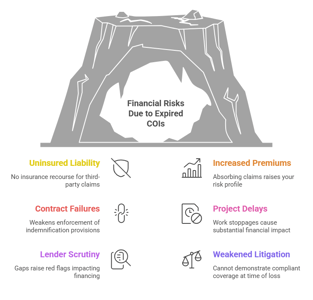
When a vendor's COI expires and no one notices, your organization may be exposed to liability the moment anything goes wrong. A systematic reminder process — triggered by the document's expiration date, not someone's memory — ensures those requirements stay current throughout the vendor lifecycle.
Building Your Procurement Reminder System: A Step-by-Step Plan
Here's how to build a functional vendor reminder system, whether you're starting from scratch or improving what you already have.
Step 1: Centralize All Vendor Contracts and Documents
Before you can track anything, everything needs to be in one place. Gather all active vendor agreements, COIs, and compliance documents into a single system. A centralized repository is the foundation everything else builds on.
Step 2: Define Standard Metadata for Every Contract
For each vendor agreement, capture: vendor name, contract value, start and end dates, renewal conditions, notice period, auto-renewal clauses, contract owner, and any compliance document requirements. Consistent metadata is what makes automation possible. If the data isn't there, the reminders can't fire.
Step 3: Set Your Reminder Cadence
Based on contract value and complexity, define when reminders should go out. High-value agreements warrant 120-day windows. Standard service contracts typically need 60–90 days. Make these defaults in your system so they apply automatically to every new contract entered.
Step 4: Assign Contract Owners
Every contract needs a named owner who receives reminders and is responsible for driving the renewal process. Without ownership, reminders land in a shared mailbox and get ignored. Ownership makes accountability explicit.
Step 5: Configure Escalation Paths
If a contract owner doesn't act on a reminder within a set window, the next reminder should copy their manager or the procurement lead. Escalation paths ensure nothing stalls due to someone being out of office, overwhelmed, or simply slow to respond.
Step 6: Track Vendor Compliance Documents Separately
Vendor COIs, licenses, and certifications should be tracked alongside (but distinct from) the contract itself. Set expiration reminders for these documents and notify both your team and the vendor when renewal is needed.
Step 7: Review and Improve Quarterly
Once a quarter, review your vendor portfolio. Check which contracts are coming up for renewal in the next six months, which vendor compliance documents are nearing expiration, and whether your reminder cadence is working. Adjust as needed.
Tools like Expiration Reminder are purpose-built for this kind of systematic tracking — giving procurement teams a centralized view of every vendor document, every renewal date, and every outstanding action, all in one place. If your current process relies on spreadsheets or calendar reminders, it's worth seeing what a dedicated platform can do. Start a free trial today and bring structure to your vendor management from day one.
Connecting Reminders to Broader Procurement Strategy
A well-run reminder system isn't just an operational convenience — it feeds directly into procurement strategy. When you know every renewal date in advance, you can plan your vendor review calendar intentionally. You can group renewals to negotiate bundled deals. You can time competitive bids to coincide with major contract expirations. You can build a vendor performance review cadence that informs renegotiation conversations.
None of that strategic work is possible when the team is constantly reacting to contracts that are about to expire. The runway that reminders create is what makes strategic procurement possible.
According to Gatekeeper, organizations with mature contract renewal processes see 15–30% cost reductions on renewed contracts. That's not just efficiency — it's direct bottom-line impact that comes from having enough time to make thoughtful decisions.
Frequently Asked Questions
What's the difference between contract reminders and contract management software?
Contract reminders are one feature within the broader category of contract management. A reminder system specifically focuses on alerting stakeholders about upcoming expiration dates, notice periods, and required renewals. Full contract management software may also include document creation, e-signature workflows, clause libraries, and reporting. For organizations primarily focused on tracking renewals and expirations, a purpose-built reminder platform often provides better value than a complex CLM system.
How early should we start the renewal process for high-value vendor contracts?
For high-value or strategically important vendor agreements, 120 days is a reasonable minimum. This gives your team time to evaluate performance, identify alternatives, prepare a competitive bid if needed, and enter negotiations with enough runway to reach a good outcome. Waiting until 30 days out — which is when many organizations start — removes almost all of your leverage.
What vendor documents should we track beyond the main contract?
At a minimum, track certificates of insurance (COIs), business licenses, and any safety or quality certifications required by your vendor agreements or regulatory requirements. Depending on your industry, you may also need to track OSHA certifications, professional licenses, and training credentials for vendor employees who work on your sites or with your customers.
Can reminder systems work for vendor compliance documents, not just contracts?
Absolutely. In fact, vendor compliance documents often have shorter renewal cycles and stricter consequences for lapses than the contracts themselves. A good tracking platform lets you set expiration reminders for COIs, licenses, and certifications separately from the contract expiration — and notify both your procurement team and the vendor when renewal is needed.
What if we use spreadsheets to track vendor contracts? Is that sufficient?
For a very small vendor portfolio (under 10–15 contracts), a well-maintained spreadsheet may be workable. But spreadsheets don't send reminders automatically, they're prone to errors, and they provide no audit trail. As your vendor portfolio grows, the administrative burden and risk of manual tracking escalates quickly. Most procurement teams find that the switch to a dedicated platform pays for itself within months through a combination of time savings and avoided missed-deadline costs.
How do we handle vendors who are slow to renew their compliance documents?
Automate your follow-up sequence. Set initial reminders 90 days before a vendor's COI or certification expires, then follow-up reminders at 60 and 30 days. Configure your system to copy vendor contacts directly on those reminders so they receive the same alerts your team does. If a document still hasn't been renewed by the 30-day mark, your escalation path should kick in — involving account management or procurement leadership to push for resolution before the gap creates a problem.
PS: Every day a vendor contract sits unreviewed past its renewal window is a day you've lost negotiating leverage. With automated reminders in place, your procurement team never has to find out the hard way that a deadline has passed.