Introduction
If your business has a website, an API, an email server, or any service that uses HTTPS, an SSL/TLS certificate is the difference between an encrypted, trusted connection and a "Not Secure" browser warning that drives users away. Certificate lifetimes have shortened dramatically over the last decade, and they are about to shorten dramatically again — making the certificate calendar one of the most consequential parts of any modern security program.
This article explains what an SSL certificate is, the current and upcoming validity limits, what happens when certificates expire, and the most practical way to track certificate expirations across a portfolio of services.
For most security and operations teams, issuing the certificate is well understood. The hard part is the calendar across dozens or hundreds of certificates, each with its own renewal date and its own dependency on automation.
What Is an SSL/TLS Certificate?
An SSL/TLS certificate is a digital file issued by a publicly trusted Certificate Authority (CA) that binds a domain name to a cryptographic public key, allowing browsers and clients to verify the identity of a server and establish encrypted communication.
Despite the common name, modern certificates use the TLS protocol (the successor to SSL). The term "SSL certificate" persists for familiarity reasons.
Certificate types include:
- Domain Validation (DV) — proves control of a domain. Issued in minutes; used for most websites.
- Organization Validation (OV) — verifies the organization behind the domain. Used for commercial and ecommerce sites.
- Extended Validation (EV) — the highest validation level, requiring extensive organizational verification.
- Wildcard — covers a primary domain and all immediate subdomains (e.g., *.example.com).
- Multi-Domain (SAN) — covers multiple specific domains in one certificate.
Validity periods have shortened progressively under CA/Browser Forum decisions:
The trend is clear: certificates are getting shorter, and manual renewal is no longer practical for any portfolio of meaningful size. Automation (ACME, certificate lifecycle management platforms) is increasingly the only sustainable approach.
When a certificate expires, browsers and clients display security warnings, API integrations fail, email may bounce, and customer trust evaporates. The disruption is immediate and visible.
Why SSL Certificate Currency Matters for Your Organization
SSL certificate currency protects against three concrete risks: customer trust loss, integration failure, and compliance gaps.
From a customer trust standpoint, an expired certificate triggers a browser warning that frightens visitors away. For ecommerce, lead-gen, and brand-critical sites, a single expired certificate can cause measurable revenue loss in the time it takes to fix.
From an integration standpoint, API calls, webhooks, mobile apps, and other automated systems often refuse to connect to a server with an expired certificate. The downstream effect can be widespread: order processing stops, payments fail, mobile apps stop working.
From a compliance standpoint, audit frameworks (PCI DSS, HIPAA, SOC 2, ISO 27001) expect TLS certificates to be current, properly issued, and tied to documented domains. A single expired internal API certificate can become an audit finding.
For organizations running modern microservice architectures with hundreds of certificates across services, environments, and domains, the calendar problem is acute. The upcoming 47-day cycle makes manual tracking effectively impossible.
Common Scenarios for Tracking SSL Certificate Expiration Dates
Public Websites and Customer-Facing Services
Every public-facing HTTPS endpoint — website, API, customer portal, SaaS product — depends on a current certificate. Customer-facing certificates have the highest visibility and the highest trust-cost of expiry.
Internal APIs and Microservices
Modern microservice architectures use TLS for service-to-service authentication. Hundreds or thousands of internal certificates can exist across services, environments, and clusters.
Mobile and IoT Backend Services
Mobile app backends and IoT services depend on TLS certificates for secure communication. An expired backend certificate can break apps in users' hands.
Email Infrastructure
SMTP TLS, IMAP/POP TLS, and mail-server identity certificates are easy to overlook and high-impact when they fail.
Compliance-Regulated Environments
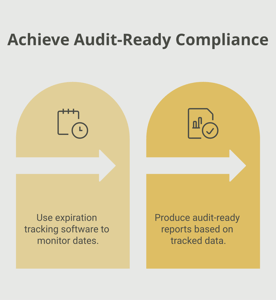
Healthcare, finance, government, and education all face explicit TLS requirements as part of broader compliance programs. Audit-ready certificate inventory is increasingly expected.
How SSL Certificate Tracking Benefits Your Organization and Security Teams
A reliable certificate tracking program produces measurable benefits.
For the company, current certificates preserve customer trust, keep integrations functional, satisfy compliance requirements, and prevent the brand damage of a visible "Not Secure" warning.
For security and operations teams, the certificate calendar becomes a planned activity rather than the cause of recurring incidents. Automation (ACME, certificate lifecycle management) can be layered on top of the tracking to reduce manual work.
For developer teams running microservice architectures, centralized certificate tracking surfaces the entire footprint and prevents siloed environments from quietly accumulating expired certificates.
How to Track SSL Certificate Expiration Dates
CA portals (DigiCert, GlobalSign, Sectigo, Let's Encrypt, Entrust, others) show issued certificates and their expiration dates for that CA. Useful for single-CA environments, less useful for multi-CA portfolios.
Certificate lifecycle management (CLM) platforms — Venafi, AppViewX, Keyfactor, DigiCert CertCentral, and others — provide deeper visibility and automation for certificate management.
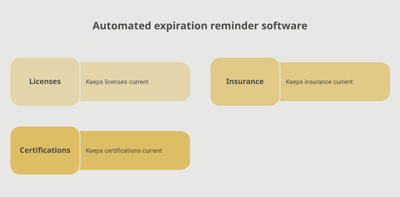
For organizations not running a dedicated CLM, a tracking platform like Expiration Reminder stores each certificate with its domain, CA, issue date, expiration date, supporting documents, and responsible owner. Reminders fire automatically before each expiration.
Key features include automated reminders at multiple intervals (60, 30, 14, 7, 1 day before expiry — short certificate lifetimes mean shorter reminder windows), document storage for certificates and private-key references, dashboard views by service, domain, or expiry window, audit-ready reports for compliance, and the ability to log new certificates in one step after each renewal.
Key Takeaways
- An SSL/TLS certificate binds a domain name to a public key, enabling encrypted HTTPS connections.
- Certificate types include DV, OV, EV, wildcard, and multi-domain (SAN).
- Maximum validity has shortened progressively: 3 years → 2 years → 397 days, with 199 days from February 24, 2026 and 47 days by 2029.
- Expired certificates cause browser warnings, API failures, email issues, and customer trust damage.
- Automation (ACME, CLM) is increasingly the only sustainable approach for portfolios of any meaningful size.
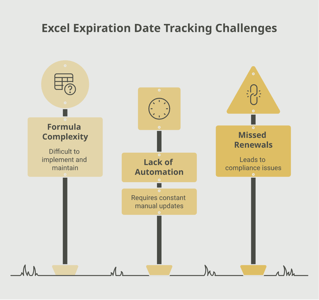
- Manual tracking via spreadsheets fails at scale; automated tracking with reminders is the reliable approach.
Frequently Asked Questions
How long is an SSL certificate valid?
Currently up to 397 days. Starting February 24, 2026, the maximum drops to 199 days. By 2029, the maximum will drop to 47 days under approved CA/B Forum decisions.
What is the difference between SSL and TLS?
SSL was the original protocol; TLS is its successor. Modern certificates use TLS, but the term "SSL certificate" persists for familiarity.
What is the difference between DV, OV, and EV certificates?
DV (Domain Validation) proves only that the requester controls the domain. OV (Organization Validation) verifies the organization behind the domain. EV (Extended Validation) requires the most extensive verification.
What happens when an SSL certificate expires?
Browsers display security warnings that drive away visitors. APIs, webhooks, mobile apps, and other automated systems may refuse to connect. The impact is immediate and visible.
What is Let's Encrypt?
Let's Encrypt is a free, automated, publicly trusted Certificate Authority. Certificates are valid for 90 days and renewed automatically through the ACME protocol — a common pattern for modern HTTPS deployments.
Why are certificate lifetimes getting shorter?
Shorter lifetimes reduce the window during which a compromised key can be exploited and force operational maturity around certificate automation, improving overall security.
Can I renew certificates automatically?
Yes. ACME (used by Let's Encrypt and others) automates issuance and renewal. Many commercial CAs also offer automation through APIs and CLM platforms.
Should I use a wildcard certificate?
Wildcard certificates simplify management when many subdomains share the same primary domain. They also concentrate risk — compromising the wildcard's private key compromises all covered subdomains. Many organizations use wildcards for low-risk subdomains and individual certificates for high-risk services.
Conclusion
SSL/TLS certificates are the trust layer for every modern web service — and the shortening lifetimes mean the calendar matters more every year. The substantive work — issuing the certificate, deploying it, automating renewal — is well understood. The administrative work — knowing every certificate's expiration date and acting before browsers start warning users — is what most programs need help with.
If your team tracks certificates through CA portals or a spreadsheet, you already know how easy it is for one to slip past. A purpose-built tracking platform like Expiration Reminder centralizes every certificate, sends reminders before each expiration, stores the supporting documents, and produces audit-ready reports the moment anyone asks.
Keep the certificates current, keep the services trusted, and let the system handle the calendar.