Introduction
If your business runs on software — operating systems, productivity tools, CRMs, ERPs, databases, design tools, security platforms, developer tools, or any of the hundreds of specialized applications most modern organizations use — software licenses are the legal and operational foundation of that software stack. When a license lapses, the software either stops working, falls out of compliance, or quietly accumulates audit risk.
This article explains what a software license is, the major license models in use today, how renewals and auto-renew clauses typically work, and what happens when licenses lapse. You will also see the most practical way to track software licenses across an organization with dozens or hundreds of applications.
For most IT, procurement, and finance teams, ordering the right license model is well understood. The hard part is the calendar — knowing every contract's renewal date, every auto-renew notice window, and every true-up obligation across a sprawling software estate.
What Is a Software License?
A software license is a legal agreement that grants the right to use software under defined terms. The agreement specifies what the user can do with the software (install, copy, modify, distribute), what they cannot do, the duration of the rights, and any associated obligations (payment, audit, compliance).
Modern software licensing falls into several major models:
- Perpetual licensing — a one-time purchase grants indefinite use of a specific version. Updates and support typically require a separate annual maintenance contract. Treated as CapEx.
- Subscription licensing — recurring payments (monthly or annual) grant use during the subscription period; entitlement ends when the subscription ends. Treated as OpEx.
- SaaS (Software as a Service) — subscription delivered as a cloud service. The provider hosts the software; the customer consumes it.
- Enterprise Agreements — multi-year, volume-discounted commitments for large organizations, often with annual true-up obligations.
- Concurrent and named-user licensing — concurrent allows shared seats based on simultaneous users; named-user assigns specific seats to specific individuals.
- Open source — free use under permissive (MIT, Apache, BSD) or copyleft (GPL, LGPL, AGPL) terms, often with commercial enterprise tiers offering support and indemnification.
Most enterprise software vendors have moved or are moving to subscription-only models, and many contracts include auto-renewal clauses requiring notice of termination 60–90 days before the renewal date.
When a license expires, consequences vary by model:
- Perpetual: software keeps working but loses access to updates, support, and (sometimes) new features.
- Subscription: software typically deactivates after a grace period; SaaS access is suspended.
- EA/term: contract becomes non-renewing; SLAs and entitlements end on schedule.
Why Software Licenses Matter for Your Organization
Software license currency protects against three concrete risks: workflow disruption, audit exposure, and unbudgeted commitments.
From a workflow standpoint, lapsed software typically stops working or stops being supported, with downstream effects on the teams that depend on it.
From an audit standpoint, vendors routinely audit deployed license counts against entitlements. Over-deployment triggers true-up fees, often applied retroactively. Annual reconciliation is a contractual requirement for many enterprise contracts.
From a commitment standpoint, auto-renewal clauses in many contracts mean that missing the termination notice window locks you into another full term — sometimes years.
For organizations with sprawling software estates (hundreds of SaaS subscriptions, multiple ERPs, design tools, security platforms, developer subscriptions), the calendar is the single most common point of failure in software asset management.
Common Scenarios for Tracking Software License Expiration Dates
Enterprise Software Estates
Large enterprises run hundreds of software contracts across ERP, CRM, HRIS, marketing automation, design, security, developer tools, and more. Each has its own term, auto-renew clause, and true-up obligation.
SaaS-Heavy Modern Businesses
SaaS-first organizations may run 100+ subscriptions across the company. Departmental purchases ("shadow IT") often slip outside central tracking until renewal time.
Mid-Market IT and Procurement
Mid-market organizations face the same calendar problem at smaller scale. The procurement team often takes ownership of renewal tracking, but the contract evaluations require input from multiple departments.
Managed Service Providers
MSPs delivering software-as-a-service on behalf of customers manage many tenants with overlapping contract cycles.
Compliance-Regulated Industries
Healthcare, finance, government, and education face software license audits as part of broader compliance frameworks. Lapsed maintenance, missing audit-trail data, and unreconciled true-ups all create findings.
How Software License Tracking Benefits Your Organization and IT Teams
A reliable tracking program produces measurable benefits.
For the company, current licenses keep critical workflows running, satisfy audit and true-up requirements, prevent unintended auto-renewal lock-ins, and produce cleaner financial records.
For IT, procurement, and finance teams, the renewal calendar becomes a planned activity. Termination notice windows are captured. True-up reconciliations happen with adequate lead time.
For executive leadership, accurate software license data supports better budgeting and stronger vendor negotiation posture.
How to Track Software License Expiration Dates
Many organizations track licenses in IT asset management (ITAM) or software asset management (SAM) tools. These work well when integrated with procurement and the actual contracts, less well when they exist as siloed inventory.
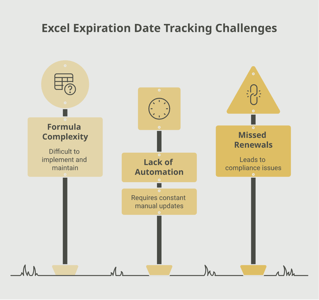
Spreadsheets remain common, particularly in mid-market environments. They centralize data but do not actively prompt anyone before expiry.
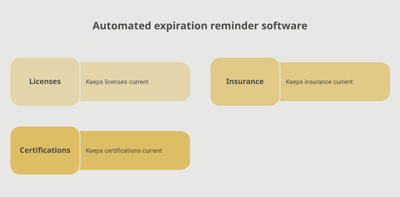
A dedicated tracking platform like Expiration Reminder stores each software contract with its vendor, product, seat count, expiration date, auto-renewal clause, termination-notice deadline, and supporting documents. Reminders fire automatically before each expiration.
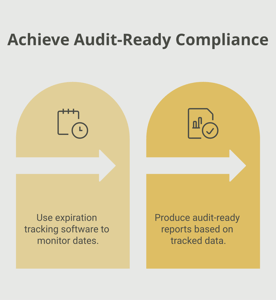
Key features include automated reminders at multiple intervals (120, 90, 60, 30 days — software renewals often need lead time for evaluation and negotiation), document storage for contracts and quotes, dashboard views by vendor, department, or expiry window, audit-ready reports for software asset management, and the ability to log new expiration dates in one step.
Key Takeaways
- A software license is a legal agreement granting the right to use software under defined terms.
- Major models include perpetual, subscription, SaaS, enterprise agreement, concurrent, named-user, and open source.
- Most enterprise software has moved or is moving to subscription-only.
- Auto-renewal clauses often require 60–90 days notice of termination before the renewal date.
- True-up obligations require annual reconciliation between deployed and contracted seats.
- Manual tracking via spreadsheets fails at scale; automated tracking with reminders is the reliable approach.
Frequently Asked Questions
What is the difference between perpetual and subscription licensing?
Perpetual licensing is a one-time purchase granting indefinite use of a specific version, typically with a separate annual maintenance contract for updates and support. Subscription licensing is a recurring fee for use during the subscription period; entitlement ends when the subscription ends.
What is SaaS licensing?
SaaS is a subscription-licensing model in which the software is delivered as a cloud service. The vendor hosts and operates the software; the customer accesses it over the internet for a recurring fee.
What is a true-up?
A true-up is the annual reconciliation between contracted seats and actually deployed seats. If deployment exceeds the contract, additional fees apply for the overage — often retroactively.
What is an auto-renewal clause?
An auto-renewal clause in a software contract automatically extends the agreement for another term unless the customer provides written notice of termination by a specified deadline (often 60–90 days before the renewal date).
What happens when a software license expires?
Consequences vary by model. Perpetual licenses keep working but lose updates and support. Subscription and SaaS access is typically deactivated after a grace period. Enterprise Agreements end on schedule with no further entitlements.
What is the difference between concurrent and named-user licensing?
Concurrent licensing allows a defined number of simultaneous users — anyone in the organization can use a seat while it is free. Named-user licensing assigns specific seats to specific individuals.
How do I avoid unwanted auto-renewals?
Track every contract's termination-notice deadline, not just the renewal date. Send written notice before the deadline if you do not want to renew. Many software contracts will auto-renew even if you do not want them to unless this notice is sent.
How should I track licenses across many vendors?
Combine an IT or software asset management tool with a renewal tracker that actively prompts before expiration. The tool inventory plus active calendar reminders is the combination that survives team transitions.
Conclusion
Software licenses are the legal and operational backbone of every modern software stack. The substantive work — choosing models, negotiating terms, evaluating renewals — sits with IT, procurement, and finance. The administrative work — knowing every contract's renewal date, every termination-notice deadline, and every true-up obligation — is the part where most software asset management programs stumble.
If your team tracks software licenses through ITAM tools, spreadsheets, or scattered emails, you already know how fragile that gets across a multi-vendor environment. A purpose-built tracking platform like Expiration Reminder centralizes every contract, sends reminders before each expiration and notice deadline, stores the supporting documents, and produces audit-ready reports the moment anyone asks.
Keep the software working, manage the commitments, and let the system handle the calendar.