Introduction
If your workplace services equipment with hazardous energy — electrical, mechanical, hydraulic, pneumatic, chemical, thermal, or stored energy — lockout/tagout (LOTO) is the OSHA program that prevents the equipment from being energized while a worker is exposed. LOTO is consistently among OSHA's most cited standards, and the citations almost always trace back to gaps in training, periodic inspections, or written procedures.
This article explains what LOTO training is, the OSHA standard behind it, the annual periodic inspection requirement, and the most practical way to track LOTO training and inspection dates across a workforce.
For most safety teams, delivering LOTO training is well understood. The hard part is the calendar — knowing who has been trained, when, on what equipment-specific procedures, and when the annual periodic inspection is due for each procedure.
What Is Lockout/Tagout Training?
LOTO training is workplace training under OSHA's Control of Hazardous Energy Standard, 29 CFR 1910.147, which requires employers to control hazardous energy during servicing and maintenance of equipment.
The LOTO program has several components:
- Energy control program — written program covering procedures, training, and inspection.
- Energy control procedures — equipment-specific written procedures for shutting down, isolating, blocking, and securing energy sources.
- Locks and tags — physical devices used to lock energy-isolating mechanisms and to tag them with identifying information.
- Training — initial training and retraining requirements.
- Periodic inspections — at least annually for each energy control procedure.
Training requirements distinguish between two categories:
- Authorized employees — those who lock out or tag out machines for servicing. Receive detailed training on recognizing hazardous energy sources, types and magnitudes of energy, and methods/means to isolate and control the energy.
- Affected and other employees — those who operate or work in the area of machines under LOTO. Receive training on the purpose and use of the energy control procedure and the prohibition against attempts to restart equipment under LOTO.
OSHA does not impose a fixed annual retraining cycle, but retraining is required whenever:
- A change in job assignments occurs.
- A change in machines, equipment, or processes presents a new hazard.
- A change in energy control procedures.
- A periodic inspection reveals deviations or inadequacies.
The annual periodic inspection is a separate, mandatory requirement. The employer must inspect each energy control procedure at least annually, performed by an authorized employee other than those using the procedure being inspected. The inspection must be certified, identifying the machine, the date, the employees included, and the inspector.
When LOTO training, inspections, or procedures are missing, the consequences include OSHA citations, increased exposure to serious injury or fatality during servicing operations, and weakened legal defenses after incidents.
Why LOTO Tracking Matters for Your Organization
LOTO program currency protects against three concrete risks: OSHA citations, serious worker injuries, and weakened legal defenses.
From a regulatory standpoint, LOTO is consistently among OSHA's top-cited standards. Missing annual periodic inspections, incomplete energy control procedures, and inadequate training are common findings.
From a safety standpoint, LOTO incidents — energization during servicing — are typically catastrophic. Electrocution, crushing, amputation, and fatalities are well-documented outcomes when LOTO programs fail. The annual inspection is designed specifically to catch program drift before it leads to harm.
From a legal standpoint, documented, recent training and inspections form a key element of the employer's defense if a worker is injured. Stale records significantly weaken that defense.
For organizations with many pieces of equipment, multiple shifts, and turnover among maintenance staff, the LOTO calendar requires active management.
Common Scenarios for Tracking LOTO Training and Inspection Dates
Manufacturing and Industrial Operations
Manufacturers run LOTO programs covering every piece of equipment requiring service — production machines, conveyors, compressors, robotic cells. Each procedure needs annual inspection and the trained workers performing the lockouts need current training.
Power Generation and Utilities
Power plants, electrical utilities, and similar operations face particularly stringent LOTO requirements given the energy magnitudes involved.
Facilities Maintenance
Facilities maintenance teams working on HVAC, electrical distribution, plumbing, and building systems perform LOTO regularly. Multi-site organizations need centralized tracking.
Construction (with Special Considerations)
Construction has its own related but distinct standard (29 CFR 1926 Subpart V for electrical, others). Many construction operations apply general LOTO principles to maintenance work.
Food Processing and Packaging
Food and beverage processing plants run continuous-process equipment requiring frequent service. LOTO programs are central to safety.
How LOTO Tracking Benefits Your Organization
A reliable LOTO tracking program produces measurable benefits.
For the company, current LOTO training and inspections satisfy OSHA requirements, prevent serious worker injuries, and support clean audit posture.
For safety and EHS teams, the training and inspection calendars become predictable activities. Annual inspections are scheduled with adequate lead time. Retraining triggers are identified before they become findings.
For workers, current training and intact procedures support the basic safety expectation: that equipment cannot be energized while a worker is exposed.
How to Track LOTO Training and Inspection Dates
Learning management systems (LMS) track training completions. Computerized Maintenance Management Systems (CMMS) can track equipment-specific procedures and inspection dates.
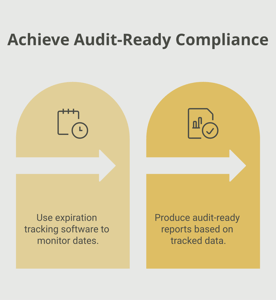
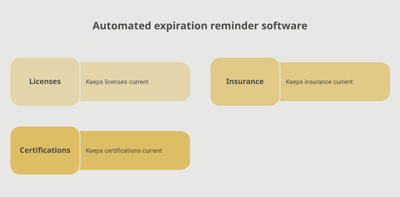
For organizations using a separate compliance tracker, a platform like Expiration Reminder stores each authorized employee with their training date, each energy control procedure with its annual inspection date, and the supporting documentation. Reminders fire automatically before each training and inspection due date.
Key features include automated reminders at multiple intervals (90, 60, 30 days before due), document storage for training records, energy control procedures, and inspection certifications, dashboard views by site, employee, equipment, or expiry window, audit-ready reports for OSHA, and the ability to log new training and inspection events in one step.
Key Takeaways
- LOTO training is required under OSHA 29 CFR 1910.147 to control hazardous energy during servicing and maintenance.
- Training distinguishes between authorized employees (who perform LOTO) and affected/other employees (who operate or work near equipment under LOTO).
- OSHA does not impose annual retraining, but retraining is required upon several trigger events.
- The annual periodic inspection is mandatory — at least once a year for each energy control procedure, performed by an authorized employee other than the user.
- Inspections must be certified, identifying the machine, date, employees, and inspector.
- LOTO incidents are typically catastrophic; the calendar is a critical safety control.
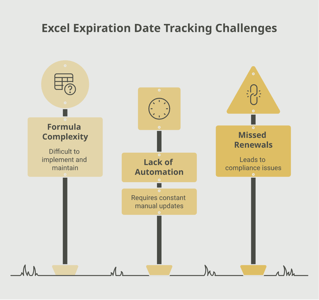
- Manual tracking via spreadsheets fails at scale; automated tracking with reminders is the reliable approach.
Frequently Asked Questions
Who is required to receive LOTO training?
Authorized employees (those who perform LOTO) receive detailed training. Affected employees (those who operate machines that are or will be under LOTO) and other employees (those working in the area) receive lighter training on the purpose and use of the program.
Is annual LOTO training required?
OSHA does not require annual training. Retraining is required upon several trigger events (job change, equipment change, procedure change, deficiencies revealed by periodic inspection). Many employers adopt annual training as best practice.
What is the annual periodic inspection requirement?
The employer must inspect each energy control procedure at least annually. The inspection is performed by an authorized employee other than those using the procedure. For lockout, the inspector reviews each authorized employee's responsibilities under the procedure with that employee.
How is the inspection documented?
The employer must certify that the periodic inspection has been performed, identifying the machine or equipment, the date of the inspection, the employees included, and the person performing the inspection.
What is the difference between lockout and tagout?
Lockout uses physical locks to secure energy-isolating mechanisms in the safe position. Tagout uses tags to warn but does not physically secure the mechanism. OSHA prefers lockout; tagout is permitted only when lockout is not feasible.
What energy sources does LOTO cover?
Electrical, mechanical, hydraulic, pneumatic, chemical, thermal, and stored energy (springs, capacitors, gravity, suspended loads).
What happens if LOTO training is missing?
OSHA citations and fines are likely. More importantly, workers servicing equipment are at significantly elevated risk of catastrophic injury.
How long should LOTO training and inspection records be kept?
OSHA does not impose a specific retention period for LOTO records, but most employers retain them for the duration of the employee's tenure plus a period thereafter to support multi-year audits and legal defenses.
Conclusion
LOTO is one of the highest-stakes safety programs in any workplace where equipment is serviced. The substantive work — writing procedures, training authorized workers, performing the annual inspection — sits with safety, maintenance, and EHS. The administrative work — knowing every worker's training date, every procedure's inspection date, and every trigger for retraining — is where most LOTO programs need help.
If your team tracks LOTO through LMS exports or spreadsheets, you already know how fragile that gets across a multi-equipment, multi-shift workforce. A purpose-built tracking platform like Expiration Reminder centralizes every training and inspection record, sends reminders before each due date, stores the supporting documents, and produces audit-ready reports the moment anyone asks.
Control the energy, train the workers, and let the system handle the calendar.