Introduction
If your organization operates in healthcare, dental, veterinary, laboratory, tattoo, body piercing, mortuary, first response, or any environment where workers may contact blood or other potentially infectious materials, infection control training is the foundation of worker safety. The federal Bloodborne Pathogens standard requires annual training, and missing it is among the most cited OSHA healthcare findings year after year.
This article explains what infection control training is, the OSHA Bloodborne Pathogens standard, the annual training requirement, the supplemental CDC and state expectations, and the most practical way to track training across a healthcare workforce.
For most safety, EHS, and HR teams in healthcare, delivering the annual training is well understood. The hard part is the calendar — knowing every employee's training due date and ensuring the documentation is ready for OSHA, Joint Commission, and CMS surveys.
What Is Infection Control Training?
Infection control training is workplace training covering the recognition and prevention of infectious disease transmission. The most consequential U.S. standard is OSHA's Bloodborne Pathogens Standard, 29 CFR 1910.1030, which requires employers to protect workers from occupational exposure to blood and other potentially infectious materials (OPIM).
The standard applies broadly: healthcare workers, first responders, laboratory staff, custodial workers in medical settings, tattoo and body-piercing artists, mortuary workers, and others with reasonably anticipated exposure to blood or OPIM.
Training under 1910.1030 must include:
- Epidemiology and symptoms of bloodborne diseases (HIV, HBV, HCV, and others).
- Modes of transmission of bloodborne pathogens.
- Explanation of the employer's Exposure Control Plan.
- Methods for recognizing tasks involving exposure.
- Use and limitations of engineering controls, work practices, and PPE.
- Hepatitis B vaccine information.
- Procedures for exposure incidents and post-exposure follow-up.
- Signs, labels, and color coding of biohazards.
OSHA requires training at the time of initial assignment and at least annually thereafter for employees with occupational exposure. Training records must be maintained for at least 3 years.
In healthcare settings, infection control training typically goes beyond the bloodborne pathogens standard to include:
- Standard and Transmission-Based Precautions (CDC guidance).
- Hand hygiene.
- Respiratory hygiene and cough etiquette.
- Sterilization and disinfection.
- Safe injection practices.
- Healthcare-associated infection (HAI) prevention.
- Outbreak response, including emerging pathogens.
Many healthcare accrediting bodies (Joint Commission, AAAHC, DNV) include infection control training in their standards. State requirements may add additional training (TB control, MRSA awareness, dialysis safety, others).
Why Infection Control Training Matters for Your Organization
Infection control training currency protects against three concrete risks: worker infection, OSHA and accreditation findings, and patient harm.
From a worker-safety standpoint, healthcare workers face documented occupational risk of bloodborne disease transmission from needlesticks, sharps injuries, and OPIM exposure. Training is the primary preventive control.
From a regulatory standpoint, OSHA 1910.1030 is one of the most cited healthcare standards. Joint Commission, CMS, and state surveys also examine training records.
From a patient-safety standpoint, healthcare-associated infections cause significant harm and cost. Training supports the broader infection-prevention program that protects patients.
For healthcare organizations of any size, the annual training calendar is a foundational operational control.
Common Scenarios for Tracking Infection Control Training Dates
Hospitals and Health Systems
Hospitals run annual infection control training across clinical, support, and contractor populations — thousands of workers per facility. The training portfolio typically includes BBP, CDC isolation precautions, hand hygiene, and emerging-pathogen modules.
Outpatient Clinics and Physician Practices
Smaller clinical settings face the same training requirements at smaller scale. Compliance often falls to a practice manager managing the calendar.
Dental and Veterinary Practices
Dental and veterinary settings have unique exposure profiles (aerosols, animal bites, dental sharps). State boards often layer additional requirements on top of federal OSHA.
Long-Term Care and Skilled Nursing
LTC and SNF settings have intense infection-control requirements driven by CMS, state surveys, and the resident population's vulnerability. Training is supplemented with state-specific modules.
Tattoo, Body Piercing, and Body Art
Body-art establishments are subject to OSHA 1910.1030 and to state-specific licensing requirements. Training is often required as a condition of practitioner licensing.
How Infection Control Training Tracking Benefits Your Organization
A reliable tracking program produces measurable benefits.
For the company, current training records satisfy OSHA, accreditation, and CMS requirements and reduce the risk of occupational and healthcare-associated infections.
For safety, EHS, infection prevention, and HR teams, the training calendar becomes predictable. Annual refreshers are scheduled with adequate lead time. New-hire onboarding includes infection control training as a structured step.
For workers, predictable training improves knowledge retention and supports a culture that takes infection prevention seriously.
How to Track Infection Control Training Expiration Dates
Learning management systems (LMS) — Relias, HealthStream, MedTrainer, KnowBe4, and others — track training completions for healthcare. Many healthcare systems integrate LMS with HRIS for centralized training records.
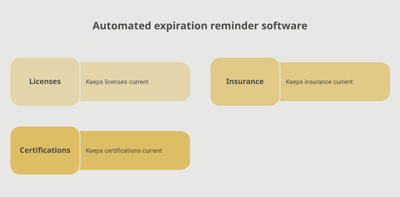
For organizations using a separate compliance tracker, a platform like Expiration Reminder stores each worker with their training history, next-due date, training program details, and supporting documents. Reminders fire automatically before each annual refresher.
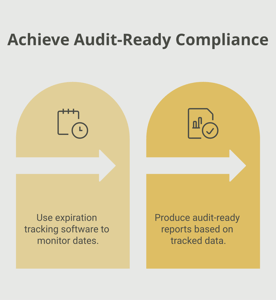
Key features include automated reminders at multiple intervals (90, 60, 30 days), document storage for training records and exposure control plans, dashboard views by site, department, or training class, audit-ready reports for OSHA and accreditation surveys, and the ability to log new training events in one step.
Key Takeaways
- Infection control training is mandated under OSHA's Bloodborne Pathogens Standard (29 CFR 1910.1030) and supplemented by CDC, accreditation, and state requirements.
- Applies broadly — healthcare, first responders, labs, custodial in medical settings, body art, mortuary, others.
- OSHA requires training at initial assignment and at least annually thereafter.
- Training records must be maintained for at least 3 years.
- Healthcare settings typically train on CDC Standard and Transmission-Based Precautions, hand hygiene, and HAI prevention in addition to BBP.
- Joint Commission, CMS, and state surveys all examine training records.
- Automated tracking with reminders is the reliable approach for healthcare workforces.
Frequently Asked Questions
How often is infection control training required?
OSHA requires Bloodborne Pathogens training at the time of initial assignment and at least once every 12 months thereafter for employees with occupational exposure.
Who needs this training?
Any employee with reasonably anticipated occupational exposure to blood or other potentially infectious materials — healthcare workers, first responders, laboratory staff, custodial workers in medical settings, body art practitioners, mortuary workers, and others.
What is OPIM?
Other Potentially Infectious Materials — body fluids (semen, vaginal secretions, cerebrospinal fluid, synovial fluid, etc.), any unfixed tissue or organ, cell or tissue cultures, and HIV-containing media or cultures.
What is an Exposure Control Plan?
A written plan required by 1910.1030 outlining the employer's policies and procedures for protecting workers from bloodborne pathogen exposure. The plan must be updated at least annually and accessible to employees.
How long must training records be kept?
OSHA requires Bloodborne Pathogens training records to be maintained for at least 3 years from the date of training.
What is the difference between BBP training and broader infection control training?
BBP training is OSHA-mandated for occupational exposure. Broader infection control training (CDC precautions, hand hygiene, HAI prevention) is often required by accreditation bodies, CMS, or state regulators on top of OSHA.
Does Joint Commission require specific infection control training?
Joint Commission accreditation standards expect documented infection prevention training as part of the broader infection prevention program. Specific content and frequency are not always prescribed at the Joint Commission level but are expected to meet OSHA, CDC, and state requirements.
How do organizations track training across large healthcare workforces?
Combinations of LMS, HRIS, and dedicated tracking platforms. The system that actively reminds before each annual refresher is the one that prevents most lapses.
Conclusion
Infection control training is the foundational safety control for any workforce handling blood, body fluids, or infectious materials. The substantive work — delivering effective training, maintaining the Exposure Control Plan, supporting the infection prevention program — sits with safety, infection prevention, and HR. The administrative work — knowing every worker's training due date and producing the records on demand — is where most healthcare programs need help.
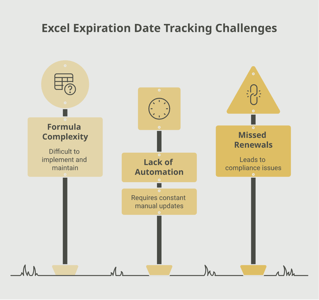
If your team tracks infection control training through LMS or HRIS exports, you already know how easy it is for one worker's annual training to slip past. A purpose-built tracking platform like Expiration Reminder centralizes every training record, sends reminders before each annual due date, stores the supporting documents, and produces audit-ready reports the moment anyone asks.
Protect the workforce, satisfy the surveys, and let the system handle the calendar.