Introduction
If your workplace uses chemicals — paints, solvents, cleaners, lab reagents, fuels, adhesives, agricultural chemicals, or any of the thousands of hazardous substances common in industrial, healthcare, education, and commercial settings — Hazard Communication (HazCom) is the OSHA program that tells workers what they are working with and how to handle it safely. HazCom is one of OSHA's most cited standards year after year, largely because of training and documentation gaps.
This article explains what HazCom training is, the OSHA standard behind it, the training and SDS requirements, and the most practical way to track HazCom training dates across a workforce.
For most safety teams, delivering HazCom training is well understood. The hard part is the calendar — knowing who has been trained, when, on what, and when the next refresher is due (especially in states that require annual training).
What Is HazCom Training?
HazCom training — formally training under OSHA's Hazard Communication Standard, 29 CFR 1910.1200 — provides workers with the information they need to protect themselves from hazardous chemicals in their workplace. The standard implements the Globally Harmonized System (GHS) of classification and labeling of chemicals.
The HazCom program has four pillars:
- Written HazCom program — a written document covering hazard identification, labeling, SDS management, training, and program responsibilities.
- Hazard identification and labeling — primary container labels with pictograms, signal words, hazard statements, and precautionary statements; workplace labels for secondary containers.
- Safety Data Sheets (SDS) — 16-section SDS for each hazardous chemical, accessible to employees during all work shifts.
- Employee training — information and training on hazardous chemicals in the work area.
Under federal OSHA, employees must be trained at the time of initial assignment and whenever a new chemical hazard is introduced into the work area. The federal standard does not require annual refresher training. However, several state-plan states — including California, Michigan, Minnesota, and others — require annual HazCom training.
Many employers adopt annual refresher training as best practice regardless of state requirements, because it supports knowledge retention and clean audit records.
When HazCom training is missing, incomplete, or out of date, the consequences include OSHA citations, increased incident rates, and weakened legal defenses after a chemical exposure incident.
Why HazCom Tracking Matters for Your Organization
HazCom training currency protects against three concrete risks: OSHA citations, chemical exposure incidents, and weakened legal defenses.
From a regulatory standpoint, HazCom violations are consistently among OSHA's top-cited standards. Missing training records, outdated SDS, and inadequate labeling are the most common findings.
From a safety standpoint, chemical exposures, fires, and chemical-related injuries are largely preventable through proper hazard awareness and handling. Training is the primary control between workers and hazardous chemicals.
From a legal standpoint, documented, recent training is a key element of an employer's defense if a worker is injured by a hazardous chemical. Stale or missing training records weaken that defense.
For organizations operating in multiple states, the variation in annual-training requirements means a federal-only program may not satisfy California, Michigan, or Minnesota requirements.
Common Scenarios for Tracking HazCom Training Expiration Dates
Manufacturing and Industrial
Manufacturers using solvents, paints, adhesives, cutting fluids, cleaners, and process chemicals run HazCom programs covering every hazardous substance on-site. Training scope and frequency vary by department.
Healthcare and Laboratory
Hospitals, clinics, and labs use hazardous drugs, sterilants, anesthetics, lab reagents, and disinfectants. HazCom requirements overlap with hazardous-drug standards (USP 800) and lab-specific requirements.
Construction
Construction sites use solvents, adhesives, sealants, paints, and many other chemicals. HazCom training is required for workers, with site-specific updates as new chemicals arrive.
Cleaning Services and Janitorial
Cleaning vendors use a wide range of chemicals — disinfectants, degreasers, glass cleaners, floor strippers. HazCom training is required for staff handling these chemicals.
Schools and Universities
Educational institutions use chemicals in science labs, art programs, maintenance shops, and food service. Each area has its own HazCom requirements.
How HazCom Tracking Benefits Your Organization
A reliable HazCom tracking program produces measurable benefits.
For the company, current training records satisfy OSHA and state-plan requirements, reduce incident rates, and support audit-ready compliance documentation.
For safety and HR teams, the training calendar becomes predictable. Refreshers are scheduled with adequate lead time. New-hire training fits into a structured process.
For workers, consistent and current training improves chemical safety knowledge, reduces injuries, and supports a culture where chemical hazards are taken seriously.
How to Track HazCom Training Expiration Dates
Learning management systems (LMS) track training completions and can flag upcoming refresher dates.
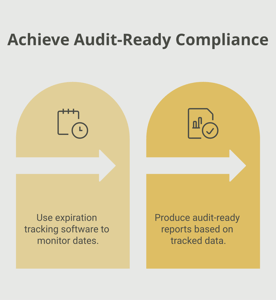
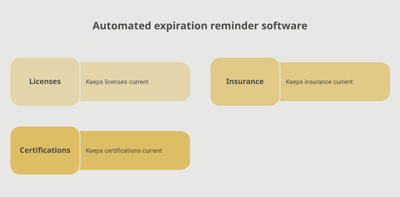
For organizations using a separate compliance tracker, a platform like Expiration Reminder stores each worker with their HazCom training completion date, next-due date (annual where required), training records, and responsible owner. Reminders fire automatically before each training expiration.
Key features include automated reminders at multiple intervals (90, 60, 30 days before training expiry), document storage for training records and certificates, dashboard views by site, department, or training class, audit-ready reports for OSHA and accreditation, and the ability to log new training events in one step.
Key Takeaways
- HazCom training is mandated under OSHA 29 CFR 1910.1200 to inform workers about hazardous chemicals in their work area.
- The standard implements the Globally Harmonized System (GHS) of classification and labeling.
- The HazCom program has four pillars: written program, labeling, Safety Data Sheets, and employee training.
- Federal OSHA does not require annual refresher training; California, Michigan, Minnesota, and other state-plan states do.
- Lapsed training is a common OSHA citation and weakens legal defenses after chemical exposure incidents.
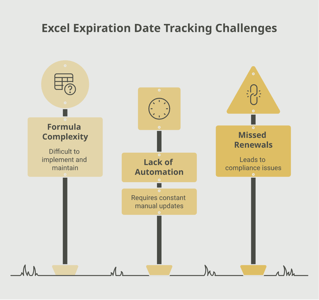
- Manual tracking via spreadsheets fails at scale; automated tracking with reminders is the reliable approach.
Frequently Asked Questions
How often must HazCom training be conducted?
Federal OSHA requires training at the time of initial assignment and whenever a new chemical hazard is introduced. Several state-plan states require annual refresher training. Many employers adopt annual training as best practice.
What is GHS?
The Globally Harmonized System of Classification and Labeling of Chemicals — an international standard for chemical classification, labeling, and Safety Data Sheets, adopted by OSHA in 2012.
What is a Safety Data Sheet (SDS)?
A 16-section document for each hazardous chemical providing information on identification, hazards, composition, first aid, fire fighting, accidental release, handling, exposure controls, physical/chemical properties, stability, toxicology, ecology, disposal, transport, regulatory information, and other details.
Where must SDSs be kept?
SDSs must be readily accessible to employees during all work shifts. Electronic access is permitted if there are no barriers to immediate access, computer access is reliable, a backup procedure exists, and employees are trained on how to access the SDSs.
What is the difference between a primary container label and a workplace label?
Primary container labels (from the manufacturer) include pictograms, signal words, hazard statements, and precautionary statements. Workplace labels (on secondary containers) must include the product identifier and general information about the chemical hazards.
What happens if HazCom training is missing?
OSHA citations and fines are likely during compliance reviews. Worker injuries from chemical exposure may be linked to training gaps, with downstream consequences for liability and workers' compensation.
Does HazCom apply to small businesses?
Yes. The HazCom standard applies to virtually all employers in covered industries that use, handle, store, or dispose of hazardous chemicals — regardless of size.
How long should training records be kept?
OSHA generally requires training records to be maintained for the duration of employment plus a period thereafter. Many employers retain training records longer to support multi-year audits and legal defenses.
Conclusion
HazCom training is one of the highest-leverage safety controls in any workplace using chemicals. The substantive work — identifying hazards, maintaining the written program, training workers — sits with safety, EHS, and operations. The administrative work — knowing who has been trained, when, and when refresher is due — is where most HazCom programs stumble, especially in multi-state operations.
If your team tracks HazCom training through LMS or spreadsheets, you already know how fragile that gets across a multi-site workforce. A purpose-built tracking platform like Expiration Reminder centralizes every worker's training record, sends reminders before each refresher date, stores the supporting documents, and produces audit-ready reports the moment anyone asks.
Train the workforce, document the evidence, and let the system handle the calendar.