Introduction
If your network is protected by any modern next-generation firewall — Fortinet, Sophos, SonicWall, Cisco, Palo Alto Networks, Check Point, Juniper, or another vendor — the licenses on the appliance are what keep the threat intelligence flowing and the support line open. When a firewall license lapses, the hardware keeps moving packets, but the protection it provides starts to deactivate piece by piece.
This article explains what a firewall license is in vendor-neutral terms, the common structure across vendors, what happens when coverage lapses, and the most practical way to track firewall licenses across a heterogeneous network.
For most network teams, the renewal itself is well understood — a partner provides a quote, the new license key is applied, the appliance is back to fully licensed. The hard part is the calendar across multiple appliances, multiple vendors, and multiple license types per appliance.
What Is a Firewall License?
A firewall license is a paid subscription that authorizes the use of specific firewall services and entitles the customer to threat intelligence updates, firmware updates, and technical support during the license period. Across vendors, firewall licensing typically separates into two categories:
- Support / Hardware coverage — covers TAC access, firmware updates, RMA hardware replacement, and (at higher tiers) faster response times. Vendor names include Fortinet FortiCare, Sophos Central support, SonicWall 24x7 Support, Cisco SmartNet, Palo Alto Premium Support, and Check Point Standard/Premium Support.
- Security services — covers the threat intelligence and feature subscriptions that make the firewall an active defense. These include IPS, antivirus, web filtering, application control, anti-spam, sandboxing, ZTNA, SD-WAN orchestration, and other vendor-specific services. Names include Fortinet FortiGuard, Sophos Xstream Protection, SonicWall EPSS/APSS, Palo Alto Threat Prevention, and Check Point software blades.
License terms are typically 1, 2, 3, or 5 years. Multi-year licenses are commonly discounted relative to annual renewals.
Most vendors offer bundles that combine support and security services into a single SKU — easier to manage but with less granularity. À-la-carte licensing offers more control but more renewal complexity.
When a firewall license expires, the consequences depend on which license expired:
- Lapsed support — firmware updates and TAC access stop. Critical CVE patches that arrive after expiry become unavailable until renewal.
- Lapsed security services — threat intelligence updates stop. New attack signatures, malware definitions, and URL categorizations cease to arrive. The appliance enforces yesterday's intelligence going forward.
Most vendors provide a grace period (typically 30 days) before features deactivate fully.
Why Firewall Licenses Matter for Your Organization
Firewall license currency protects against three concrete risks: security gap exposure, support unavailability, and compliance findings.
From a security standpoint, a lapsed firewall license means the appliance is increasingly out of touch with current threats. Each lapsed service creates its own gap.
From an operational standpoint, a lapsed support license means no firmware updates and no TAC access. When a critical CVE drops and the patch is behind a paywall, the timing of the renewal becomes a real risk question.
From a compliance standpoint, frameworks like PCI DSS, ISO 27001, SOC 2, HIPAA, and many cyber-insurance requirements expect active firewall security services with current threat intelligence. Lapsed licenses are visible during audits and reviews.
For multi-vendor and multi-site networks, the license calendar can quickly become unmanageable without a central tracker.
Common Scenarios for Tracking Firewall License Expiration Dates
Enterprise and Data Center Firewalls
Data center perimeter, segmentation, and east-west firewalls each carry support and security service licenses. Each appliance has its own bundle and renewal date.
Branch Office and Distributed Networks
Branch firewalls — often FortiGate, SonicWall TZ, or Sophos XGS at the lower end — are typically deployed in volume. The renewal calendar across dozens or hundreds of branch sites is one of the most common operational gaps.
Managed Security Service Providers
MSSPs delivering managed firewall services on customer premises manage many tenants, each with its own appliance, vendor, and license cycle.
Multi-Vendor Networks
Many organizations run different firewall vendors in different roles — one vendor for perimeter, another for data center, another for cloud edge, another for OT segmentation. Centralizing license tracking across vendors is essential.
Compliance-Regulated Industries
Financial services, healthcare, education, government, and other regulated industries need to be able to prove license status during audits and cyber-insurance reviews.
How Firewall License Tracking Benefits Your Organization and Network Teams
A reliable license tracking program produces measurable benefits.
For the company, current licenses maintain continuous threat protection, ensure firmware updates remain available, satisfy audit and cyber-insurance requirements, and prevent the cliff-edge of expired appliances.
For network and security teams, the renewal calendar becomes predictable. Quotes are requested early, renewals are scheduled, and the team avoids the recurring scramble of emergency renewals.
For finance, multi-year terms offer meaningful savings — but only when there is enough lead time to evaluate them properly.
How to Track Firewall License Expiration Dates
Vendor portals (Fortinet support, MySonicWall, Sophos Central, Cisco CCO, Palo Alto Customer Support Portal, Check Point UserCenter) each provide license visibility for that vendor's appliances. Useful, but each vendor only shows its own.
Authorized partners and resellers often provide consolidated visibility for customers buying through them, with proactive renewal outreach 60–120 days before expiry.
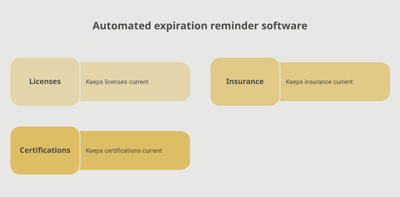
A dedicated tracking platform like Expiration Reminder stores each firewall with its vendor, model, serial number, support expiration, security service expirations, supporting documents, and responsible owner. Reminders fire automatically before each expiration, lapsing appliances surface on a dashboard, and reports support IT, procurement, and audit needs.
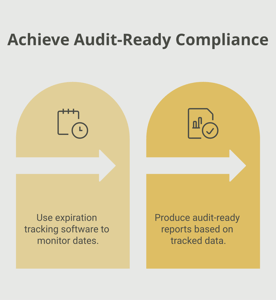
Key features include automated reminders at multiple intervals (120, 90, 60, 30 days — firewall quotes often need lead time, especially for multi-year terms), document storage for license certificates and purchase orders, dashboard views by site, vendor, or expiry window, audit-ready reports for compliance and cyber insurance, and the ability to log the new expiration date in one step.
Key Takeaways
- A firewall license is a paid subscription covering support (TAC, firmware, RMA) and security services (IPS, AV, web filtering, sandboxing, etc.) for a firewall appliance.
- Major vendors (Fortinet, Sophos, SonicWall, Cisco, Palo Alto, Check Point, Juniper) each use their own branding but follow similar structures.
- Licenses are typically 1, 2, 3, or 5 years; multi-year terms are commonly discounted.
- Lapsed support stops firmware and TAC access; lapsed security services stop threat intelligence updates.
- Multi-vendor, multi-site networks make centralized license tracking essential.
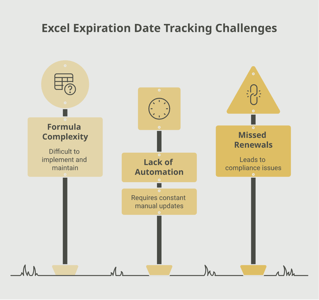
- Manual tracking via vendor portals fails at scale; automated tracking with reminders is the reliable approach.
Frequently Asked Questions
What is the difference between firewall support and security services?
Support covers TAC access, firmware updates, and RMA hardware replacement. Security services cover the threat intelligence and feature subscriptions (IPS, AV, web filtering, sandboxing) that make the firewall actively defend the network.
How long is a firewall license valid?
Typically 1, 2, 3, or 5 years depending on vendor. Multi-year terms are commonly discounted.
What happens when a firewall license expires?
The hardware continues to pass traffic, but expired security services stop receiving threat updates and expired support cuts off firmware updates and TAC access. Most vendors provide a brief grace period before features deactivate.
Can I run different licenses on different firewalls in my network?
Yes. Each appliance is licensed independently. Different appliances may carry different bundles based on role and risk.
Can I renew a firewall license early?
Yes, in most cases. Renewals typically extend from the existing expiration date, preserving the remaining term.
Do firmware and security patches require an active support license?
Most vendors restrict firmware updates (including CVE patches) to appliances with active support. Without renewal, critical security patches may be unavailable.
How do MSSPs track firewall licenses across customers?
MSSPs typically use a combination of vendor portals, internal CRM/PSA tools, and dedicated tracking platforms to coordinate renewals across customer environments.
What is a typical lead time for firewall renewals?
60–120 days is typical for enterprise multi-year renewals — quote preparation, internal approvals, partner ordering, and license application all take time. Smaller renewals can sometimes complete in 30 days, but tighter timelines are riskier.
Conclusion
Firewall licenses are the active part of every modern firewall — without them, the appliance is hardware, but not really a security stack. The renewal itself is routine procurement. The failure mode is administrative — a license that slips past unnoticed while the appliance keeps appearing to work.
If your team tracks firewall licenses through vendor portals, partner emails, or a spreadsheet, you already know how easy it is for one appliance to fall out of coverage. A purpose-built tracking platform like Expiration Reminder centralizes every appliance, sends reminders before each expiration date, stores the supporting documents, and produces audit-ready reports the moment anyone asks.
Keep the protection current, plan the renewals, and let the system handle the calendar.