Introduction
If your workplace has fire extinguishers, expects employees to use them, or runs evacuation procedures, fire safety training is the foundation of life safety in that workplace. The OSHA training rules are clear, the consequences of skipping training are concrete, and the documentation expectations are well-defined — yet missing or stale fire safety training is a recurring OSHA citation across nearly every industry.
This article explains what fire safety training is, the OSHA standards behind it, the annual hands-on training rule for fire extinguishers, evacuation training expectations, and the most practical way to track fire safety training across a workforce.
For most safety and EHS teams, scheduling annual training is well understood. The hard part is the calendar — knowing whose training is current, who needs hands-on practice, and how each site's emergency action plan supports the training program.
What Is Fire Safety Training?
Fire safety training covers the workplace skills needed to prevent fires, respond to fire emergencies, and use fire safety equipment. The applicable OSHA standards include:
- 29 CFR 1910.157 (Portable Fire Extinguishers) — training requirements for workers expected to use portable fire extinguishers.
- 29 CFR 1910.38 (Emergency Action Plans) — required for workplaces with 11 or more employees; covers evacuation, alarm systems, and emergency response procedures.
- 29 CFR 1910.39 (Fire Prevention Plans) — required where specific other standards reference it; covers fire hazards and prevention measures.
- NFPA Life Safety Code and NFPA standards — referenced by many state codes and AHJs.
Under 1910.157(g), employers who provide portable fire extinguishers for employee use must train workers in the general principles of fire extinguisher use and the hazards of incipient-stage firefighting. Training is required:
- Upon initial assignment.
- At least annually thereafter.
Critically, OSHA requires the annual training to include hands-on practice with an extinguisher. A video and quiz do not satisfy the requirement — workers must actually operate an extinguisher.
Employers have two policy options:
- Evacuation-only — written policy stating employees will not use extinguishers. Workers must be trained on evacuation procedures (under 1910.38) but not on extinguisher operation.
- Extinguisher use — workers may use extinguishers. Annual training under 1910.157(g) is required, including hands-on practice.
Many state and local fire codes layer additional training requirements on top of OSHA — particularly in healthcare, residential care, education, and high-hazard facilities. NFPA standards may apply through state-adopted fire codes.
Beyond extinguisher training, fire safety training typically includes evacuation procedures, alarm response, designated meeting points, accountability procedures, and (for designated fire response personnel) more advanced fire-fighting training.
Why Fire Safety Training Matters for Your Organization
Fire safety training currency protects against three concrete risks: fire-related injuries and fatalities, OSHA citations, and emergency-response failures.
From a safety standpoint, fires in workplaces continue to cause injuries, fatalities, and property damage every year. Training is the primary control supporting safe evacuation and (where authorized) effective use of extinguishers in incipient-stage fires.
From a regulatory standpoint, missing or out-of-date fire training is among OSHA's commonly cited findings. Hands-on training requirements are particularly easy to overlook.
From an emergency-response standpoint, the value of evacuation training is most visible during actual emergencies. Workers who have not been trained, or who have not practiced recently, are slower to respond and more likely to make dangerous decisions.
For organizations with multiple sites, varying occupancies, and turnover among staff, the fire safety training calendar requires active management.
Common Scenarios for Tracking Fire Safety Training Dates
General Industry Workplaces
Manufacturing, warehousing, office buildings, and similar workplaces require evacuation training and (where extinguishers are provided for employee use) annual hands-on extinguisher training.
Healthcare and Senior Living
Healthcare and senior living facilities run intense fire safety programs driven by Life Safety Code requirements, Joint Commission and CMS expectations, and state fire-marshal inspections.
Hospitality and Retail
Hotels, restaurants, and retail operations have ongoing fire training needs across both back-of-house and customer-facing operations.
Education
K-12 schools, universities, and other educational institutions face specific fire-drill and training requirements layered onto general workplace fire safety.
High-Hazard Operations
Chemical plants, refineries, paint and finishing operations, woodworking, and similar high-hazard environments may have additional training requirements including team firefighting and specialized response.
How Fire Safety Training Tracking Benefits Your Organization
A reliable tracking program produces measurable benefits.
For the company, current training records support OSHA and fire-code compliance, satisfy accreditation expectations, and reduce both incident risk and incident severity.
For safety, EHS, and operations teams, the training calendar becomes a predictable activity. Annual hands-on sessions are scheduled with adequate lead time. New-hire onboarding includes fire safety as a structured step.
For workers, predictable training reinforces evacuation procedures and equipment use.
How to Track Fire Safety Training Expiration Dates
Learning management systems track training completions. Many safety platforms (Vector EHS, Safesite, KPA, others) include fire safety modules.
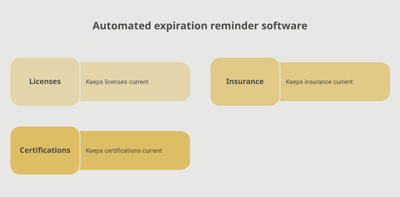
For organizations using a separate compliance tracker, a platform like Expiration Reminder stores each worker with their fire safety training history, last hands-on session date, next-due date, and supporting documents. Reminders fire automatically before each annual refresher.
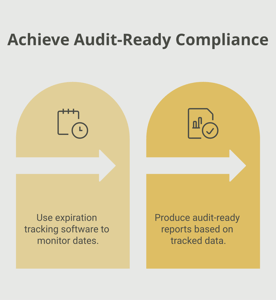
Key features include automated reminders at multiple intervals (90, 60, 30 days), document storage for training records and emergency action plans, dashboard views by site, department, or training class, audit-ready reports for OSHA, fire marshals, and accreditation, and the ability to log new training events in one step.
Key Takeaways
- Fire safety training covers fire prevention, emergency response, evacuation procedures, and (where applicable) portable fire extinguisher use.
- OSHA 1910.157(g) requires annual hands-on extinguisher training for workers expected to use extinguishers.
- Video-and-quiz training alone does not satisfy the hands-on requirement.
- Employers may choose an evacuation-only policy to avoid the extinguisher training requirement, but written policy and evacuation training are still required under 1910.38.
- NFPA standards and state fire codes may impose additional training requirements.
- Automated tracking with reminders is the reliable approach across multi-site workforces.
Frequently Asked Questions
How often is fire extinguisher training required?
OSHA requires training upon initial assignment and at least annually thereafter for workers expected to use portable fire extinguishers. The annual training must include hands-on practice with an extinguisher.
Can I avoid the extinguisher training requirement?
Yes. Employers who adopt an evacuation-only policy — supported by a written policy and emergency action plan requiring all workers to evacuate when a fire alarm sounds — do not need to train workers on extinguisher operation. Evacuation training is still required.
Is video-and-quiz training enough?
Not for extinguisher operation under 1910.157(g). OSHA requires actual hands-on practice with an extinguisher. Video-and-quiz alone does not satisfy the requirement.
What is an Emergency Action Plan?
A written plan required under OSHA 1910.38 for workplaces with 11 or more employees, covering evacuation procedures, alarm systems, accountability, and emergency response. The plan must be available to employees.
What is the difference between an Emergency Action Plan and a Fire Prevention Plan?
The Emergency Action Plan (1910.38) covers what to do during an emergency. The Fire Prevention Plan (1910.39) covers measures to prevent fires from occurring. Both may apply, depending on the workplace.
Do healthcare facilities have additional fire training requirements?
Yes. Healthcare facilities are subject to Life Safety Code requirements, Joint Commission and CMS expectations, and state fire-marshal inspections — all of which typically expect more frequent and more comprehensive fire safety training than OSHA's baseline.
How long should fire training records be kept?
OSHA does not specify a retention period for fire safety training records. Most employers retain them for the duration of employment plus several years to support multi-year audits and legal defenses.
What is incipient-stage firefighting?
The earliest stage of a fire, where it is small enough to be controlled with a portable fire extinguisher. OSHA's 1910.157 training requirements focus on incipient-stage firefighting; more advanced fire response requires additional training and PPE.
Conclusion
Fire safety training is the life-safety foundation in every workplace. The substantive work — delivering effective training, conducting drills, maintaining extinguishers and evacuation systems — sits with safety, EHS, and facilities. The administrative work — knowing every worker's training status, ensuring annual hands-on sessions happen, and producing records on demand — is where most programs need help.
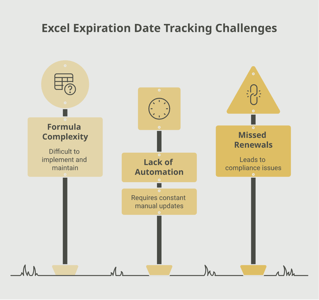
If your team tracks fire safety training through LMS or spreadsheets, you already know how easy it is for one worker's annual training to slip past — particularly the hands-on extinguisher session. A purpose-built tracking platform like Expiration Reminder centralizes every training record, sends reminders before each refresher date, stores the supporting documents, and produces audit-ready reports the moment anyone asks.
Train the workforce, run the drills, and let the system handle the calendar.