Cosmetology License
If you run a salon, manage a spa, or oversee a beauty school, you already know how much one credential carries on its shoulders. A cosmetology license is the difference between a licensed stylist legally serving clients and a state board citation that can shut a chair down for the day. The paperwork looks straightforward on the surface, but renewal cycles, continuing education hours, and state-specific rules turn it into a moving target — especially when you employ more than a few licensed professionals.
This article walks through what a cosmetology license actually is, who is required to hold one, how renewal cycles work across different states, and the everyday operational headaches that come with managing dozens of expiration dates at once. By the end, you will have a clear playbook for staying ahead of renewals so your team can focus on clients instead of paperwork.
We will also look at the most common scenarios where tracking expiration dates becomes a real liability, and the simplest way to keep every license, every CE certificate, and every renewal date in one place.
What Is a Cosmetology License?
A cosmetology license is a state-issued professional credential that authorizes a person to legally perform cosmetology services for compensation. Those services typically include hair cutting and styling, hair coloring, skin care, nail care, and makeup application — though the exact scope varies by state and by license type (cosmetologist, esthetician, nail technician, barber, and so on).
The issuing authority is the state board of cosmetology or its equivalent regulatory body. In Texas, that is the Texas Department of Licensing and Regulation. In Georgia, it is the State Board of Cosmetology and Barbers. In Maryland, the Board of Cosmetologists sits under the Division of Occupational and Professional Licensing. Each state board sets its own rules for who qualifies, how schools are accredited, what the exam looks like, and how often the license must be renewed.
To get an initial license, candidates generally complete a board-approved cosmetology program (the required clock hours range from roughly 1,000 to 1,600 depending on the state), pass written and practical board exams, and submit an application with fees and proof of training. Once issued, the license belongs to the individual practitioner — not the salon — and must be renewed on a recurring cycle.
Renewal cycles are usually one or two years. Most states require continuing education (CE) hours as a condition of renewal, with topics covering health, safety, infection control, and sometimes business or industry trends. The number of CE hours and the kinds of topics that count vary widely by state.
Why a Cosmetology License Matters for Your Organization
If you employ licensed beauty professionals, an expired or invalid license is not just an individual problem — it becomes a business problem the moment a state inspector walks in. State boards can fine salons that allow unlicensed practice, suspend the business license, or in serious cases close the location until the situation is resolved.
Beyond the immediate penalties, an expired license creates downstream risks. Liability insurance carriers often require all practicing employees to hold valid credentials; a claim involving an unlicensed staff member can be denied. Client trust takes a hit when a state board posting goes public. And the cost of rescheduling appointments while a stylist scrambles to complete back-dated CE hours falls directly on the business.
For multi-location operations, the math gets worse. A regional chain with fifty stylists across three states is juggling fifty individual renewal dates, three different state board calendars, and three different sets of CE rules. Manual spreadsheets break down quickly at that scale, and missed renewals tend to surface during the worst possible moments — like an audit or an inspection.
Treating cosmetology license tracking as a core compliance function (the same way you would treat payroll or tax filings) protects both the people who work for you and the reputation you have built with clients.
Common Scenarios for Tracking Cosmetology License Expiration Dates
The work of tracking licenses looks different depending on who is doing it. Here are the most common situations where staying ahead of expiration dates matters most.
Salon Owners Managing a Team of Stylists
A salon owner with eight to twenty stylists is the most common case. Each licensed professional has a renewal date that may not line up with anyone else's, and each state has its own grace period (or lack of one). When a stylist's license lapses, they cannot legally work — which means lost revenue, unhappy clients, and an awkward conversation about rebooking. A simple tracker that flags upcoming renewals 90, 60, and 30 days in advance gives everyone time to act.
Multi-State Salon Chains and Franchise Operators
Franchise operators and regional groups face the hardest version of this problem. A Georgia stylist who transfers to a Texas location has different CE requirements waiting. A Florida cosmetologist needs 10 hours of board-approved CE before renewal; a Texas barber needs only 4. Mixing those rules in one spreadsheet is a recipe for missed deadlines. Centralized credential tracking lets corporate HR and store managers each see the slice that affects them.
Beauty Schools and Training Academies
Beauty schools have a double responsibility. They hold a school license issued by the state board, and they employ licensed instructors who each have their own renewal cycles. A lapse on either side can pause classes and disrupt student certification — a serious problem when graduating students are scheduled to sit for board exams.
Spas, Medspas, and Healthcare-Adjacent Practices
Estheticians and laser technicians working in medspas often hold cosmetology licenses alongside other healthcare credentials (such as RN or LPN). Tracking the cosmetology license is one piece of a larger compliance picture that may also include HIPAA training, BLS certification, and equipment safety credentials. A single source of truth for all of these documents reduces the chance that one slips through.
Independent Booth Renters and 1099 Stylists
In states that permit booth rental, the salon owner is not the legal employer — but the practical risk is still shared. Many landlords require renters to submit proof of an active license before renewing the rental agreement. Tracking those expiration dates protects the salon's reputation even when the stylist is technically self-employed.
How a Cosmetology License Benefits Your Company and Employees
For the salon or beauty business, every active and current cosmetology license on your team translates into compliance assurance, audit readiness, and uninterrupted service. You can answer a state board inquiry within minutes instead of digging through filing cabinets. You can give your liability insurer confidence that every working stylist is properly credentialed. And you can confidently bring in new clients knowing every service is performed by someone legally authorized to perform it.
For employees, the license is the foundation of their career. It opens doors to higher-paying positions, lets them work across states (sometimes with reciprocity), and gives them the professional credibility that helps build a personal clientele. Keeping CE hours and renewals on schedule means no awkward gaps in their work history and no last-minute scramble that costs them income.
For clients, the value is quieter but just as real. A valid license is a public commitment to safety, sanitation, and skill. It is a baseline assurance that the person handling chemical services or sharp tools has met state-mandated training standards — and is staying current.
How to Track Cosmetology License Expiration Dates
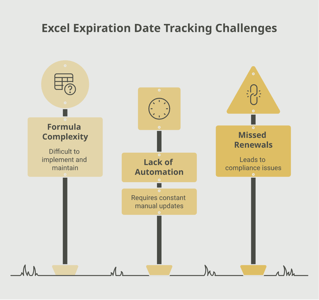
Most small salons start with a spreadsheet. It works for a while. Then a stylist's renewal gets buried under three months of new entries, the spreadsheet owner goes on vacation, and a deadline quietly slips by. The problem with manual tracking is not the spreadsheet itself — it is that nobody is actively watching it on the day a reminder matters.
Calendar reminders run into a similar wall. Outlook or Google Calendar will tell you a date is approaching, but they will not show you the proof-of-completion document, attach the CE certificate, or generate the audit report you need when the inspector arrives.
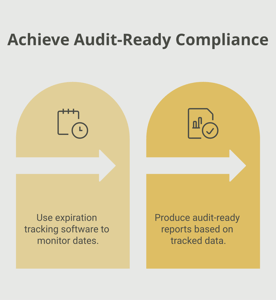
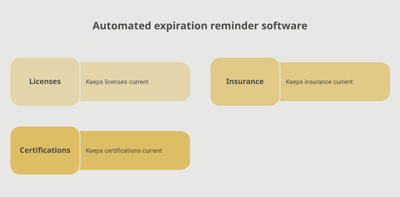
Automated credential tracking software solves the structural problem. A platform like Expiration Reminder lets you upload every stylist's license, set the state-specific renewal cycle, and configure reminders that go to both the stylist and the salon manager at customizable intervals. You can attach the CE certificates as they come in, run a single audit report across the team, and see at a glance which licenses are current, expiring soon, or already lapsed.
For salon owners managing multiple licensed roles or comparing options, our guide to certification tracking software walks through what to look for. The right system pays for itself the first time it prevents a missed renewal.
Key Takeaways
- A cosmetology license is a state-issued credential required for legally performing hair, skin, and nail services for compensation.
- Each state board sets its own renewal cycle (usually one or two years) and its own continuing education requirements.
- Renewal rules vary widely — Florida requires 10 CE hours, Georgia requires 5, Texas requires 4, and Maryland introduced 6 hours starting January 2026.
- Expired licenses expose salons to state board fines, possible suspension, insurance gaps, and lost client trust.
- Multi-state operators face the steepest tracking burden because each location follows a different rulebook.
- Manual spreadsheets and calendar reminders break down at scale; automated credential tracking gives you a single source of truth for renewals and CE.
- Reminding stylists 90, 60, and 30 days in advance is a reliable rhythm for protecting both their careers and your business.
Frequently Asked Questions
What happens if a cosmetology license expires?
A cosmetologist with an expired license cannot legally perform services in most states. Continuing to work on an expired license can result in fines for the individual, fines for the employer, and possible board discipline. Most states offer a grace period for late renewal with an additional late fee, but services performed during the lapse may still be considered unlicensed practice.
How long does it take to renew a cosmetology license?
In most states, online renewal takes a few minutes once continuing education is complete. The bottleneck is usually the CE hours themselves — courses typically run 4 to 10 hours and should be completed well before the deadline. Plan to start the renewal process 30 to 60 days before the expiration date to allow time for CE, application review, and any board follow-up.
Who is required to have a cosmetology license?
Anyone who performs cosmetology services for compensation — including hair cutting, coloring, chemical services, esthetics, nail care, and in some states makeup application — generally needs a license issued by the state where the work happens. Some states have separate licenses for cosmetologists, estheticians, nail technicians, and barbers, each with its own scope of practice.
How far in advance should I start the renewal process?
Most state boards recommend starting at least 60 days before the expiration date. That gives you time to finish CE hours, gather any required documents, submit the application, and resolve any issues. Beyond 90 days is even better if your state allows early renewal.
Can a stylist work with an expired cosmetology license?
No. Working with an expired license is considered unlicensed practice in virtually every state. Both the individual and the employing salon can be penalized. If a renewal is in progress, the stylist should pause client services until the new license is issued.
Do continuing education requirements transfer between states?
Sometimes, but not always. CE hours completed in one state may not satisfy another state's requirements, especially when topics differ. If a stylist moves or works across state lines, check the destination state board's rules and confirm which courses they accept before assuming credits transfer.
How often does a cosmetology license need to be renewed?
Most states use a one- or two-year renewal cycle. A few states, like Florida, use a two-year cycle with a fixed expiration calendar; others tie renewal to the licensee's birthday or the original issue date. Always confirm the exact cycle with your state board.
Where can I check the status of a cosmetology license?
Every state board maintains an online license lookup tool. Search the state board's website for "license lookup" or "license verification." Most lookups show the license number, status, expiration date, and any disciplinary history.
Conclusion
A cosmetology license is one of the most important credentials in any beauty business — and one of the easiest to lose track of when life gets busy. Renewal cycles, continuing education rules, and state-by-state differences create a constant administrative load that grows quickly as your team grows. Staying ahead of those expiration dates is not just about compliance; it is about protecting the careers of the professionals you work with and the clients who trust your salon.
The good news is that this is a solved problem. Centralized credential tracking, automated reminders, and audit-ready reports take what used to be a stressful spreadsheet exercise and turn it into a quiet background process. With the right system in place, no renewal date sneaks up on you, no CE certificate gets lost, and no inspector visit ever finds you unprepared.
Whether you manage two stylists or two hundred, the goal is the same: keep every license current, give your team peace of mind, and let the great work they do speak for itself.
Make sure your company is compliant
Say goodbye to outdated spreadsheets and hello to centralized credential management. Avoid fines and late penalties by managing your employee certifications with Expiration Reminder.