CLIA Certification: What It Is, Who Needs It & How to Track Expiration Dates
You manage a busy medical practice, and one morning a surveyor shows up unannounced asking to see your CLIA certificate. Your stomach drops because you cannot remember the last time anyone checked the expiration date. That moment of uncertainty is more common than you might think, and the consequences of an expired or lapsed CLIA certificate can range from halted laboratory operations to exclusion from Medicare and Medicaid reimbursement.
The Clinical Laboratory Improvement Amendments (CLIA) program touches virtually every healthcare facility that performs any form of laboratory testing on human specimens. Whether your practice runs a simple rapid strep test or your hospital operates a full-service reference laboratory, a valid CLIA certificate is a non-negotiable requirement under federal law. In this guide, we will walk through exactly what CLIA certification is, who needs it, why it matters, and how to make sure your certificate never catches you off guard at renewal time.
What Is CLIA Certification?
CLIA certification is a federal credential required under the Clinical Laboratory Improvement Amendments of 1988 (42 U.S.C. § 263a). Congress enacted CLIA to establish uniform quality standards for all laboratory testing performed on human specimens—blood, urine, tissue, and other body fluids—used to diagnose, prevent, or treat disease. The program is administered by the Centers for Medicare & Medicaid Services (CMS) in coordination with the Centers for Disease Control and Prevention (CDC) and the Food and Drug Administration (FDA).
Any facility that tests human specimens for health assessment purposes must hold an appropriate CLIA certificate before it can accept samples for testing. This requirement applies regardless of the size or type of facility, from large hospital reference labs to physician office laboratories, pharmacies, nursing facilities, and even mobile testing units.
There are several types of CLIA certificates, each corresponding to the complexity of tests performed:
- Certificate of Waiver (CoW) – Authorizes only CLIA-waived tests (simple, low-risk tests like rapid glucose, urine dipstick, and rapid strep). This is the most commonly held certificate type.
- Certificate for Provider-Performed Microscopy Procedures (PPMP) – Covers a limited list of moderate-complexity microscopy tests performed by a physician, midlevel practitioner, or dentist during a patient visit. Facilities with a PPMP certificate may also perform waived tests.
- Certificate of Compliance (CoC) – Authorizes moderate and/or high-complexity testing when surveyed by CMS or a CMS-designated state survey agency and found compliant.
- Certificate of Accreditation (CoA) – Authorizes moderate and/or high-complexity testing when the laboratory is accredited by a CMS-approved accreditation organization such as the College of American Pathologists (CAP), The Joint Commission, or COLA.
- Certificate of Registration – A temporary certificate that allows a lab to conduct moderate or high-complexity testing until a compliance or accreditation survey is completed.
All CLIA certificates are valid for two years from the date of issue. Laboratories apply for certification by submitting CMS Form 116 to their designated State Agency. The application fee ranges from approximately $180 for a Certificate of Waiver to several thousand dollars for high-complexity laboratories, depending on the annual test volume and specialty areas.
Why CLIA Certification Matters for Your Organization
Operating a laboratory without a valid CLIA certificate is a federal violation. The stakes are high, and the consequences touch every part of your organization, from patient care to the bottom line.
Legal and regulatory compliance. Under CLIA regulations (42 CFR Part 493), performing laboratory testing without the proper certificate can result in civil monetary penalties of up to $10,000 per day of non-compliance. CMS can also impose alternative sanctions including suspension of Medicare and Medicaid payments, directed plans of correction, and state monitoring. In severe cases, a laboratory’s CLIA certificate can be revoked entirely, which means the facility cannot perform any testing until it reapplies and is re-certified.
Revenue and reimbursement. Medicare, Medicaid, and most private insurers require a valid CLIA certificate as a condition of reimbursement for laboratory services. If your certificate lapses, claims for lab tests will be denied, creating an immediate and significant revenue disruption. For practices that depend on point-of-care testing as part of their workflow, this can slow patient throughput and affect the broader care delivery model.
Patient safety and quality. CLIA quality standards exist to ensure that laboratory results are accurate and reliable. Facilities operating outside their certificate scope—for example, running moderate-complexity tests under a waiver certificate—are exposing patients to potentially unreliable results, which can lead to misdiagnosis, improper treatment, and adverse outcomes.
Operational continuity. An expired CLIA certificate does not just affect the laboratory. It can disrupt clinical operations across the entire organization, forcing providers to send specimens to external reference labs, increasing turnaround times, and complicating care coordination.
Common Scenarios for Tracking CLIA Certification Expiration Dates
CLIA certificates touch a wide range of facilities and roles. Here are five common scenarios where tracking expiration dates becomes critical.
Multi-Site Health Systems Managing Dozens of Certificates
Large health systems with multiple clinics, urgent care centers, and hospital campuses each hold their own CLIA certificate. A system with 30 locations means 30 separate certificates, each with its own two-year renewal cycle. Compliance officers need a centralized way to see which certificates are approaching expiration and ensure that the renewal process—including fee payment and any required survey scheduling—starts well in advance.
Physician Office Laboratories Renewing Waiver Certificates
Small practices and physician offices that perform waived tests such as rapid flu tests, pregnancy tests, or hemoglobin A1c checks often have a single office manager responsible for dozens of administrative tasks. The CLIA renewal can easily slip through the cracks when it arrives in the mail alongside a stack of other regulatory correspondence. Automated reminders ensure this two-year deadline does not get lost.
Laboratory Directors Preparing for CMS Surveys
For laboratories holding a Certificate of Compliance, CMS or its designated state agency conducts unannounced surveys on a biennial cycle. Laboratory directors and quality managers need to maintain survey-readiness at all times, which includes keeping the CLIA certificate current, maintaining proficiency testing results, and ensuring personnel qualifications are documented. Tracking the certificate expiration date is the anchor point for this entire readiness calendar.
Compliance Officers Handling Certificate Amendments
Changes in a laboratory’s ownership, location, director, or the types of tests it performs must be reported to the State Agency within 30 days. These amendments can affect the certificate type and expiration date. Compliance officers need to track not just renewal dates but also any pending amendments that could trigger a new certificate or additional survey requirements.
Credentialing Teams Verifying CLIA Numbers for Billing
Every CLIA certificate carries a unique 10-digit CLIA number that must be included on insurance claims for laboratory services. Credentialing and billing teams must verify that each location’s CLIA number is current and that the certificate has not expired or been revoked. An invalid CLIA number on a claim will trigger denials and payment delays.
How CLIA Certification Benefits Your Company and Employees
For your organization, maintaining a valid CLIA certificate protects your revenue stream by ensuring uninterrupted Medicare, Medicaid, and commercial insurance reimbursement. It demonstrates regulatory compliance during audits and surveys, reduces the risk of civil monetary penalties, and supports your organization’s reputation as a provider of safe, high-quality care. For multi-site systems, a well-managed CLIA compliance program also simplifies mergers, acquisitions, and new site openings by establishing a repeatable process for obtaining and maintaining certificates.
For your employees, a current CLIA certificate provides the legal foundation they need to perform their work. Laboratory professionals, physicians, nurses, and medical assistants who rely on point-of-care or laboratory testing can do so with confidence, knowing that their facility meets federal quality standards. It also protects staff from the professional risk of performing tests in a non-compliant facility, which could jeopardize their own licenses or certifications.
For your patients and clients, CLIA certification is an assurance that laboratory results are produced under quality-controlled conditions. Patients can trust that the rapid test result they receive at their doctor’s office, or the complex panel processed at a hospital lab, meets nationally recognized standards for accuracy and reliability.
How to Track CLIA Certification Expiration Dates
With a two-year renewal cycle and multiple certificate types across potentially many locations, tracking CLIA expiration dates requires a deliberate system.
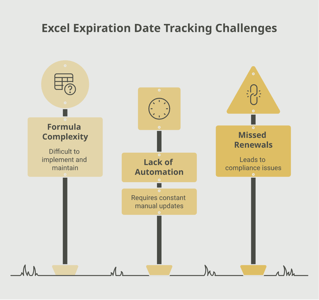
The challenge with manual methods. Many organizations start by logging CLIA expiration dates in a spreadsheet or marking them on a shared calendar. This approach works until it does not. Spreadsheets do not send reminders, they depend on someone remembering to check them, and they quickly become outdated when staff turnover occurs or new locations are added. A missed renewal that results in even a brief lapse can trigger claim denials that take months to resolve.
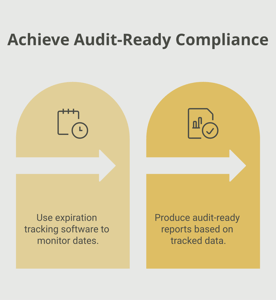
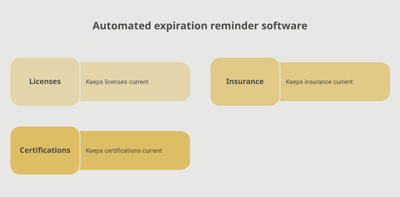
The case for automated tracking. An automated compliance tracking system eliminates the guesswork. It stores all certificate details in one centralized location, sends escalating reminders as expiration dates approach, and provides a clear audit trail that shows when reminders were sent and who acknowledged them. For organizations managing multiple CLIA certificates, this centralized visibility is essential.
A platform like Expiration Reminder is designed specifically for this kind of document tracking. You can set up tiered reminder schedules—for example, alerts at 180 days, 90 days, 30 days, and 7 days before expiration—that go to the right people at each stage. The centralized dashboard gives compliance officers a single view of every certificate across every location, making it straightforward to identify upcoming renewals and take action before deadlines pass.
Key Takeaways
- Any facility that performs laboratory testing on human specimens must hold a valid CLIA certificate under federal law, regardless of size or test complexity.
- CLIA certificates are valid for two years and must be renewed before they expire to avoid disruption in testing and reimbursement.
- There are five types of CLIA certificates (Waiver, PPMP, Compliance, Accreditation, and Registration), each tied to the complexity of testing performed.
- Non-compliance can result in civil monetary penalties of up to $10,000 per day, suspension of Medicare and Medicaid payments, and certificate revocation.
- Multi-site health systems face a compounding challenge, managing dozens of certificates with overlapping but distinct renewal timelines.
- Changes in ownership, location, laboratory director, or test menu must be reported within 30 days and may affect your certificate.
- Automated tracking systems replace the risk of manual methods with reliable reminders, centralized visibility, and audit-ready documentation.
Frequently Asked Questions
What happens if my CLIA certificate expires?
If your CLIA certificate expires, your facility is no longer authorized to perform laboratory testing on human specimens. You must stop testing immediately, and any claims submitted for laboratory services will be denied by Medicare, Medicaid, and most commercial insurers. You will need to reapply through your State Agency and may face additional scrutiny or a survey before a new certificate is issued.
How long does it take to renew a CLIA certificate?
CMS typically begins the renewal billing process six months to one year before your certificate expires. Once the fee is paid, your new certificate is generally mailed approximately two weeks before the current one expires. However, delays can occur, so it is important to respond to renewal notices promptly and follow up with your State Agency if you have not received your new certificate as the expiration date approaches.
Who is required to have a CLIA certificate?
Any entity that performs clinical laboratory testing on human specimens for health purposes must have a CLIA certificate. This includes hospitals, physician offices, clinics, nursing facilities, pharmacies, ambulatory surgery centers, health fairs, and mobile testing sites. Even performing a single waived test, such as a rapid strep or glucose test, requires at minimum a Certificate of Waiver.
What is the difference between a Certificate of Waiver and a Certificate of Compliance?
A Certificate of Waiver authorizes only simple, low-risk waived tests and does not require routine CMS inspection. A Certificate of Compliance authorizes moderate and high-complexity testing and requires the facility to pass a biennial CMS survey demonstrating compliance with CLIA quality standards for personnel, quality control, proficiency testing, and more.
Can I perform tests while waiting for my renewed certificate?
If you have submitted your renewal application and fee before the expiration date, your facility can generally continue testing while the renewal is processed. However, if you allow the certificate to lapse without initiating renewal, you must stop all testing until a new certificate is issued.
How much does a CLIA certificate cost?
Fees depend on the certificate type and, for non-waived certificates, on the annual test volume and specialty areas. A Certificate of Waiver costs approximately $180 for the two-year period. Certificates of Compliance and Accreditation can range from several hundred to several thousand dollars based on the laboratory’s size and scope of testing.
How far in advance should I start the renewal process?
CMS initiates the renewal billing process six months to one year before expiration, but you should have internal reminders set at least 180 days before the expiration date. This gives your team time to verify facility information, update any changes, pay the renewal fee, and schedule any required surveys well before the deadline.
Does each location need its own CLIA certificate?
Yes. Each laboratory location where testing is performed must hold its own CLIA certificate with a unique CLIA number. This applies even within the same health system. Satellite or off-site testing locations must be separately certified unless they meet specific CMS criteria for operation under a parent laboratory’s certificate.
Conclusion
CLIA certification is one of those foundational compliance requirements that quietly supports everything your laboratory does, from the accuracy of a simple rapid test to the complex panels that guide critical treatment decisions. Keeping it current is not just a regulatory checkbox; it protects your revenue, your patients, and your team’s ability to deliver care without interruption.
The two-year renewal cycle can feel manageable until it sneaks up on you, especially if you are juggling multiple locations or navigating a change in laboratory director or test menu. A proactive tracking system, whether through a purpose-built platform like Expiration Reminder or a well-maintained internal process, ensures that renewal deadlines never become surprises. When every certificate is accounted for and every reminder is in place, you can focus on what matters most: running a safe, compliant, and effective laboratory.
Make sure your company is compliant
Say goodbye to outdated spreadsheets and hello to centralized credential management. Avoid fines and late penalties by managing your employee certifications with Expiration Reminder.