Introduction
If your organization protects endpoints with antivirus or endpoint protection software — Microsoft Defender for Business, Sophos Intercept X, CrowdStrike Falcon, SentinelOne, Symantec Endpoint Protection, Bitdefender GravityZone, or any of the broader endpoint security market — the license is what keeps the protection actively updating and the management console useful. When the license lapses, the agents continue to run (sometimes) but stop receiving the threat intelligence updates that make them effective.
This article explains what an antivirus / endpoint protection license is, the common business licensing models, how renewals work, and what happens when coverage lapses. You will also see the most practical way to track antivirus licenses across hundreds or thousands of endpoints.
For most security and IT teams, the renewal itself is routine — a partner provides a quote, the new license key updates the management console, and the agents continue to update. The hard part is the calendar — seat counts change, products are mixed, and renewal terms are easy to lose track of.
What Is an Antivirus Software License?
An antivirus software license is a paid subscription that authorizes use of endpoint protection software and entitles the customer to threat intelligence updates, feature releases, and technical support during the license period.
Modern endpoint protection has evolved well past traditional signature-based antivirus. Most current products are better described as "endpoint protection platforms" (EPP) and "endpoint detection and response" (EDR) — combining signature scanning, behavioral analysis, machine learning, exploit prevention, application control, and (often) managed detection response.
Major endpoint protection products include:
- Microsoft Defender for Business / Defender for Endpoint — built into Microsoft 365 Business Premium and licensed standalone for Plan 1 and Plan 2 tiers.
- CrowdStrike Falcon — subscription-based EPP/EDR/XDR platform.
- SentinelOne Singularity — subscription-based EPP/EDR/XDR platform.
- Sophos Intercept X — EPP/EDR with optional Managed Detection and Response.
- Symantec Endpoint Protection (SEP) / Endpoint Security — Broadcom's enterprise EPP/EDR, now subscription-only.
- Bitdefender GravityZone — EPP/EDR for business and enterprise.
- VIPRE Endpoint, Trend Micro Apex One, ESET PROTECT — additional widely deployed options.
Business endpoint protection is typically licensed per device or per user, with terms of 1, 2, or 3 years. Multi-year terms are commonly discounted. Most vendors enforce a seat-count limit, with true-up obligations when actual deployment exceeds the license.
According to Broadcom's Symantec Endpoint Security documentation, modern enterprise endpoint protection (including SEP) is subscription-only, with annual audits and true-up fees for over-deployment.
When an antivirus license expires, the consequences vary by product. Some agents continue to run with last-known signatures; others deactivate. Most management consoles restrict actions, and customer support is no longer available.
Why Antivirus Licenses Matter for Your Organization
Antivirus license currency protects against three concrete risks: security gap exposure, audit findings, and compliance failure.
From a security standpoint, the value of endpoint protection is in current threat intelligence and current behavioral models. An expired license means the protection layer is frozen at the last update before expiry — a snapshot of yesterday's threats rather than an active defense.
From an audit standpoint, vendors routinely audit deployed seat counts against licensed entitlements. Over-deployment triggers true-up fees, often applied retroactively. Annual reconciliation is a contractual requirement for many enterprise EPP/EDR contracts.
From a compliance standpoint, frameworks like PCI DSS, HIPAA, ISO 27001, SOC 2, and most cyber-insurance policies expect active endpoint protection with current threat intelligence. Lapsed licenses are visible during audits and underwriting.
For organizations with cyber-insurance policies, antivirus license currency is often a stated requirement of the policy. A claim involving devices with lapsed endpoint protection may be reduced or denied.
Common Scenarios for Tracking Antivirus License Expiration Dates
Enterprise Endpoint Fleets
Enterprises running endpoint protection across thousands of laptops, desktops, and servers need centralized license tracking — particularly when the seat count changes regularly with onboarding, offboarding, and refresh cycles.
Hybrid and Multi-Product Environments
Many organizations run different endpoint products in different roles — CrowdStrike on endpoints, Defender for cloud workloads, a third product on legacy systems. Each license has its own calendar.
Managed Service Providers
MSPs delivering endpoint protection to customers manage many tenants, each with its own license. Coordinating renewals across tenants is a recurring operational task.
Compliance-Driven Industries
Healthcare, finance, government, and education environments need to be able to prove active endpoint protection during audits, and cyber-insurance carriers increasingly look at the same evidence during underwriting.
Education and K-12
Schools deploying endpoint protection across hundreds or thousands of student and staff devices need predictable renewal cycles, often aligned with the academic year.
How Antivirus License Tracking Benefits Your Company and Security Teams
A reliable license tracking program produces measurable benefits.
For the company, current licenses maintain continuous endpoint protection, satisfy audit requirements, support cyber-insurance underwriting, and prevent the cliff-edge of a lapsed license disabling protection.
For security and IT teams, the renewal calendar becomes predictable. Quotes can be requested early, seat counts can be reconciled with HR data, and budget conversations can happen with adequate lead time.
For finance, accurate license tracking supports cleaner budgeting and stronger negotiation posture at renewal time — particularly when multi-year terms are on the table.
How to Track Antivirus License Expiration Dates
Vendor management consoles display seat utilization and renewal information for that vendor. Useful, but they do not actively remind administrators before expiry, and they only cover that vendor's product.
Most managed endpoint protection vendors offer partner portals with consolidated visibility for MSPs and resellers.
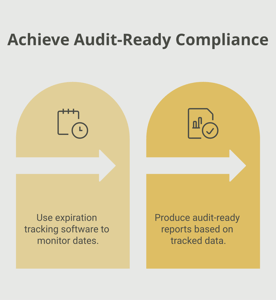
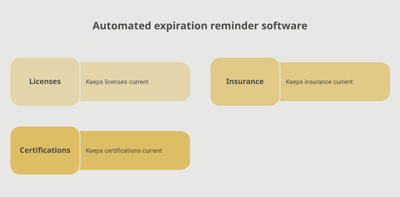
A dedicated tracking platform like Expiration Reminder stores each antivirus subscription with its product, seat count, expiration date, supporting purchase order, and responsible owner. Reminders fire automatically before expiration, lapsing licenses surface on a dashboard, and reports support IT, security, and compliance needs.
Key features include automated reminders at multiple intervals (120, 90, 60, 30 days — enterprise renewals often need lead time for seat reconciliation), document storage for license certificates and purchase orders, dashboard views by product, location, or expiry window, audit-ready reports for compliance and cyber insurance, and the ability to log the new expiration date in one step.
Key Takeaways
- An antivirus / endpoint protection license is a paid subscription authorizing use of EPP/EDR software and providing threat intelligence updates and support.
- Major products are subscription-only (typically 1, 2, or 3 years) with annual true-up obligations for many enterprise contracts.
- Major vendors include Microsoft Defender, CrowdStrike, SentinelOne, Sophos Intercept X, Symantec/Broadcom, Bitdefender, Trend Micro, and others.
- Expired licenses stop threat intelligence updates and remove support access; some products deactivate entirely.
- Audit and cyber-insurance requirements increasingly expect provable license currency.
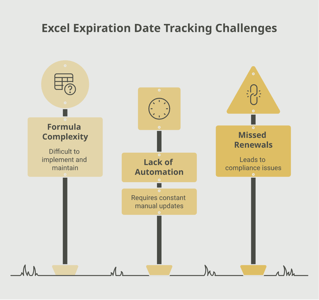
- Manual tracking via vendor consoles or spreadsheets fails at scale; automated tracking with reminders is the reliable approach.
Frequently Asked Questions
How long is an antivirus license valid?
Business endpoint protection is typically licensed for 1, 2, or 3 years. Multi-year terms are commonly discounted relative to annual renewals.
What happens when an antivirus license expires?
Consequences vary by product. Threat intelligence updates stop; some agents continue to run with last-known signatures while others deactivate; management consoles restrict actions; and technical support is no longer available.
What is a true-up in endpoint protection licensing?
A true-up is the annual reconciliation between contracted seats and actually deployed seats. If deployment exceeds the contract, additional fees apply for the overage.
What is the difference between EPP and EDR?
Endpoint Protection Platforms (EPP) focus on prevention — signature scanning, behavioral analysis, exploit prevention. Endpoint Detection and Response (EDR) adds investigation, hunting, and response capabilities. Most modern products combine both.
Do I need separate licenses for servers and workstations?
Some vendors price servers and workstations differently. Others use unified per-device licensing. Check the specific vendor's licensing model.
Are firmware updates and signatures separate from licensing?
Threat intelligence updates and product updates typically require active licensing. Some vendors allow the agent to keep running with cached signatures for a limited time after expiry; others deactivate at expiration.
How does cyber-insurance underwriting look at antivirus licenses?
Carriers increasingly require active EPP/EDR with current updates as a condition of coverage. Lapsed licenses can reduce coverage limits, raise premiums, or result in claim denial.
How do MSPs track antivirus licenses across customers?
MSPs typically use vendor partner portals plus internal PSA/RMM tools or dedicated tracking platforms to coordinate renewals and seat counts across customer environments.
Conclusion
Antivirus and endpoint protection licenses are the foundation of one of the most important controls in any modern security stack — and the foundation only holds when the license is current and the protection layer is actively updating. The renewal itself is routine. The failure mode is administrative: a renewal that slips past unnoticed, or a deployed seat count that exceeds the contract without anyone reconciling.
If your team tracks antivirus licenses through vendor consoles, a spreadsheet, or annual scrambles, you already know how fragile that is across a multi-product environment. A purpose-built tracking platform like Expiration Reminder centralizes every license, sends reminders before each expiration date, stores the supporting documents, and produces audit-ready reports the moment anyone asks.
Keep the endpoints protected, plan the renewals, and let the system handle the calendar.