Introduction
If your organization works with children anywhere in Australia — schools, childcare, sport clubs, disability services, faith communities, healthcare — the Working with Children Check (WWCC) is non-negotiable. Without it, the worker cannot legally start. With an expired one, the worker must stop. And because every Australian state and territory runs its own scheme, with different names, fees, and validity periods, keeping the records current across a national workforce is harder than it sounds.
This article explains what the WWCC is, the rules behind it in each state, who needs it, how long it remains valid, and what happens when it lapses. You will also see the most practical way to track WWCC expiration dates across a workforce that may include educators, contractors, volunteers, and visiting professionals.
For most organizations working with children, the check itself is straightforward — the applicant applies through their state's portal, the state runs the screening, and a card or notice issues. The hard part is keeping the renewal calendar current for every worker, every year.
What Is a Working with Children Check?
A Working with Children Check is a background screening clearance issued by a state or territory government in Australia, confirming that an individual has been assessed and is not prohibited from working or volunteering with children. The screening reviews criminal history, relevant findings, and ongoing monitoring against police records.
There is no single national WWCC scheme. Each state and territory runs its own:
- New South Wales — Working with Children Check, issued by the NSW Office of the Children's Guardian. Valid for 5 years.
- Victoria — Working with Children Check (now Worker Screening), issued by the Department of Government Services. Valid for 5 years.
- Queensland — Blue Card, issued by Blue Card Services. Valid for 3 years.
- Western Australia — Working with Children Check, issued by the WA Department of Communities. Valid for 3 years.
- South Australia — Working with Children Check, issued by the Department of Human Services Screening Unit. Valid for 5 years.
- Tasmania — Working with Vulnerable People Registration, issued by the Department of Justice. Valid for 3 years.
- Northern Territory — Ochre Card, issued by SAFE NT. Valid for 2 years.
- Australian Capital Territory — Working with Vulnerable People Check, issued by Access Canberra. Valid for 5 years.
The screening includes ongoing monitoring during the validity period. If a new criminal record or relevant finding arises while a card is current, the issuing authority can suspend or revoke the clearance and notify the holder and their employer.
Workers who move between states generally must obtain a new check for the state where they will work — the clearance is not portable, though some jurisdictions offer recognition arrangements.
Why Working with Children Checks Matter for Your Organization
WWCC compliance is one of the highest-stakes obligations in any organization working with children. The legal, reputational, and child-safety consequences of failure are severe.
From a legal standpoint, allowing a worker to engage with children without a current clearance is a criminal offense in every Australian state, with penalties ranging from fines to imprisonment for the organization and individuals responsible. State regulators conduct compliance reviews and impose conditions on registration when gaps are found.
For organizations subject to the National Principles for Child Safe Organisations and equivalent state frameworks (Victoria's Child Safe Standards, NSW's Child Safe Scheme), WWCC compliance is a fundamental input. Failure can result in deregistration, loss of funding, or operating restrictions.
The reputational impact extends well beyond the regulator. Parents, funders, and the broader community lose trust quickly when a child-safety failure surfaces, and recovering from such a failure is significantly more expensive than maintaining the compliance program.
Insurance carriers covering child-serving organizations routinely review WWCC compliance as part of underwriting and may decline claims if the screening program is found to be inadequate.
Common Scenarios for Tracking WWCC Expiration Dates
WWCC tracking touches every organization working with children. Here are the contexts where keeping clearances current matters most.
Schools and Education Providers
Schools maintain WWCC records for every teacher, education support officer, casual relief teacher, contractor, and volunteer interacting with students. Independent schools, state schools, and Catholic schools all face the same legal obligation, though the operational scale differs widely.
Childcare and Early Learning
Early childhood services have some of the highest staff-to-child ratios and the most frequent staff turnover, which makes WWCC tracking especially demanding. Educators, casual relief staff, students on placement, and visiting professionals all need current clearances.
Sport Clubs and Recreation
Junior sports clubs, dance schools, and recreation programs typically rely on volunteer coaches, officials, and committee members. Volunteer roles still trigger WWCC requirements, and the volunteer base is often the hardest to track because it turns over informally and seasonally.
Faith Communities and Youth Organizations
Faith communities, scouting groups, and youth organizations must track clearances for clergy, youth leaders, music leaders, group leaders, and event helpers — many of whom contribute on a voluntary basis.
Healthcare, Disability, and Allied Health
Paediatric clinicians, allied health professionals, and disability support workers interacting with children under 18 require WWCCs in addition to their professional registration. NDIS providers face overlapping screening requirements (NDIS Worker Screening Check plus WWCC in some states).
How WWCC Tracking Benefits Your Organization and Workers
A well-run WWCC program produces meaningful benefits across stakeholders.
For the organization, current clearances support regulatory compliance, registration with funding bodies, insurance coverage, and clean audits. They also protect against the reputational damage of a child-safety incident involving an unscreened worker.
For workers and volunteers, a clear renewal calendar prevents the awkward gap between an expired clearance and a new one — a gap that can mean lost shifts, suspended volunteer activity, and avoidable bureaucratic stress.
For families, funders, and the broader community, a robust screening program demonstrates that the organization takes child safety seriously and is willing to invest in the systems that maintain it.
How to Track WWCC Expiration Dates
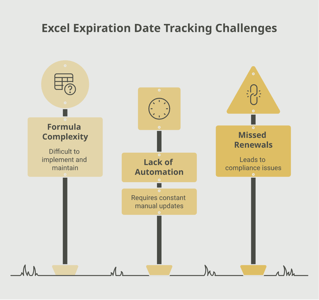
The most common tracking method is a spreadsheet maintained by HR or the volunteer coordinator. This works for very small organizations but breaks down at scale and survives employee turnover poorly.
A document management system or shared drive is a step up but does not actively flag expiring clearances or send reminders. The expiry date is one cell among many, and the file rarely gets reviewed until something forces it.
State portals (such as the NSW Office of the Children's Guardian's WWCC Verification System) allow employers to register workers and receive automated notifications of status changes, including suspensions, revocations, and expiries. These verification systems are powerful but apply only to the issuing state and do not consolidate records for multi-state organizations.
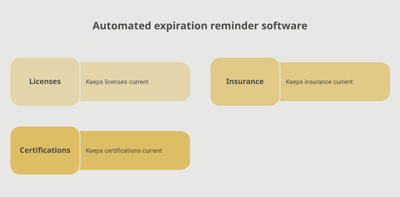
A dedicated tracking platform like Expiration Reminder stores each worker with their state, WWCC type, clearance number, expiry date, and role. Reminders fire automatically before the expiry, expired records appear on a dashboard, and clearance certificates can be attached for audit purposes.
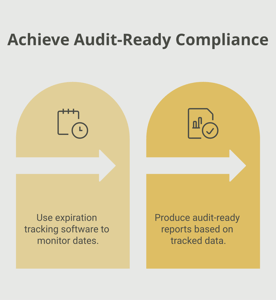
The features that matter most for WWCC tracking include automated renewal reminders at configurable intervals (90, 60, 30 days, expiry, expired), document storage so the clearance card or certificate is attached to each worker record, dashboard views by site, role, or state, audit-ready reports of clearance status across the workforce, and the ability to record a new expiry date the moment a renewal is confirmed.
The aim is straightforward: no one starts work without a current clearance, and no one continues to work past expiry without notice.
Key Takeaways
- A Working with Children Check is a government-issued background screening clearance for individuals working or volunteering with children in Australia.
- Every Australian state and territory runs its own scheme, with different names, fees, and validity periods (2, 3, or 5 years depending on jurisdiction).
- Allowing an uncleared worker to engage with children is a criminal offense in every state and territory.
- The clearance includes ongoing monitoring; suspensions and revocations can occur during the validity period.
- Multi-state organizations face multiplied compliance burdens because clearances are not portable between states.
- Manual tracking via spreadsheets fails at scale; automated tracking with reminders and document storage is the reliable approach.
- Robust screening protects children, supports compliance, and preserves the organization's reputation and operating authority.
Frequently Asked Questions
How long is a Working with Children Check valid?
Validity periods vary by state and territory. New South Wales, Victoria, South Australia, and ACT issue 5-year clearances. Queensland, Western Australia, and Tasmania issue 3-year clearances. The Northern Territory issues 2-year clearances. The expiry date is printed on the card or notice.
Who needs a Working with Children Check?
Anyone working or volunteering in a child-related role must have a current clearance. Definitions of "child-related work" vary by state but typically include education, childcare, healthcare, sport, recreation, religious activities, accommodation services, and any role with direct unsupervised contact with children.
Can I use a Working with Children Check from another state?
In most cases, no. Clearances are issued under state-specific legislation and are not automatically portable. If you move between states or take work in a different state, you generally need to apply for that state's check. Some recognition arrangements exist — confirm with the issuing authority before relying on cross-border use.
What happens if my Working with Children Check expires?
Working in a child-related role with an expired clearance is a criminal offense. Workers must stop the relevant work until a current clearance is in place. Employers face penalties for allowing the work to continue.
How far in advance should I renew?
Apply for renewal 60–90 days before expiry. Processing times vary by state and can be longer during peak periods or when additional checks are required.
Are volunteers required to have a WWCC?
Yes, in most jurisdictions. Volunteer roles working with children are generally treated the same as paid roles for WWCC purposes, though application fees may be reduced or waived for volunteers in some states.
What if a worker's clearance is suspended or revoked during the validity period?
The worker must stop child-related work immediately. The employer is notified by the issuing authority and must verify the status before allowing the worker to resume. Continuing to work after suspension or revocation is a criminal offense for both the worker and the employer.
How is the WWCC different from a police check?
A police check returns the individual's criminal history but does not include the suitability assessment, ongoing monitoring, or state-specific child-protection findings included in a WWCC. A standard police check is not a substitute for a WWCC in any Australian jurisdiction.
Conclusion
Working with Children Checks are the foundation of child-safe organizations across Australia. The substantive work — applying for, holding, and renewing the clearance — sits with the individual worker, but the responsibility for verifying and tracking it sits with the organization. The legal, regulatory, and reputational consequences of missing an expiry are severe.
If your team is tracking WWCC expiry dates on spreadsheets, in shared drives, or through the memory of one HR lead, you already know how risky that is. A purpose-built tracking platform like Expiration Reminder centralizes every worker's clearance details, sends reminders before each expiry, stores certificates, and produces audit-ready reports the moment anyone asks.
Protect the children in your care, protect the workers who serve them, and let the system handle the dates.