Introduction
If your organization employs workers across borders — citizens in their home countries hiring non-citizens, multinationals deploying workforces internationally, or any organization with cross-border hiring — work permits are the documents that make those employment relationships legal. The frameworks vary dramatically by country, the validity periods range from months to multiple years, and the renewal processes can take weeks or months. Missing renewals disrupts employment, creates regulatory exposure, and (in many countries) can affect future entry.
This article explains what a work permit is, the major frameworks across the US, Canada, EU, UK, GCC, and other jurisdictions, typical validity periods, and the most practical way to track work permits across an international workforce.
For most HR and immigration teams, individual renewals are well understood. The hard part is the calendar across many workers, many jurisdictions, and many work permit categories.
What Is a Work Permit?
A work permit is a government-issued authorization permitting a non-citizen to work in a country. The specific name and framework varies by country:
- United States — Employment Authorization Document (EAD, Form I-766) plus various visa categories (H-1B, L-1, O-1, TN, etc.) authorizing work.
- Canada — Work permits issued by Immigration, Refugees and Citizenship Canada (IRCC); employer-specific or open. Most employer-specific work permits require Labour Market Impact Assessment (LMIA) or qualify under International Mobility Program (IMP).
- European Union — EU Single Permit combines residence and work authorization. EU Blue Card for high-skilled workers.
- United Kingdom — Skilled Worker Visa, Health and Care Worker Visa, Global Talent Visa, and other route-specific authorizations under the points-based immigration system.
- United Arab Emirates — MoHRE Work Permit (Labour Card) issued under sponsorship.
- Saudi Arabia — HRSD-issued work permit combined with the Iqama.
- Australia — Temporary Skill Shortage (TSS) Visa (Subclass 482), Employer Nomination Scheme (Subclass 186), and other employer-sponsored or skill-stream visas.
- Singapore — Employment Pass (EP), S Pass, Work Permit (lower-skilled).
Common patterns across frameworks:
- Employer-specific vs open work permits — most work permits are tied to a specific employer and role; some (US EAD, Canada open work permits, certain spousal categories) allow broader employment.
- Validity tied to employment or program — typically 1-3 years initially, with extension options.
- LMIA-style labor-market testing — many countries (Canada, Australia, UK) require some demonstration that the role cannot be filled by local workers.
- Sponsorship obligations — employers sponsoring work permits typically have ongoing reporting and compliance obligations.
Canada-specific points:
- LMIA validity: 6 months for the application after positive decision (worker must apply for work permit within this window).
- Work permit validity itself: 1-3 years typically.
- Recognized Employer Pilot: 3-year LMIA validity for trusted employers.
- Extension: initiate at least 30 days before permit expiry.
Why Work Permit Tracking Matters for Your Organization
Work permit currency protects against three concrete risks: illegal employment, regulatory enforcement, and worker disruption.
From an illegal-employment standpoint, a worker with an expired work permit cannot legally be employed in the country. The employer faces fines and (in repeat cases) loss of sponsorship privileges; the worker can face removal.
From a regulatory standpoint, immigration audits in Canada (IRCC), the US (ICE), the UK (Home Office), the EU member states, and the Gulf countries all review employer compliance with sponsorship obligations. Lapsed work permits are a visible finding.
From a worker-experience standpoint, work permit lapses cascade into other documents (residence permits, dependent permits, healthcare access) with significant personal disruption.
For employers with international workforces, the work permit calendar is one of the most consequential HR-compliance controls in the immigration program.
Common Scenarios for Tracking Work Permit Expiration Dates
Multinational Employers
Multinationals with global workforces manage work permits across many jurisdictions, each with its own framework and renewal timing.
Specialty Skill Employers
Tech, healthcare, finance, and other specialty-skill employers manage US H-1B, Canadian LMIA-based permits, UK Skilled Worker visas, EU Blue Cards, and other category-specific authorizations.
Gulf-Region Operations
UAE, Saudi Arabia, Qatar, Kuwait, Bahrain, and Oman operations manage sponsored work permits across an expatriate workforce.
International Education
Universities and research institutions sponsor international academics, post-docs, faculty, and certain student work authorizations.
Construction and Engineering
Major infrastructure projects globally manage work permits across diverse craft and technical workforces.
How Work Permit Tracking Benefits Your Organization
A reliable program produces measurable benefits.
For the company, current work permits maintain legal employment, satisfy sponsorship obligations, and prevent regulatory enforcement.
For HR, immigration, and global mobility teams, the renewal calendar becomes predictable. Extension applications are filed with adequate lead time. New filings can be planned to align with project timelines.
For workers, predictable renewals support continued employment and prevent cascading personal disruption.
How to Track Work Permit Expiration Dates
Country-specific immigration portals provide individual status verification. Global mobility platforms (Envoy Global, Boundless, Topia, Berry Appleman & Leiden tools, others) integrate work permit data across jurisdictions.
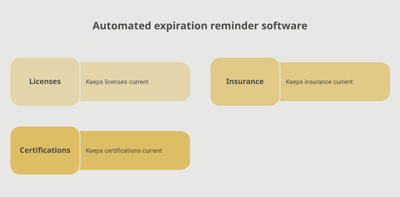
For organizations using a separate compliance tracker, a platform like Expiration Reminder stores each worker with their work permit category, country, expiration date, employment basis, supporting documents, and renewal lead times. Reminders fire automatically before each renewal milestone.
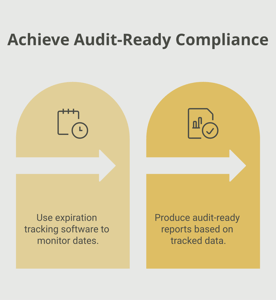
Key features include automated reminders at multiple intervals (180, 120, 60, 30 days — international renewals often need long lead times), document storage for permits with appropriate confidentiality, dashboard views by country, worker, or expiry window, audit-ready reports for sponsorship audits, and the ability to log renewals in one step.
Key Takeaways
- A work permit is a government-issued authorization permitting a non-citizen to work in a country.
- Frameworks vary dramatically: US EAD/visa categories, Canada LMIA-based permits and IMP, EU Single Permit and Blue Card, UK points-based system, Gulf sponsorship, Australia TSS/ENS, Singapore EP/S Pass.
- Most work permits are tied to specific employers; some are open.
- Typical validity 1-3 years initially with extension options.
- Many frameworks require labor-market testing (LMIA-style) demonstrating that the role cannot be filled locally.
- Sponsorship comes with ongoing compliance and reporting obligations.
- Lapses cause illegal employment, regulatory exposure, and worker disruption.
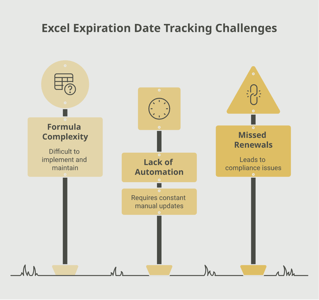
- Automated tracking with reminders is essential for any global workforce.
Frequently Asked Questions
How long is a work permit valid?
Varies by country and category. Typical initial validity is 1-3 years. Some categories (US H-1B initial 3 years extendable to 6, Canada employer-specific based on LMIA validity, etc.) follow specific category rules.
What is the difference between a work permit and a residence permit?
A work permit authorizes employment; a residence permit authorizes living in the country. Many jurisdictions combine them (EU Single Permit, US H-1B status, Canadian work permits often combined). Others issue them separately.
What is an LMIA?
A Labour Market Impact Assessment — a Canadian document obtained by the employer demonstrating that the role cannot be filled by a Canadian worker. Required for most employer-specific Canadian work permits.
What is the EU Single Permit?
A combined residence and work permit issued by EU member states under EU Directive 2011/98, designed to simplify legal migration for non-EU workers.
How early should I start a work permit renewal?
60-90 days before expiration is typical; for complex renewals (LMIA, H-1B extension, EU long-term resident applications), 6 months or more.
Can I change employers on a work permit?
It depends on the permit type. Open work permits allow employment changes; employer-specific permits typically require a new permit for a new employer (with some exceptions and grace periods).
What is sponsorship?
The employer's role in supporting a non-citizen's work authorization — typically including petition filing, fee payment, attestations to government, and ongoing reporting and compliance obligations.
How do organizations track work permits across many countries?
Combinations of country-specific portals, global mobility platforms, immigration management software, and dedicated tracking systems. The system that actively reminds before each expiration is the one that prevents most lapses.
Conclusion
Work permits are the foundation of legal international employment. The substantive work — sponsorship, applications, government filings, attestations — sits with HR, global mobility, immigration counsel, and the workers themselves. The administrative work — knowing every worker's work permit expiration, sequencing renewal lead times, and managing the cascade with residence and dependent permits — is where most global immigration programs need help.
If your team tracks work permits through country portals or global mobility software, you already know how easy it is for one worker's permit to slip past the renewal window. A purpose-built tracking platform like Expiration Reminder centralizes every worker's work permit and linked documents, sends reminders before each renewal, stores the supporting documents, and produces audit-ready reports the moment anyone asks.
Authorize the work, sponsor the renewals, and let the system handle the calendar.