Introduction
If your organization employs or hosts non-citizens, visa status is one of the most consequential pieces of HR and compliance data you track. Visas come in dozens of categories with widely varying validity periods, and the distinction between the visa expiration date and the authorized period of stay (typically recorded on Form I-94 in the US) catches new immigration-compliance staff off guard every year. The calendar matters because lapses can disrupt employment, trigger reverification obligations, and (in serious cases) affect future entry.
This article explains what a visa is, common categories, the critical distinction between visa expiration and authorized stay, and the most practical way to track visa-related dates across a non-citizen workforce.
For most HR, immigration, and travel teams, capturing visa data at I-9 verification or onboarding is well understood. The hard part is the calendar — knowing whose visa is approaching expiry, whose I-94 authorization is ending, and which workers need extension or change-of-status filings.
What Is a Visa?
A visa is a government authorization permitting a non-citizen to seek entry to a country for a specified purpose and period. For U.S. immigration, visas fall into two main categories:
- Nonimmigrant visas — for temporary visits (business, tourism, study, work, exchange).
- Immigrant visas — for permanent residence (leading to a green card upon admission).
Common U.S. nonimmigrant visa categories:
- B-1/B-2 Visitor Visa — short-term business (B-1) or tourism (B-2). Typically valid up to 10 years from issue; authorized stay up to 180 days per entry; no employment authorization.
- F-1 Student Visa — academic study; validity tied to course length and SEVIS status; limited employment authorization (CPT, OPT).
- J-1 Exchange Visitor Visa — exchange programs; validity tied to program.
- H-1B Specialty Occupation Visa — work visa for specialty occupations; initial period of up to 3 years, extendable to 6 years.
- L-1 Intracompany Transfer Visa — for employees transferring from a related foreign company.
- O-1 Extraordinary Ability Visa — for individuals with extraordinary ability in their field.
- TN Visa — for Canadian and Mexican professionals under USMCA.
- E-1/E-2 Treaty Trader/Investor Visa — based on treaty country business activity.
Critical distinction:
- Visa expiration date — the date by which the visa can be used to seek entry to the U.S. Stamped on the visa in the passport.
- Authorized period of stay — the date by which the person must leave the U.S., recorded on Form I-94 (electronic since 2013). Often different from (and shorter than) the visa expiration.
A traveler with a 10-year B-1/B-2 visa might be admitted for only 6 months on each entry. The visa stays valid for return travel for up to 10 years, but the authorized stay resets at each admission. Workers on H-1B visas have an I-94 typically valid for the duration of the approved petition (initial up to 3 years).
For employment verification (Form I-9), the relevant date is the work-authorization expiration — typically the I-94 expiration or the underlying petition validity, not just the visa stamp.
Why Visa Tracking Matters for Your Organization
Visa tracking protects against three concrete risks: unauthorized employment, immigration-compliance findings, and worker disruption.
From an employment-authorization standpoint, an expired I-94 or work-authorization document means the worker no longer has authorization to work. Continuing to employ them violates federal immigration law.
From a worker-travel standpoint, an expired visa stamp prevents return to the U.S. after international travel — even if the underlying status remains valid. Workers planning international trips need both the visa and underlying status considered.
From a compliance standpoint, ICE audits review I-9 records and the underlying employment-authorization documents. Lapsed authorization without timely reverification is a paperwork violation.
For employers with non-citizen workforces, the visa calendar is one of the most consequential HR-compliance controls in the immigration program.
Common Scenarios for Tracking Visa Expiration Dates
Technology and Specialty Workforces
Tech companies, financial services, healthcare, and other specialty-skill employers manage H-1B, L-1, O-1, and TN visa workers. Each category has distinct rules and renewal procedures.
Universities and Research Institutions
Universities sponsor F-1 students, J-1 exchange visitors, H-1B faculty, and O-1 distinguished researchers. International student offices manage thousands of overlapping calendar items.
Hospitality and Service Industries
H-2B seasonal workers, J-1 cultural exchange participants, and other temporary categories require tracking aligned with seasonal cycles.
Healthcare
Hospitals sponsoring H-1B and J-1 physicians manage visa status alongside medical licensing and credentialing.
International Business and Consulting
Consulting firms with global workforces manage business-visit visas (B-1), intracompany transfers (L-1), and treaty-based visas across many jurisdictions.
How Visa Tracking Benefits Your Organization
A reliable program produces measurable benefits.
For the company, current visa records support I-9 compliance, immigration-program integrity, and clean ICE-audit posture.
For HR, immigration-compliance, and travel teams, the calendar becomes predictable. Reverification is scheduled proactively. Extension and change-of-status petitions are filed with adequate lead time.
For workers, predictable tracking supports international travel and ensures continued employment authorization.
How to Track Visa Expiration Dates
I-9 management systems track work-authorization expiration as part of structured reverification workflows. Immigration management platforms (Envoy, Boundless, Berry Appleman & Leiden tools, and others) integrate visa data with petition workflows.
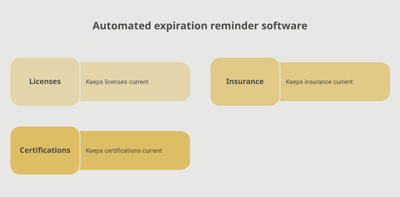
For organizations using a separate compliance tracker, a platform like Expiration Reminder stores each worker with their visa category, visa stamp expiration, I-94 authorized stay, underlying petition validity, and supporting documents. Reminders fire automatically before each renewal milestone.
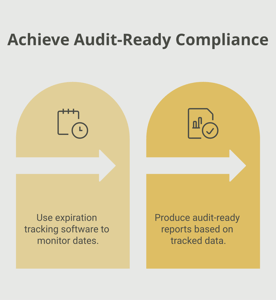
Key features include automated reminders at multiple intervals (180, 120, 60 days — extensions and renewals often need long lead times), document storage for visas, I-94 records, petitions, and approval notices with appropriate confidentiality, dashboard views by visa category or expiry window, audit-ready reports for ICE audits, and the ability to log new dates after each renewal or extension.
Key Takeaways
- A visa is a government authorization permitting a non-citizen to seek entry for a specified purpose and period.
- U.S. visas are nonimmigrant (temporary) or immigrant (leading to permanent residence).
- The visa expiration (stamp) and the authorized period of stay (I-94) are different dates with different implications.
- Common categories: B-1/B-2 visitor, F-1 student, J-1 exchange, H-1B specialty occupation, L-1 transfer, O-1 extraordinary ability, TN professional.
- For employment authorization (I-9), the I-94 or underlying petition validity typically matters more than the visa stamp.
- Lapsed work authorization without timely reverification is an I-9 paperwork violation.
Frequently Asked Questions
How long is a U.S. visa valid?
Varies dramatically by category: B-1/B-2 typically up to 10 years; H-1B initial up to 3 years (extendable to 6); F-1 and J-1 tied to program; others vary.
What is the difference between visa expiration and authorized stay?
The visa expiration is the date by which the visa can be used to seek entry. The authorized stay (I-94) is the date by which the person must leave the U.S. They are different dates; the I-94 typically matters for employment authorization.
What is Form I-94?
The U.S. Customs and Border Protection record of admission, showing the authorized period of stay. Electronic since 2013; available online at i94.cbp.dhs.gov.
How do I reverify employment authorization when a worker's visa is expiring?
Use Section 3 of Form I-9 to reverify, examining the new document the worker presents. Reverification must be completed no later than the date employment authorization expires.
What is a grace period?
Some categories include grace periods after employment ends. H-1B workers, for example, have a 60-day grace period to find a new employer or change status (assuming the I-94 hasn't expired sooner).
Can a visa be revoked?
Yes. The U.S. Department of State can revoke a visa for various reasons. A revoked visa cannot be used to seek entry.
What is Duration of Status (D/S)?
A notation used for some visa categories (F-1, J-1) instead of a fixed I-94 end date, meaning the person is authorized to remain as long as they maintain the status (e.g., enrolled in study).
How do I track visa status across many workers?
Combinations of I-9 management systems, immigration management platforms, and dedicated tracking platforms. The system that actively reminds before each expiration is the one that prevents most lapses.
Conclusion
Visa tracking sits at the foundation of immigration compliance for any employer with non-citizen workforces. The substantive work — petitions, visa applications, status changes, extensions — sits with immigration counsel and HR. The administrative work — knowing every worker's visa expiration, I-94 authorized stay, and underlying petition validity, and triggering reverification or extension filings in time — is where most immigration programs need help.
If your team tracks visa dates through I-9 systems or immigration management platforms, you already know how easy it is for one worker's I-94 to slip past or for an H-1B extension to need filing on short notice. A purpose-built tracking platform like Expiration Reminder centralizes every worker's visa status, sends reminders before each milestone, stores the supporting documents with appropriate confidentiality controls, and produces audit-ready reports the moment anyone asks.
Verify the authorization, file in time, and let the system handle the calendar.