Introduction
If your business buys from third parties — software, services, equipment, marketing tools, professional services, facilities suppliers — vendor contracts are the legal agreements behind those purchases. Modern organizations run dozens or hundreds of vendor contracts, each with its own term, renewal cycle, and auto-renewal clause. When one slips past unnoticed, the consequences range from unbudgeted renewal commitments to service interruptions.
This article explains what a vendor contract is, how it typically differs from a supplier contract, the common terms, and the most practical way to track vendor contracts across a procurement portfolio.
For most procurement, IT, and finance teams, the renewal itself is well understood. The hard part is the calendar across hundreds of contracts with overlapping terms and notice deadlines.
What Is a Vendor Contract?
A vendor contract is a legal agreement between a buyer and a vendor covering the purchase of goods or services from a third party. In common usage, a vendor contract typically covers finished products, software, professional services, or other deliverables for the buyer's own use — as distinguished from supplier contracts, which usually cover raw materials and production inputs.
Common vendor contract elements include:
- Scope of work or product — what is being provided.
- Term and renewal — initial period, renewal mechanism, termination.
- Fees and payment — pricing, invoicing, late payment, escalators.
- Service levels — for service vendors: uptime, response times, quality measures.
- Intellectual property — ownership of pre-existing IP and new work product.
- Confidentiality and data protection — handling of sensitive information.
- Indemnification and liability — caps and carve-outs.
- Insurance requirements — what the vendor must carry.
- Termination rights — for cause, for convenience, end of term.
Vendor contracts vary widely in length. SaaS vendor contracts commonly run 1–3 years with auto-renewal. Professional services vendor contracts may be project-length with discrete SOWs. Equipment vendor contracts often align to depreciation cycles. Marketing tool vendors typically run annual subscription terms.
Most vendor contracts of any size include auto-renewal clauses requiring written termination notice (typically 60–90 days before the renewal date) to prevent automatic extension for another full term.
Why Vendor Contract Tracking Matters for Your Organization
Vendor contract currency protects against three concrete risks: unintended auto-renewal, missed renegotiation, and service disruption.
From an auto-renewal standpoint, vendor contracts that auto-renew can lock organizations into another full term — sometimes years — when the relationship has run its course. The termination-notice deadline is the critical date, often weeks or months before the renewal date itself.
From a renegotiation standpoint, end of term is the strongest moment to renegotiate price, scope, or terms. Missing the window means accepting the existing arrangement for another period.
From a service standpoint, vendor contracts often gate access to underlying services. An expired vendor contract can suspend access to software, halt service delivery, or trigger termination of the relationship.
For organizations with sprawling vendor portfolios — typical of enterprise IT environments with hundreds of SaaS subscriptions — central tracking is the only sustainable approach.
Common Scenarios for Tracking Vendor Contract Expiration Dates
SaaS-Heavy IT Environments
Modern organizations commonly run 50–500+ SaaS vendor contracts across IT, marketing, sales, HR, finance, and operations. Each has its own renewal date and auto-renewal clause.
Marketing Vendor Stacks
Marketing teams contract for marketing automation, CRM, analytics, advertising platforms, content tools, design tools, and dozens of specialized services. The vendor stack changes year over year, but the contracts persist.
Professional Services Vendors
Consulting, legal, accounting, audit, and similar professional services vendors operate under engagement letters or MSAs with annual or matter-based engagement cycles.
Facilities and Operations Vendors
Cleaning, security, HVAC maintenance, landscaping, pest control, fire protection, and other facilities vendors operate under recurring service contracts that are easy to lose track of.
Equipment and Hardware Vendors
Equipment vendor contracts (copiers, AV equipment, kitchen equipment, fleet vehicles) often run multi-year with embedded service components.
How Vendor Contract Tracking Benefits Your Organization
A reliable tracking program produces measurable benefits.
For the company, current vendor contracts prevent unintended auto-renewal lock-ins, preserve renegotiation leverage, and avoid service disruptions.
For procurement, IT, and finance teams, the renewal calendar becomes a planned activity. Notice deadlines are acted on in time. Cost reviews happen with adequate lead time.
For executive leadership, accurate vendor data supports vendor consolidation, license rationalization, and stronger negotiation posture.
How to Track Vendor Contract Expiration Dates
ERP and procurement systems store vendor master data and (sometimes) contract data. SaaS management platforms (Zylo, Productiv, Vendr, BetterCloud) specialize in tracking SaaS vendor contracts.
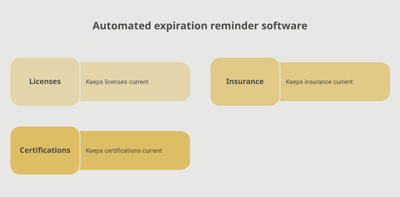
For organizations not running a dedicated SaaS management platform, a tracking system like Expiration Reminder stores each vendor contract with its vendor, scope, term, renewal date, auto-renewal clause, termination-notice deadline, contract owner, and supporting documents. Reminders fire automatically before each renewal and notice deadline.
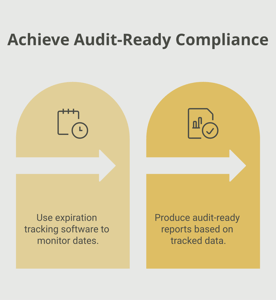
Key features include automated reminders at multiple intervals (120, 90, 60, 30 days — and separate reminders before each termination-notice deadline), document storage for contracts and quotes, dashboard views by vendor, department, or expiry window, audit-ready reports for procurement and finance, and the ability to log new dates after each renewal.
Key Takeaways
- A vendor contract is a legal agreement covering the purchase of goods or services from a third party.
- Vendor contracts typically cover finished goods, software, professional services, and other deliverables.
- The distinction from supplier contracts (raw materials/components) is common but not universal.
- Most vendor contracts include auto-renewal clauses requiring 60–90 days termination notice.
- Missing the notice deadline locks the buyer into another full term.
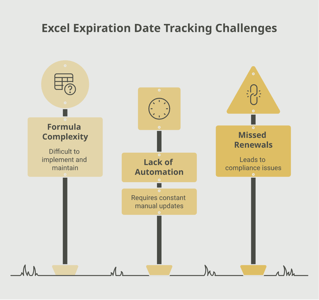
- Manual tracking via spreadsheets fails at portfolio scale; automated tracking with reminders is the reliable approach.
Frequently Asked Questions
What is the difference between a vendor and a supplier?
Vendors typically provide finished goods or services for the buyer's own use; suppliers typically provide raw materials and components for the buyer's production. The terms are often used interchangeably in practice.
How long do vendor contracts typically last?
Common lengths include 12 months with auto-renewals (SaaS, software, services), multi-year terms (3 or 5 years for enterprise services), and project-length terms (professional services).
What is the termination-notice deadline?
The date by which the buyer must provide written notice if they do not want a contract to auto-renew. Typically 60–90 days before the renewal date.
What happens when a vendor contract expires?
If auto-renewal applies, the contract extends for another term unless notice is given. If not, the relationship terminates and any associated services are typically suspended.
How should I prepare for vendor contract renewals?
Begin reviewing 90–120 days before the renewal date for larger contracts. Evaluate alternatives, gather usage data, and identify negotiation points before the formal renewal conversation.
What is a true-up?
A true-up is the annual reconciliation between contracted seats or volume and actual usage. Over-deployment triggers retroactive fees in many enterprise contracts.
How do organizations track many vendor contracts?
Combinations of ERP, procurement systems, SaaS management platforms, and dedicated tracking systems. The system that actively reminds before expiry is the one that prevents most failures.
What is shadow IT and how does it affect vendor tracking?
Shadow IT refers to software and services purchased by departments outside central IT/procurement view. Shadow IT contracts are often missing from central tracking, leading to surprise renewals and audit findings.
Conclusion
Vendor contracts are the third-party buying side of every modern business — and the calendar around them is one of the most important operational systems an organization runs. The substantive work — choosing vendors, negotiating terms, managing the relationship — sits with procurement, IT, and the function buying the service. The administrative work — knowing every contract's renewal date and termination-notice deadline — is where most procurement programs lose money quietly.
If your team tracks vendor contracts through ERP, procurement systems, or spreadsheets, you already know how easy it is for a renewal to slip past. A purpose-built tracking platform like Expiration Reminder centralizes every contract, sends reminders before each renewal and notice deadline, stores the supporting documents, and produces audit-ready reports the moment anyone asks.
Preserve the leverage, prevent the lock-ins, and let the system handle the calendar.