Introduction
If your organization manages residential properties — multifamily housing, corporate housing, employee housing, short-term rentals, expatriate accommodation — tenancy contracts are the legal foundation of every occupant relationship. Term lengths range from month-to-month to multi-year, renewal notice rules vary by jurisdiction, and missed notice deadlines can lock both parties into another full term.
This article explains what a tenancy contract is, how it differs from a commercial lease agreement, the typical 6-12 month residential term, the renewal-notice rules, and the most practical way to track tenancy contracts across a residential property portfolio.
For most property managers and real estate operators, individual renewals are well understood. The hard part is the calendar across many units and many tenancies with overlapping end dates.
What Is a Tenancy Contract?
A tenancy contract (also called a residential lease, tenancy agreement, or rental agreement) is a legal contract between a landlord (or property manager) and a tenant covering the right to occupy and use a residential property for a defined period in exchange for rent. Tenancy contracts cover:
- Premises — the specific unit being rented.
- Term — fixed-term (typically 6-12 months) or month-to-month.
- Rent — base rent, payment schedule, late fees.
- Security deposit — amount, conditions for return.
- Utilities — which party pays what.
- Use restrictions — number of occupants, pets, smoking, modifications.
- Maintenance and repairs — landlord vs tenant responsibilities.
- Renewal and termination — notice periods, holdover rules.
- Local law — most residential tenancies are heavily regulated at the state and local level (rent control, just-cause eviction, security deposit limits, etc.).
Tenancy contracts differ from commercial lease agreements in several important ways:
- Consumer protection — residential tenancies face significant tenant-protection law that does not apply to commercial leases.
- Shorter terms — most residential tenancies are 6-12 months; commercial leases run 3-10 years.
- Less negotiated — residential tenancies typically follow standard forms with limited negotiation.
- Renewal patterns — many residential tenancies automatically convert to month-to-month at term end if neither party gives notice.
Common renewal scenarios:
- Fixed-term renewal — the parties sign a new fixed-term contract before the current term ends.
- Conversion to month-to-month — most jurisdictions allow automatic conversion at term end with no new contract; either party can terminate with statutory notice (typically 30-60 days).
- Non-renewal / move-out — the tenant vacates at term end; landlord conducts move-out inspection and returns security deposit per state rules.
Short-term and corporate housing tenancies follow their own patterns — often shorter terms (week-to-week, month-to-month, or specific assignment periods) with their own renewal and notice rules.
Why Tenancy Contract Tracking Matters for Your Organization
Tenancy contract currency protects against three concrete risks: unintended month-to-month conversion, missed notice windows, and security-deposit complications.
From a term-conversion standpoint, fixed-term residential tenancies typically convert to month-to-month at term end unless renewed. Property managers needing a fixed-term renewal must act before the term ends.
From a notice standpoint, both renewal-offer and termination-notice deadlines vary by jurisdiction. Missing the window can lock the parties into unintended arrangements.
From a security-deposit standpoint, state-specific rules dictate when and how the deposit must be returned after move-out — typically within 14-30 days with itemized deductions.
For property management companies, corporate housing operators, multifamily housing providers, and employee housing programs, the tenancy contract calendar is one of the most consequential operational controls.
Common Scenarios for Tracking Tenancy Contract Expiration Dates
Multifamily Property Management
Apartment communities and multifamily portfolios manage hundreds or thousands of tenancies across multiple properties.
Corporate Housing and Relocation
Corporate housing providers and relocation companies manage shorter-term assignment tenancies for relocating employees.
Employee Housing
Some employers provide employee housing (campus housing, hospital staff housing, agricultural worker housing) with their own tenancy arrangements.
Short-Term Rentals
Airbnb hosts, vacation rental managers, and similar operators manage many short-stay tenancies with their own legal frameworks (in many jurisdictions, short-term rentals operate under distinct rules from traditional tenancies).
Single-Family Rentals (SFR) Operators
Institutional SFR operators (Invitation Homes, AMH, Tricon, others) manage thousands of tenancy contracts across geographically dispersed properties.
How Tenancy Contract Tracking Benefits Your Organization
A reliable program produces measurable benefits.
For the company, current tenancy data supports rent collection, renewal planning, move-in/move-out coordination, and compliance with state and local tenant-protection rules.
For property management and operations teams, the tenancy calendar becomes predictable. Renewal offers, rent increases, and non-renewal notices can be issued within statutory windows.
For tenants, predictable renewal timelines support their planning and housing security.
How to Track Tenancy Contract Expiration Dates
Property management platforms (Yardi, AppFolio, Buildium, RealPage, others) typically include tenancy tracking and renewal workflows.
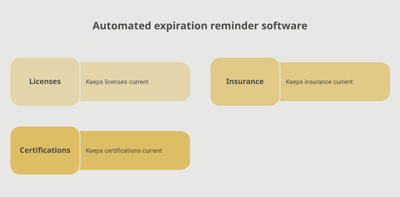
For organizations using a separate compliance tracker alongside property management software, a platform like Expiration Reminder stores each tenancy with property, unit, tenant, term, rent, expiration date, notice-deadline windows, security deposit details, and supporting documents. Reminders fire automatically before each renewal and notice deadline.
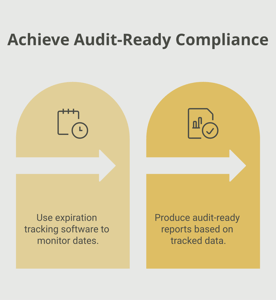
Key features include automated reminders at multiple intervals (90, 60, 30 days), document storage for tenancy agreements and addendums, dashboard views by property, unit type, or expiry window, audit-ready reports for management and audit teams, and the ability to log renewals in one step.
Key Takeaways
- A tenancy contract is a legal contract between landlord and tenant covering residential property occupancy.
- Typical residential term: 6-12 months, with month-to-month options.
- Distinct from commercial lease agreements: shorter terms, consumer protections, standardized forms.
- Most residential tenancies automatically convert to month-to-month at term end unless renewed.
- State and local laws govern renewal notice, security deposits, just-cause eviction, and rent control.
- Property management platforms typically integrate tenancy tracking and renewal workflows.
Frequently Asked Questions
How long is a typical residential tenancy?
6-12 months is most common for fixed-term residential leases. Month-to-month is also common.
What happens at the end of a tenancy term?
Options include: signing a new fixed-term contract, converting to month-to-month (default in most states if neither party gives notice), or the tenant moving out.
What is the difference between a tenancy contract and a lease agreement?
In common usage, "tenancy" refers to residential rental relationships; "lease agreement" can refer to either residential or (more commonly in business contexts) commercial real estate. Commercial leases face different legal frameworks and longer terms.
How much notice is required to terminate a tenancy?
Varies by state — typically 30 days for month-to-month tenancies; longer (60-90 days) in some jurisdictions, particularly for landlord-initiated termination.
What are tenant-protection laws?
State and local laws protecting residential tenants — covering rent control, just-cause eviction requirements, security deposit limits, habitability standards, and similar protections. Specifics vary widely.
How long do landlords have to return a security deposit?
State-specific — typically 14-30 days after move-out, with itemized deductions for damages beyond normal wear and tear.
How are short-term rentals (Airbnb, VRBO) different?
Short-term rentals often operate under distinct legal frameworks — hotel/transient lodging rules rather than tenancy law. Specifics vary by jurisdiction; many cities have specific short-term-rental regulations.
How do property managers track many tenancies?
Combinations of property management software (Yardi, AppFolio, Buildium, RealPage), CRM tools, and dedicated tracking platforms. The system that actively reminds before each renewal and notice deadline is the one that prevents most lapses.
Conclusion
Tenancy contracts are the legal foundation of residential property management. The substantive work — leasing, maintaining properties, supporting tenants — sits with property management. The administrative work — knowing every tenancy's expiration, notice deadlines, and security-deposit timelines — is where most property management programs need help, particularly at scale.
If your team tracks tenancies through property management software, you may already have integrated tracking. For organizations seeking complementary calendar discipline, a purpose-built tracking platform like Expiration Reminder centralizes every tenancy, sends reminders before each renewal and notice deadline, stores the supporting documents, and produces audit-ready reports the moment anyone asks.
Lease the units, renew the tenancies, and let the system handle the calendar.