Introduction
If your workforce includes healthcare workers, childcare staff, school employees, or others with close contact with infants, pregnant women, or vulnerable populations, Tdap vaccination status is part of the immunization documentation you need to keep current. CDC recommends Tdap for healthcare personnel who have never received it and a Td or Tdap booster every 10 years for all adults — so the calendar matters across an entire working lifetime.
This article explains what the Tdap vaccine is, the CDC recommendations, the 10-year adult booster cycle, the healthcare worker considerations, and the most practical way to track Tdap vaccination records across a workforce.
For most occupational health and HR teams, capturing Tdap status at hire is well understood. The hard part is the calendar — knowing whose 10-year booster is due and ensuring no worker is in a child-contact role without an up-to-date immunization record.
What Is the Tdap Vaccine?
Tdap is a combination vaccine protecting against three bacterial diseases:
- Tetanus — caused by Clostridium tetani, leading to painful muscle stiffness.
- Diphtheria — caused by Corynebacterium diphtheriae, causing severe throat infection and potential complications.
- Pertussis — whooping cough, caused by Bordetella pertussis. Especially dangerous to infants.
Tdap is the adult/adolescent version (capital "P" indicates a different formulation than the childhood DTaP). CDC recommendations include:
- All adults — one dose of Tdap if not previously received, followed by Td (or Tdap) booster every 10 years to maintain tetanus and diphtheria protection.
- Healthcare personnel with direct patient contact — should receive a one-time dose of Tdap if not previously received, regardless of last Td dose.
- Pregnant women — recommended to receive Tdap during each pregnancy (preferably weeks 27–36) to protect the newborn through passive antibody transfer.
- Adolescents (age 11–12) — single dose of Tdap as part of routine immunization.
- Wound management — Tdap may be given in place of Td for tetanus-prone wounds.
Important nuances:
- Pertussis immunity wanes within a few years after Tdap, so booster doses do not maintain pertussis protection (only tetanus and diphtheria). However, healthcare providers continue to recommend Tdap (over Td) for the 10-year booster when pertussis exposure risk is elevated.
- Vaccine selection: Boostrix® (Tdap) is approved for adults 65 years or older when feasible; Adacel® is approved through age 64.
Why Tdap Tracking Matters for Your Organization
Tdap status tracking protects against three concrete risks: occupational and community pertussis transmission, regulatory and accreditation gaps, and worker tetanus exposure.
From a public-health standpoint, pertussis outbreaks affect daycares, schools, healthcare facilities, and broader communities. Healthcare worker vaccination reduces the risk of transmission to vulnerable patients (especially infants too young to be fully immunized).
From a regulatory standpoint, many healthcare facilities require Tdap as a condition of employment, and accreditation bodies (Joint Commission, AAAHC, CMS Conditions of Participation) expect documented healthcare-worker immunization programs.
From a worker-safety standpoint, tetanus protection in occupations with puncture-wound risk (construction, agriculture, certain healthcare and lab roles) is part of broader workplace safety.
For healthcare organizations, schools, daycares, and similar settings, Tdap tracking is part of the broader immunization compliance program.
Common Scenarios for Tracking Tdap Expiration Dates
Healthcare Facilities
Hospitals, clinics, and outpatient practices typically require Tdap as part of immunization documentation at hire and on a 10-year cycle thereafter.
Long-Term Care and Senior Living
LTC and senior living settings have higher pertussis transmission risk and often require staff Tdap.
Childcare and Schools
Daycares, preschools, and schools commonly require Tdap for staff to protect vulnerable students and themselves.
Public Safety and First Response
Police, fire, EMS, and other first responders often face workplace immunization expectations including Tdap.
High Wound-Risk Occupations
Construction, agriculture, food processing, and similar occupations may include Tdap as part of broader occupational health programs.
How Tdap Tracking Benefits Your Organization
A reliable program produces measurable benefits.
For the company, current Tdap records satisfy accreditation, regulatory, and contractual immunization requirements and reduce occupational transmission risk.
For occupational health and HR teams, the immunization calendar becomes predictable. 10-year boosters are scheduled with adequate lead time. New-hire onboarding includes Tdap status verification as a structured step.
For workers, predictable tracking removes the friction of last-minute booster appointments and supports continued eligibility for roles requiring current immunization.
How to Track Tdap Expiration Dates
Occupational health management systems, employee health platforms (Immuware, ReadySet, and others), and many HRIS modules track immunization records.
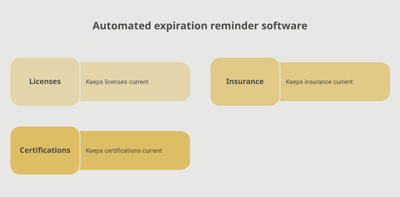
For organizations using a separate compliance tracker, a platform like Expiration Reminder stores each worker with their Tdap status, last dose date, 10-year next-due date, vaccine brand, and supporting documents — alongside other immunizations. Reminders fire automatically before each 10-year booster.
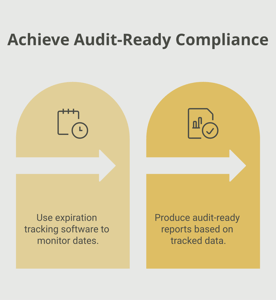
Key features include automated reminders at multiple intervals (180, 90, 30 days), document storage for vaccination records with HIPAA-compliant access controls, dashboard views by site, role, or expiry window, audit-ready reports for accreditation surveys, and the ability to log new doses in one step.
Key Takeaways
- Tdap is a combination vaccine protecting against tetanus, diphtheria, and pertussis.
- CDC recommends one Tdap dose for adults who have not received it, followed by Td or Tdap booster every 10 years.
- Healthcare personnel with direct patient contact should receive a one-time Tdap dose if not previously received.
- Tdap is recommended in each pregnancy to protect newborns.
- Pertussis immunity wanes within a few years post-Tdap; tetanus and diphtheria protection lasts 10 years.
- Many healthcare, school, and childcare employers require Tdap as a condition of employment.
- Automated tracking with reminders is the reliable approach for any non-trivial workforce.
Frequently Asked Questions
How often do adults need Tdap or Td?
Every 10 years for booster protection against tetanus and diphtheria. Healthcare workers and others at elevated pertussis risk may receive Tdap (rather than Td) at the 10-year interval.
What is the difference between DTaP and Tdap?
DTaP (capital D and T) is the pediatric vaccine given to infants and young children. Tdap (lowercase d) is the adolescent/adult formulation with reduced diphtheria and pertussis antigens. Both protect against the same three diseases.
Do all adults need Tdap?
CDC recommends one dose of Tdap for adults who have not received it, especially for healthcare workers with patient contact, childcare and school staff, and anyone with close contact with infants. After that, Td or Tdap booster every 10 years.
How long does Tdap protect against pertussis?
Pertussis immunity following Tdap wanes within a few years, faster than tetanus or diphtheria protection. There is no booster recommendation to maintain pertussis protection beyond the initial Tdap dose.
Is Tdap required for healthcare workers?
CDC recommends Tdap for healthcare workers with direct patient contact. Many healthcare facilities require it as a condition of employment, and accreditation expectations align with the CDC recommendation.
Is Tdap recommended during pregnancy?
Yes. CDC recommends Tdap during each pregnancy, preferably between weeks 27 and 36, to protect the newborn through passive antibody transfer.
Where can I check my Tdap status?
Through your healthcare provider's records, immunization registry (in many states), or the employee health office for healthcare workers.
How do organizations track immunization records?
Combinations of employee health management systems, HRIS modules, and dedicated tracking platforms. The system that actively reminds before the 10-year booster is the one that prevents most lapses.
Conclusion
Tdap is one of the most important adult vaccines in occupational health programs — combining ongoing tetanus and diphtheria protection with pertussis coverage critical to healthcare worker safety. The substantive work — administering the vaccine, providing education — sits with occupational health and clinical staff. The administrative work — knowing every worker's Tdap status and 10-year booster date — is where most programs need help.
If your team tracks Tdap status through HRIS or paper records, you already know how easy it is for a worker's 10-year booster to slip past. A purpose-built tracking platform like Expiration Reminder centralizes every worker's immunization record, sends reminders before each booster date, stores the supporting documents with appropriate confidentiality controls, and produces audit-ready reports the moment anyone asks.
Protect the workforce, document the immunization, and let the system handle the calendar.