Surety and Performance Bonds
Introduction
If you have ever bid on a public project, signed a federal construction contract, or onboarded a new subcontractor, you have already encountered surety and performance bonds. These are not optional documents. They are the three-party financial guarantees that allow large contracts to proceed at all — and the moment one expires unnoticed, the contract is exposed.
This article explains what surety and performance bonds are, how they differ, who is required to have them, how long they remain valid, and what happens when one expires. It also covers the most reliable way to track bond dates across an active book of work so renewals never get missed.
For contractors, project owners, and subcontractor coordinators, bond tracking sits in a tricky place — every bond is tied to a different project, every project has a different timeline, and the consequences of a lapse can include contract suspension, lost work, and licensing penalties. The good news is that tracking dates is the easiest part, once the right system is in place.
What Are Surety and Performance Bonds?
A surety bond is a three-party contract in which a surety company guarantees that one party (the principal) will fulfill obligations to another party (the obligee). If the principal defaults, the surety steps in to make the obligee whole — and then pursues recovery from the principal. The bond is not insurance for the contractor. It is financial protection for the project owner.
A performance bond is a specific type of surety bond used in construction and contract work. It guarantees that the contractor will complete the project according to the terms of the contract. If the contractor abandons the work, fails to meet specifications, or becomes financially unable to finish, the surety either funds the completion of the work or pays damages to the owner, typically up to the full contract value (the standard 100% bond amount on public work).
Other common surety bonds in the construction context include:
- Bid bonds — guarantee that the bidder will enter into the contract at the bid price if awarded.
- Payment bonds — guarantee that the contractor will pay subcontractors, suppliers, and laborers.
- Maintenance bonds — guarantee that defects discovered after completion will be corrected within a specified warranty period.
- License and permit bonds — required by state or municipal licensing authorities to operate in regulated trades.
Bonds are required by law on most public construction work. In the United States, the Miller Act requires performance and payment bonds on federal construction contracts over $150,000, and most states have parallel "Little Miller Act" laws covering state and local projects. Many private project owners — particularly on larger commercial work — also require bonds in their contracts.
Validity is a critical concept and one of the most misunderstood. Most performance bonds are issued for the term of the underlying contract — from notice to proceed through final acceptance, sometimes with an additional defects-liability or maintenance period. Some bonds carry a fixed term (often one year on commercial or licensing bonds) and must be formally renewed. Others extend with the project. In either case, an "extend or pay" or "claims-made within" provision may apply.
Why Surety and Performance Bonds Matter for Your Organization
Bonds carry real legal and financial weight on both sides of a project.
For contractors, the bond is the ticket to bid on regulated work. No bond, no bid. License and permit bonds keep the trade license active. Performance bonds on individual projects determine whether the work can proceed at all. A contractor whose bond capacity dries up — because of claims, financial trouble, or expired bonds — quickly loses access to the work that drives the business.
For project owners, the bond is the most concrete financial protection against contractor failure. If the contractor walks off a partially built project, the owner is not left absorbing the cost of finishing the work — the surety covers it, up to the bond amount. Owners on public work are required to demand bonds; private owners increasingly do the same on projects above a meaningful threshold.
For subcontractors and suppliers, the payment bond is the legal route to recover unpaid amounts when the prime contractor fails. On federal Miller Act work, this is the sole remedy — subs cannot lien federal property, but they can claim against the bond.
Compliance is also at stake. License and permit bonds are conditions of the underlying license. When a bond expires unrenewed, the license can be suspended automatically, often the same day. State licensing boards do not send friendly reminders.
Common Scenarios for Tracking Bond Expiration Dates
Bond tracking touches almost every kind of contracting organization. Here are the situations where keeping dates current matters most.
General Contractors Managing an Active Backlog
A mid-sized general contractor running 20–60 active projects has 20–60 active performance bonds plus payment bonds plus underlying license bonds. Each bond has its own dates, premium renewals, and underlying contract milestones. Without a central tracker, the smaller jobs slip through the cracks — and a missed bond renewal on a "small" job can still expose the contractor to a claim.
Subcontractor Coordination
Prime contractors and construction managers routinely require subs to provide proof of bonding and to keep that bonding current. A coordinator managing dozens of subs across multiple projects needs a way to track each sub's bond expiration date and request renewals before the date passes. Manual tracking of subcontractor bonds is one of the most common audit findings in subcontractor management.
Project Owners and Developers
Owners on large commercial or public projects must hold copies of every required bond for every contractor on the job, and must confirm that bonds remain in effect for the contract duration plus any maintenance period. Owners with multiple concurrent projects can easily lose visibility into bond status without a system.
Public Sector and Government Procurement
Procurement officers managing public construction must verify bonds at award, hold the bonds throughout the contract, and confirm bond status if the contract is amended or extended. Government audits routinely review bond records, and missing or expired bonds can trigger findings and procurement-process reviews.
Trade License and Permit Bond Holders
Contractors holding state licenses (general contractors, plumbers, electricians, HVAC, roofers) typically must maintain a license bond as a condition of the license. These bonds usually renew annually. A missed renewal can result in immediate license suspension — and license suspension means no legal work in that state until the bond is reinstated.
How Bond Tracking Benefits Your Company and Employees
A reliable bond tracking program produces measurable benefits.
For the company, current bonds protect license status, preserve eligibility for new work, and prevent surprise claims from undermining bond capacity with the surety. Bond capacity is finite — most contractors operate within a single surety's appetite — and the cleanest way to preserve that capacity is to manage existing bonds without claims. Strong dates and timely renewals are part of that story.
For estimators and project managers, knowing the bond status on every active project removes a recurring source of uncertainty. Estimators preparing a new bid can confirm available bond capacity in real time. Project managers can confirm a bond is in place before mobilizing.
For owners, customers, and project partners, on-time bond renewals reinforce the perception of a well-run organization. The flip side — an expired bond surfacing during a contract review — undermines confidence quickly.
How to Track Bond Expiration Dates
Most contracting organizations track bond dates one of three ways: in the head of the bond manager, in a spreadsheet, or through their bonding agent. Each method has a failure mode.
The bond manager method fails when the manager leaves, retires, or simply has a busy month. There is no institutional memory.
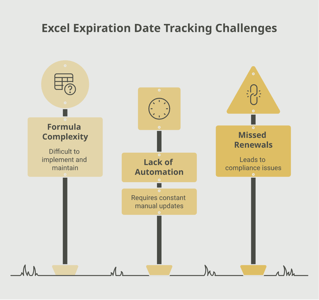
The spreadsheet method centralizes the data but does not send reminders. The next bond date is one row among hundreds, and the file rarely gets opened until someone needs it.
The bonding agent method works for routine renewals but breaks down when the agent changes, when bonds are split across multiple sureties, or when project-specific bonds need different attention than the underlying license bond.
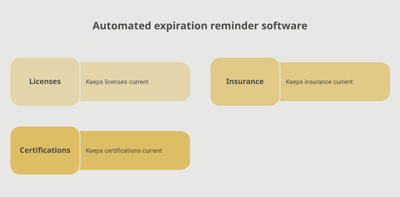
A dedicated tracking platform like Expiration Reminder stores every bond with its number, type, principal, obligee, contract or license reference, effective date, expiration date, and bond amount. Reminders fire automatically — typically 90, 60, and 30 days before expiration — to whichever roles need the notice. Overdue bonds appear on a dashboard the moment they cross the date, so nothing hides.
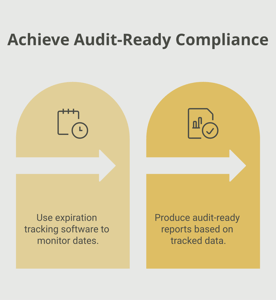
The features that matter most for bond tracking include automated reminders at multiple intervals (so the bonding agent, the project manager, and the finance team all know), document storage so the actual bond document is attached to the record and pullable for inspections, dashboard views by project or by status (active, renewing, expired), audit-ready reports that show bond status across every active contract, and the ability to record the new expiration date the moment a renewal is received.
The result is a bond program that runs in the background, with the right people getting the right notice at the right time.
Key Takeaways
- Surety bonds are three-party financial guarantees in which a surety stands behind a principal's contract obligations to an obligee.
- Performance bonds are a specific surety bond guaranteeing that a contractor will complete a project; payment, bid, maintenance, and license bonds serve other purposes.
- Federal construction contracts over $150,000 require performance and payment bonds under the Miller Act, and most states require the same on state and local work.
- Performance bonds usually remain in force for the contract term plus a defects or maintenance period; license and commercial bonds typically renew annually.
- An expired license bond can result in immediate license suspension; an expired performance bond can leave a project owner unprotected.
- Manual tracking via spreadsheets or memory fails as the bond portfolio grows; automated tracking with multi-step reminders is the reliable approach.
- Audit-ready, document-attached bond records protect license status, bond capacity, and access to future work.
Frequently Asked Questions
What is the difference between a surety bond and a performance bond?
A surety bond is the broader category — any three-party financial guarantee. A performance bond is a specific surety bond that guarantees a contractor will complete a project as specified. All performance bonds are surety bonds, but not all surety bonds are performance bonds.
How long is a performance bond valid?
Performance bonds typically remain in force for the duration of the underlying contract, often extended through a defects-liability or maintenance period after completion. Some bonds carry a fixed term and must be formally renewed. The exact validity is defined in the bond document and the underlying contract.
Who is required to have a performance bond?
Contractors on most public construction projects are required to have performance bonds. The Miller Act requires them on federal contracts over $150,000, and most states require them on state and local work. Many private project owners also require performance bonds on larger commercial projects.
What happens if a bond expires?
The consequences depend on the bond type. An expired performance bond may leave the project owner without coverage if a claim arises. An expired license or permit bond can result in immediate license suspension. An expired commercial surety bond can trigger contract default provisions.
How far in advance should I start the renewal process?
For annual license and commercial bonds, start the renewal 60–90 days before the expiration date. For project-specific performance bonds, monitor the contract milestones and confirm the bond remains in effect through completion and any maintenance period.
Can I work on a project with an expired bond?
In most cases no — the underlying contract requires a current bond as a condition of work. Continuing to work with an expired bond can be a material contract breach.
How do I know when my bond needs to be renewed?
The bond document itself states the effective and expiration dates. License and commercial bonds usually carry a fixed annual term and renew on the same date each year. Project-specific bonds follow the contract timeline and may require extension if the project runs long.
What is the difference between a payment bond and a performance bond?
A payment bond guarantees that the contractor will pay subcontractors, suppliers, and laborers. A performance bond guarantees that the contractor will complete the work. Both are commonly required together — particularly on public work — and are often issued as a combined performance-and-payment bond.
Conclusion
Surety and performance bonds are the financial backbone of regulated contracting. They keep licenses active, allow contractors to bid on work, and give project owners real recourse when something goes wrong. The bonds themselves are well understood; the failure mode is almost always administrative — a date that slipped by without notice.
If your team is tracking bond expirations in a spreadsheet, on a whiteboard, or through one person's calendar, you already know how fragile that is. A purpose-built tracking platform like Expiration Reminder centralizes every bond, sends reminders to the right people on the right schedule, and produces audit-ready reports the moment anyone asks.
Keep the bonds current, keep the work flowing, and let the system handle the dates.
Key Facts: Surety and Performance Bonds
- What they are: Three-party financial guarantees in which a surety stands behind a principal's contract obligations to an obligee.
- Performance bond: A specific surety bond guaranteeing the contractor will complete the project per contract.
- Other bond types: Bid bonds, payment bonds, maintenance bonds, license and permit bonds.
- Federal requirement: The Miller Act requires performance and payment bonds on federal construction contracts over $150,000.
- State requirements: Most states have parallel 'Little Miller Act' laws covering state and local public construction.
- Validity period: Performance bonds typically run for the contract term plus any defects/maintenance period; license bonds usually renew annually.
- Consequences of lapse: License suspension, contract default, lost bond capacity, and exposure of the project owner to financial risk.
Make sure your company is compliant
Say goodbye to outdated spreadsheets and hello to centralized credential management. Avoid fines and late penalties by managing your employee certifications with Expiration Reminder.