Introduction
If your business buys raw materials, components, or production inputs, the supplier contracts behind those purchases are what keep your operations supplied, your quality predictable, and your costs controlled. When a supplier contract expires unmanaged, the immediate effect can range from spot-market pricing to a stockout that halts production.
This article explains what a supplier contract is, how it differs from a vendor contract, the typical terms, and the most practical way to track supplier contract expiration dates across a procurement portfolio.
For most procurement and supply chain teams, negotiating the supplier contract is the heavy lift. The hard part of ongoing management is the calendar — knowing every contract's renewal date, every termination-notice deadline, and every price-adjustment trigger.
What Is a Supplier Contract?
A supplier contract is a legal agreement between a buyer and a supplier covering the supply of goods, raw materials, components, or production inputs over a defined period. Supplier contracts typically support the buyer's own production or operations rather than reselling.
The distinction between "supplier" and "vendor" is not always crisp, but common industry usage treats:
- Suppliers — providers of raw materials and components that feed into the buyer's own production. Strategic, long-term, often with minimum order quantities and structured pricing.
- Vendors — providers of finished goods or services to the buyer for resale or end use. More transactional in many cases.
Supplier contracts typically include:
- Specifications — exact product specifications, quality standards, applicable certifications.
- Volume commitments — minimum order quantities, forecasts, take-or-pay obligations.
- Pricing — base prices, escalators (often tied to commodity indices or CPI), volume discounts.
- Delivery — Incoterms, lead times, delivery schedules.
- Quality — inspection rights, AQL (acceptable quality limits), defect remediation.
- Term and renewal — initial period, renewal mechanism, termination.
- Force majeure — supply disruption rules.
- Confidentiality and IP — protection of specifications and intellectual property.
Supplier contracts often run multi-year terms (3–5 years) to support investment in tooling, capacity, and quality systems on both sides. Renewals and price adjustments are typically negotiated at fixed checkpoints (annual price reviews, mid-term volume reviews).
When a supplier contract approaches end of term without renewal, the buyer may face spot-market pricing, supply allocation risks, and loss of contractual quality and delivery commitments.
Why Supplier Contract Tracking Matters for Your Organization
Supplier contract currency protects against three concrete risks: supply disruption, cost volatility, and quality regression.
From a supply standpoint, an expired contract may move the buyer to spot-market sourcing, where lead times, quality, and price are far less predictable. For products with long qualification cycles, switching suppliers mid-stream is operationally serious.
From a cost standpoint, contracted pricing typically protects against commodity volatility. An expired contract exposes the buyer to whatever the market is doing today.
From a quality standpoint, contractual specifications, inspection rights, and defect-remediation obligations only apply during the contract term. Spot-market purchases come with whatever quality the seller chooses to provide.
For manufacturers and other goods-driven businesses, supplier contract tracking is one of the most important operational controls in the procurement organization.
Common Scenarios for Tracking Supplier Contract Expiration Dates
Manufacturing and Industrial
Manufacturers depend on stable supply of raw materials, components, and packaging. Each commodity or component category typically has one or more supplier contracts with overlapping terms.
Food and Beverage
Food and beverage producers contract for ingredients, packaging, and supplies. Quality, food safety, and traceability requirements layer on top of standard supplier terms.
Construction and Infrastructure
Construction firms maintain supplier contracts for steel, concrete, fasteners, lumber, electrical, and mechanical materials. Project-based purchasing layers on top of standing supplier agreements.
Automotive and Aerospace
Tier-1 and Tier-2 suppliers in automotive and aerospace operate under highly structured supplier agreements with detailed specifications, quality protocols, and long-term volume commitments.
Retail Private Label
Retailers contracting for private-label production manage supplier agreements that include exclusivity, IP, and brand-control terms in addition to standard supply terms.
How Supplier Contract Tracking Benefits Your Organization
A reliable tracking program produces measurable benefits.
For the company, current contracts preserve supply continuity, lock in negotiated pricing, and maintain quality and delivery commitments.
For procurement teams, the contract calendar becomes a planned activity. Renewals are negotiated with adequate lead time. Annual price reviews happen on schedule.
For finance and operations, accurate contract data supports cost forecasting, capacity planning, and supply-risk management.
How to Track Supplier Contract Expiration Dates
ERP systems often store supplier contract metadata alongside vendor master records. Procurement systems (Coupa, Ariba, Ivalua, Jaggaer) add contract lifecycle workflows.
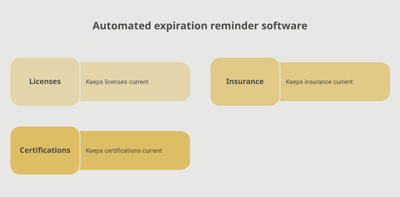
For organizations not running a dedicated CLM, a tracking platform like Expiration Reminder stores each supplier contract with its supplier, products/categories, term, renewal date, price-review checkpoints, and supporting documents. Reminders fire automatically before each milestone.
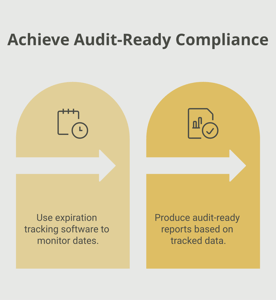
Key features include automated reminders at multiple intervals (180, 120, 90, 60 days — supplier renewals typically need long lead times for qualification, negotiation, and supply transition), document storage for contracts and specifications, dashboard views by supplier, category, or expiry window, audit-ready reports for procurement and finance, and the ability to log new dates after each renewal.
Key Takeaways
- A supplier contract is a legal agreement between buyer and supplier for the supply of goods, raw materials, or components.
- Supplier contracts focus on specifications, volume commitments, pricing, delivery, and quality.
- Typical terms run multi-year (3–5 years) to support tooling, capacity, and quality investments.
- Expired contracts expose the buyer to spot-market pricing, supply allocation risk, and quality regression.
- Multi-supplier procurement portfolios make centralized tracking essential.
Frequently Asked Questions
What is the difference between a supplier and a vendor?
Suppliers typically provide raw materials and components that feed into the buyer's own production; vendors typically provide finished goods or services for resale or end use. The terms are often used interchangeably in practice.
How long do supplier contracts typically last?
Multi-year terms (3–5 years) are common to support tooling, capacity, and quality investments on both sides. Some commodity contracts run shorter (annual price reviews with year-by-year extensions).
What are minimum order quantities (MOQs)?
MOQs are the minimum volume the buyer must purchase per order or per period. They are common in manufacturing supply contracts to support the supplier's production economics.
What is a take-or-pay clause?
A take-or-pay clause obligates the buyer to purchase a minimum quantity over a defined period — or pay for the shortfall even if it does not take the volume.
How do price escalators work?
Price escalators are formulas that adjust the contract price based on commodity indices, CPI, or other external benchmarks. They protect both buyer and supplier from commodity volatility.
What happens when a supplier contract expires?
Without renewal, the buyer typically moves to spot-market purchasing or short-term arrangements. Lead times, quality, and pricing become less predictable.
What is Incoterms?
Incoterms are a set of international commercial terms (FOB, CIF, DDP, EXW, others) that define who bears shipping costs, insurance, and risk at each stage of international shipment.
How do organizations track many supplier contracts?
Combinations of ERP, procurement systems, and dedicated contract trackers. The system that actively reminds before expiry is the one that prevents most failures.
Conclusion
Supplier contracts are the supply-side foundation of every goods-driven business. The substantive work — qualification, specification, pricing, negotiation — sits with procurement and supply chain. The administrative work — knowing every contract's renewal date and price-review checkpoint — is where most procurement programs need help.
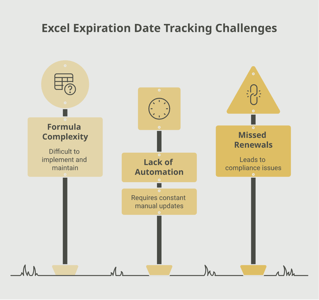
If your team tracks supplier contracts through ERP or spreadsheets, you already know how easy it is for a renewal to land before you have planned for it. A purpose-built tracking platform like Expiration Reminder centralizes every contract, sends reminders before each renewal, stores the supporting documents, and produces audit-ready reports the moment anyone asks.
Keep the supply flowing, plan the renewals, and let the system handle the calendar.