Introduction
If your organization employs security guards, security officers, private investigators, or armed security personnel, security licensing is the state-issued authority that makes the work legal. State frameworks vary widely — training hours, fingerprinting, mental-fitness assessments for armed personnel, and renewal cycles all differ — and the consequences of operating with unlicensed staff range from fines to operational shutdown.
This article explains what a security license is, the state regulatory framework, the unarmed vs armed distinction, training requirements, the most practical way to track security licenses across a security services workforce.
For most security company managers and corporate security teams, individual guard licensing is well understood. The hard part is the calendar across multiple guards, multiple states, and training-cycle renewals.
What Is a Security License?
A security license is a state-issued authorization permitting an individual or company to provide security services — including security guards, security officers, private investigators, alarm-system operators, and (in some states) related services.
Licensing is administered by state agencies — common examples include:
- California Bureau of Security and Investigative Services (BSIS) — administers guard cards, baton permits, firearms permits, exposed firearm cards, alarm company licenses, and private investigator licenses.
- Florida Division of Licensing (DOL) — under the Department of Agriculture and Consumer Services; administers Class D (unarmed), Class G (armed), Class C (PI), and other classifications.
- New York Department of State (DOS) Division of Licensing Services — administers security guard registration.
- Texas Department of Public Safety (DPS) Regulatory Services Division — administers private security regulation.
- State-by-state — every state has its own framework with varying requirements.
Common license categories:
- Unarmed security officer / guard card — entry-level licensure for unarmed work.
- Armed security officer — additional licensure required for armed duty, typically with firearms training, fingerprinting, mental-fitness assessment, and ongoing range qualification.
- Private investigator — licensure for investigative services, typically requiring experience, examination, and background check.
- Alarm company / alarm installer — licensure for fire and burglar alarm system installation and monitoring.
- Security company / contractor license — for the company providing security services.
Initial licensure typically requires:
- Training hours — varying by state (California: 40-hour Power to Arrest, plus additional for armed; Florida Class D: 40-hour training; others 8-40 hours).
- Background check and fingerprinting.
- Age requirement — typically 18+ for unarmed, 21+ for armed.
- Application fees.
- Bonding and insurance for company-level licensure.
Renewal cycles:
- Annual — common in some states.
- 2 years — common.
- 3 years — used in some states.
Continuing training:
- CE training — required in most states for renewal.
- Range qualification — armed officers typically must qualify on the range annually or more frequently.
- Topic requirements — defensive tactics, de-escalation, legal updates, increasingly required.
Why Security License Tracking Matters for Your Organization
Security license currency protects against three concrete risks: operational shutdown, civil and criminal liability, and customer-contract issues.
From an operational standpoint, an unlicensed guard cannot legally provide security services. Continuing to deploy unlicensed staff exposes the company to state enforcement.
From a liability standpoint, incidents involving unlicensed or inadequately trained guards can create significant civil and criminal exposure. Many customer contracts specifically require current licensure for all on-site personnel.
From a customer-contract standpoint, security service contracts typically require proof of licensure and (for armed personnel) firearms training as a condition of service.
For security service companies and corporate security operations, the license calendar across the guard workforce is one of the most consequential operational controls.
Common Scenarios for Tracking Security License Expiration Dates
Security Service Companies
Allied Universal, Securitas, GardaWorld, and smaller regional security companies manage licenses across thousands of guards in multiple states.
Corporate Security Operations
In-house corporate security operations manage licenses for proprietary security forces.
Armed Security Operations
Armored car services, bank security, and high-risk security contracts require armed personnel with current firearms training, mental-fitness assessment, and range qualification.
Event Security and Crowd Management
Event security companies serving sports venues, concerts, and conventions manage guards across short-duration events and longer-term venue contracts.
Private Investigation Firms
PI firms manage investigator licensure, often with additional state-specific requirements.
How Security License Tracking Benefits Your Organization
A reliable program produces measurable benefits.
For the company, current licenses maintain operational authority, support customer-contract compliance, and reduce liability exposure.
For HR, operations, and account management teams, the license calendar becomes predictable. Training renewals are scheduled with adequate lead time. New-hire onboarding includes licensure verification as a structured step.
For guards, predictable tracking supports their continued employment.
How to Track Security License Expiration Dates
State licensing board databases provide license verification (BSIS Online, Florida DOL portal, NY DOS license search, etc.). Security workforce management platforms increasingly include credential tracking.
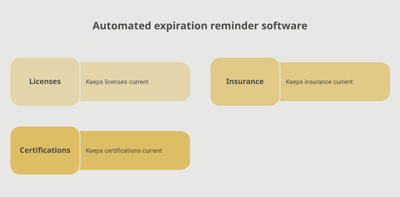
For organizations using a separate compliance tracker, a platform like Expiration Reminder stores each guard with their state license(s), expiration, training credentials, armed status (if applicable), range qualification, and supporting documents. Reminders fire automatically before each renewal and training milestone.
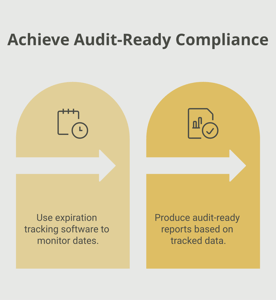
Key features include automated reminders at multiple intervals (90, 60, 30 days — armed-officer range qualifications often have shorter cycles), document storage for licenses and training certificates, dashboard views by site, role, or expiry window, audit-ready reports for state regulators and customer audits, and the ability to log renewals in one step.
Key Takeaways
- A security license is a state-issued authorization permitting individuals or companies to provide security services.
- Administered by state agencies (BSIS, DOL, DOS, DPS, others) with framework varying widely.
- Categories: unarmed officer, armed officer, private investigator, alarm company/installer, security company.
- Initial licensure: training hours (8-40+ depending on state and category), background check, fingerprinting, fees.
- Armed licensure adds firearms training, range qualification, and (in many states) mental-fitness assessment.
- Renewal cycle: annual, biennial, or triennial depending on state.
- Lapses cause operational shutdown, customer-contract violations, and liability exposure.
Frequently Asked Questions
Who issues a security license?
State agencies — California's BSIS, Florida's DOL, New York's DOS, Texas DPS, and equivalent agencies in other states.
What is the difference between unarmed and armed security licensure?
Unarmed licensure permits security work without a firearm. Armed licensure requires additional training, fingerprinting, mental-fitness assessment, range qualification, and (in most states) is restricted to age 21+.
How long is a security license valid?
Varies by state — annual, biennial, or triennial cycles are all used.
What training hours are required?
Varies significantly — California's Power to Arrest is 40 hours; Florida Class D is 40 hours; other states range 8-40+ hours of initial training plus ongoing CE.
What is a guard card?
A common term (used in California particularly) for the basic unarmed security officer license issued by the state.
What are range qualification requirements?
For armed officers, periodic firearms qualification at an approved range — typically annual or more frequently. Specific scoring and ammunition counts vary by state and weapon class.
Do security companies need their own license?
In most states yes — separate company-level licensure is required to operate as a security services provider, distinct from individual guard licensure.
What happens if a guard's license expires?
The guard cannot legally provide security services. The employer must remove them from licensed duties until the license is renewed. Customer contracts may require notification.
Conclusion
Security licensing is the foundation of legal security operations. The substantive work — training, background checks, firearms qualification, daily security work — sits with guards, supervisors, and operations leadership. The administrative work — knowing every guard's license status, training renewals, and (for armed personnel) range qualifications across multiple states — is where most security companies need help.
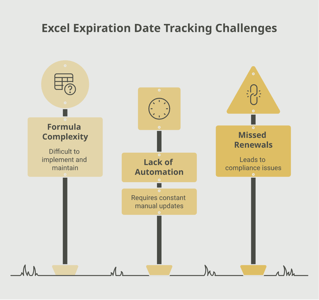
If your team tracks security licenses through state-board sites or paper records, you already know how easy it is for one guard's license or qualification to slip past. A purpose-built tracking platform like Expiration Reminder centralizes every guard's licensure, sends reminders before each renewal and training deadline, stores the supporting documents, and produces audit-ready reports the moment anyone asks.
License the workforce, train the guards, and let the system handle the calendar.