Introduction
If your operations involve scaffolds — construction, painting, facade work, industrial maintenance, or any work at height that depends on temporary platforms — scaffolding certification is the training and competence verification that keeps workers safe and your projects compliant. Scaffolding consistently ranks among the most cited OSHA construction standards, and the training and competent-person gaps drive most of those citations.
This article explains what scaffolding certification is, the OSHA rules around erector, user, and competent-person training, the typical refresher cadence, and the most practical way to track scaffolding training dates across a workforce.
For most construction and safety teams, delivering the initial training is well understood. The hard part is the calendar — knowing who has been trained, who needs refresher training, and which sites have a currently designated competent person.
What Is Scaffolding Certification?
Scaffolding certification refers to the training and documented competence required for workers who erect, dismantle, alter, operate, repair, maintain, inspect, or work on scaffolds. The applicable U.S. standard is OSHA 29 CFR 1926.454 (Training Requirements), supported by 1926.451 (General Requirements) and 1926.450 (Definitions).
OSHA distinguishes between several roles:
- User — anyone working on a scaffold. Must be trained by a qualified person to recognize the hazards associated with the type of scaffold in use.
- Erector / Dismantler / Inspector — workers involved in erecting, disassembling, moving, repairing, maintaining, or inspecting scaffolds. Must be trained by a competent person.
- Competent Person — designated by the employer; capable of identifying hazards and authorized to take prompt corrective action. Must select and direct erectors, supervise erection, inspect scaffolds before each shift, and ensure user training.
- Qualified Person — possesses a recognized degree, certificate, or professional standing, or extensive knowledge demonstrating ability to solve problems related to scaffolding work. Required to design specific scaffold systems.
OSHA does not "certify" competent persons — the standard defines them by capability. The employer designates the competent person based on training, experience, and demonstrated ability.
Refresher training is required whenever the employer has reason to believe the worker lacks the skill or understanding needed for safe work — for example, after changes in scaffold type, changes in fall protection systems, or evidence of unsafe practice. Industry best practice suggests refresher training every three years even when not strictly required.
Why Scaffolding Certification Matters for Your Organization
Scaffolding training currency protects against three concrete risks: fatal fall incidents, OSHA citations, and project shutdowns.
From a safety standpoint, falls from scaffolds are among the most common causes of construction fatalities. Proper erection, inspection, and use are the controls that prevent those incidents.
From a regulatory standpoint, scaffolding standards are consistently among OSHA's top construction citations. Training and competent-person designations are the most frequent gaps.
From an operational standpoint, project-site inspections — by general contractors, owners, or OSHA — can shut down scaffolding work if competent-person designation or worker training is not documented.
For multi-site, multi-project construction operations, the training calendar across the workforce is one of the most important safety controls in the organization.
Common Scenarios for Tracking Scaffolding Certification Dates
General and Specialty Contractors
GCs and specialty subs (painting, restoration, masonry, glazing) running scaffolds across multiple projects need every worker's training current and a designated competent person on each site.
Industrial Maintenance and Plant Turnarounds
Industrial maintenance contractors performing turnaround work in refineries, chemical plants, and power plants use scaffolds extensively. Plant safety overlays add to OSHA requirements.
Facade and Restoration
Facade restoration, window replacement, and historic-building work depend on scaffolding. Many municipalities add their own scaffolding permit and inspection requirements.
Shipyard and Marine
Shipyard operations have parallel OSHA rules (29 CFR 1915) covering scaffolds in marine environments with industry-specific hazards.
Suspended Access and Specialty Scaffolds
Suspended scaffolds, mast climbers, and specialty access equipment require additional specialized training beyond general scaffold competency.
How Scaffolding Tracking Benefits Your Organization
A reliable scaffolding training tracking program produces measurable benefits.
For the company, current training records support OSHA and customer-audit compliance, reduce incident risk, and preserve project schedules.
For safety and operations teams, the training calendar becomes a predictable activity. Refresher training is scheduled with adequate lead time. Competent-person designations are kept current as the workforce changes.
For workers, predictable training and clear role assignments support a safer working environment.
How to Track Scaffolding Certification Expiration Dates
Learning management systems (LMS) track training completion dates. Many construction-focused safety platforms (Procore Safety, SiteDocs, Safesite, others) integrate training records with site-specific compliance.
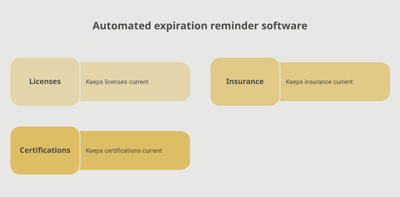
For organizations using a separate compliance tracker, a platform like Expiration Reminder stores each worker with their scaffolding training, competent-person designations, last refresher date, and supporting documents. Reminders fire automatically before each refresher.
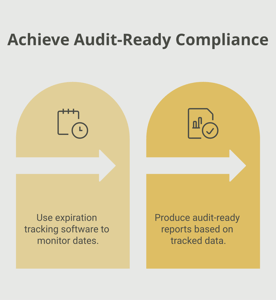
Key features include automated reminders at multiple intervals (90, 60, 30 days), document storage for training records and competent-person designations, dashboard views by site, role, or training status, audit-ready reports for OSHA and customers, and the ability to log new training events in one step.
Key Takeaways
- Scaffolding certification is workplace training under OSHA 29 CFR 1926.454 for workers who erect, use, inspect, or maintain scaffolds.
- OSHA distinguishes between users (trained by qualified person), erectors (trained by competent person), and competent persons (designated by the employer).
- OSHA does not certify competent persons — the employer designates them based on demonstrated capability.
- Refresher training is required when worker proficiency drops; industry best practice is every 3 years.
- Scaffolding is consistently a top-cited OSHA construction standard.
- Automated tracking with reminders is the reliable approach across multi-project workforces.
Frequently Asked Questions
Who needs scaffolding training?
Anyone who works on, erects, dismantles, moves, repairs, maintains, or inspects scaffolds must be trained. The depth of training depends on the role (user, erector, competent person).
Does OSHA require periodic scaffolding refresher training?
OSHA requires retraining whenever the employer has reason to believe a worker lacks the skill or understanding needed for safe work, or when scaffold type, fall protection, or other conditions change. There is no fixed annual interval, but industry best practice is a 3-year refresher cycle.
What is a competent person?
A person designated by the employer who is capable of identifying scaffold hazards and authorized to take prompt corrective action. The competent person selects and directs erectors, supervises erection, inspects scaffolds before each shift, and ensures worker training.
What is a qualified person?
A person with a recognized degree, certificate, professional standing, or extensive knowledge demonstrating problem-solving ability related to scaffolding. Required for design of specific scaffold systems.
What is the difference between a competent person and a qualified person?
A competent person identifies hazards and takes corrective action; a qualified person has the technical knowledge to design scaffold systems. Both are defined by capability rather than certification.
What scaffold types are covered?
OSHA 1926 Subpart L covers all scaffolds in construction — frame, system (modular), tube-and-coupler, suspended, mast climbers, and specialty access equipment. Different scaffold types have specific training and inspection requirements.
How long should training records be kept?
OSHA does not specify a retention period for scaffolding training records, but most employers retain them for the duration of employment plus several years to support multi-year audits and legal defenses.
Are there state-specific scaffolding requirements?
Yes. Some state-plan states (California Cal/OSHA, Washington L&I, others) have additional or more stringent scaffolding requirements layered on top of federal OSHA.
Conclusion
Scaffolding certification sits at the intersection of safety, compliance, and operational continuity in construction and industrial work. The substantive work — training erectors and users, designating competent persons, inspecting before each shift — sits with safety, supervision, and field leadership. The administrative work — knowing every worker's training status and every site's competent person — is where most programs need help.
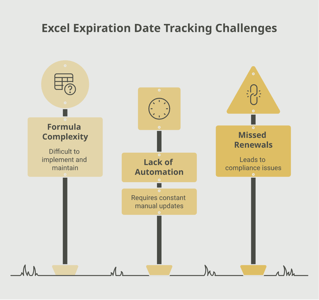
If your team tracks scaffolding training through LMS or spreadsheets, you already know how easy it is for a worker's training to lapse unnoticed. A purpose-built tracking platform like Expiration Reminder centralizes every training record, sends reminders before each refresher date, stores the supporting documents, and produces audit-ready reports the moment anyone asks.
Train the workforce, designate the competent persons, and let the system handle the calendar.