Introduction
If you operate any vehicle on a UK public road, road tax — formally Vehicle Excise Duty (VED) — is non-negotiable. There is no grace period. A vehicle without current road tax is illegal on the road from the first second after the tax expires, and the DVLA's automatic number-plate-recognition cameras can flag an untaxed vehicle within minutes.
This article explains what UK road tax is, the rules behind it, who must pay, what the renewal options are, and what happens when payment lapses. You will also see the most practical way to track road tax expiration dates across a fleet of any size.
For most vehicle owners and fleet operators, paying the tax itself is simple — Direct Debit, card, or in person at a Post Office. The hard part is keeping every vehicle's expiry on the radar, especially across fleets where vehicles are added, sold, and re-registered constantly.
What Is Road Tax (Vehicle Excise Duty)?
Vehicle Excise Duty (VED), commonly called road tax or car tax, is an annual tax paid by owners of vehicles driven or kept on public roads in the UK. It is collected and enforced by the Driver and Vehicle Licensing Agency (DVLA).
The tax rate depends on the vehicle's first-registration date, fuel type, CO₂ emissions, and (for vehicles registered after 1 April 2017) a "standard rate" that applies from the second year onward. Additional surcharges apply to vehicles with a list price over £40,000.
Payment options include:
- Annual — single payment covering 12 months.
- Six-monthly — two payments per year, with a small surcharge.
- Monthly Direct Debit — twelve payments per year, with a small surcharge but smoother cash flow.
If the owner pays by Direct Debit, the tax renews automatically as long as the vehicle continues to have a valid MOT (where required) and insurance. If payment is made by card or at a Post Office, the renewal is manual — the DVLA sends a reminder (V11) but does not auto-renew.
A vehicle that is not being used and is kept off the public road can be declared off-road via a Statutory Off Road Notification (SORN). A SORN'd vehicle does not need road tax, but it also cannot be driven or kept on a public road.
The validity is simple: the tax is valid until the end of the month for which it was paid. There is no grace period.
Why Road Tax Matters for Your Organization
Road tax compliance protects against three concrete risks: enforcement, operational disruption, and insurance.
From an enforcement standpoint, the DVLA's continuous registration system means every vehicle must either be taxed or formally SORN'd. ANPR cameras across the UK road network can identify untaxed vehicles in real time. Penalties include an automatic £80 penalty (reduced if paid quickly), with potential prosecution and fines of up to £1,000 in court. The vehicle can also be clamped, impounded, or in extreme cases destroyed.
From an operational standpoint, an untaxed vehicle is illegal to drive — which can ground a delivery, idle a service technician, or strand an executive. For commercial fleets, even brief downtime is costly.
From an insurance standpoint, many UK motor insurance policies require the vehicle to be legally roadworthy and taxed. A claim involving an untaxed vehicle may be denied, leaving the operator personally liable for damages.
For fleet operators, the tax bill across a fleet of vehicles is also a meaningful annual budget item, and forecasting it accurately depends on knowing every vehicle's tax band and renewal date.
Common Scenarios for Tracking Road Tax Expiration Dates
Road tax tracking touches every UK vehicle operator. Here are the contexts where keeping the calendar current matters most.
Commercial Fleets and Logistics
Delivery fleets, service fleets, and logistics operators run dozens to thousands of vehicles, each with its own tax renewal date. Direct Debit smooths the cash flow but does not prevent issues when a vehicle's MOT expires (which suspends auto-renewal) or insurance lapses.
Company Car Schemes and Salary Sacrifice
HR, fleet, and benefits teams managing company car schemes are responsible for vehicle compliance even when the vehicle is in an employee's hands. Tax status is part of that compliance picture.
Hire Car, Rental, and Leasing Operators
Vehicle hire companies and lessors manage tax on the fleet (in most cases) and must keep every vehicle compliant across constant rotation. Tax-status mistakes can result in vehicles being clamped while in customer hands.
Construction, Plant, and Service Vehicle Fleets
Construction companies and service businesses often run mixed fleets — vans, utility vehicles, plant trucks — that move between job sites. Vehicles that sit idle between projects need either tax or SORN status; getting the toggle wrong creates either unnecessary cost or compliance exposure.
Private Owners with Multiple Vehicles
Private owners with multiple cars (collectors, families with several drivers, second-vehicle households) face the same calendar problem at smaller scale. A vehicle parked through winter often runs the highest risk of overlooked tax expiry.
How Road Tax Tracking Benefits Your Organization and Drivers
A reliable road tax program produces measurable benefits.
For the company, current road tax keeps every vehicle road-legal, prevents fines and clamping events, supports insurance validity, and avoids operational downtime. It also produces clean records for management accounts and audits.
For drivers, knowing the vehicle is taxed removes a layer of personal exposure. In many enforcement contexts, the driver of an untaxed vehicle can face their own penalty alongside the registered keeper.
For finance teams, accurate tax tracking improves budget forecasting and prevents unexpected late-fee charges.
How to Track Road Tax Expiration Dates
The most common tracking method is the DVLA reminder (V11 notice) sent to the registered keeper before each renewal. This works for a single vehicle owned at a stable address. It breaks down quickly as soon as there are multiple vehicles, address changes, or any internal handoff between the keeper, the driver, and the finance team.
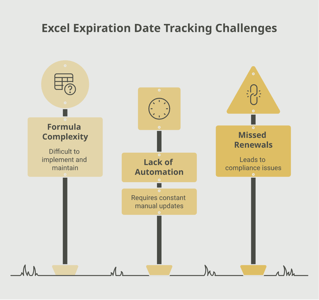
Spreadsheet trackers centralize the data but rarely include reminders, do not survive employee turnover well, and become unwieldy past 20–30 vehicles.
Fleet management software typically tracks tax status alongside other vehicle data, but smaller operators often cannot justify the cost or complexity of a full fleet management system for tax alone.
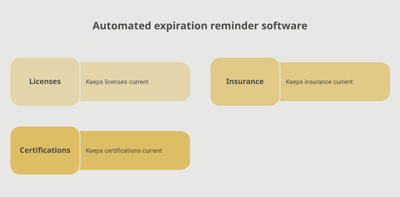
A dedicated tracking platform like Expiration Reminder stores each vehicle with its registration, tax expiry date, payment method, MOT expiry, and insurance dates. Reminders fire automatically before each tax expiry, vehicles approaching expiry appear on a dashboard, and supporting documents (V5C, tax confirmation, insurance certificate) can be attached.
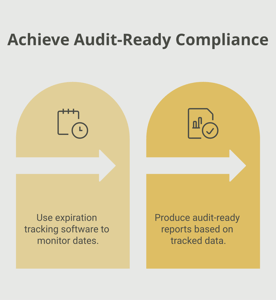
The features that matter most for road tax tracking include automated reminders at configurable intervals (60, 30, 7 days before expiry), document storage for V5C registration certificates and tax confirmations, dashboard views by vehicle status (taxed, tax due, SORN, expired), audit-ready reports for fleet finance and compliance, and the ability to record the new expiry date in one step after each renewal.
The aim is straightforward: no vehicle on the road without current tax, and no vehicle running into a renewal date by surprise.
Key Takeaways
- Vehicle Excise Duty (VED) — commonly called road tax — is an annual UK tax on vehicles driven or kept on public roads, collected by the DVLA.
- Payment options include annual, six-monthly, and monthly Direct Debit.
- Direct Debit renews automatically as long as MOT (where required) and insurance remain valid; card and Post Office payments require manual renewal.
- There is no grace period — a vehicle becomes illegal to use on the road from the first second after the tax expires.
- Penalties include automatic £80 penalties, court fines of up to £1,000, and potential clamping or impoundment.
- Vehicles not in use on public roads can be declared off-road via SORN, suspending the tax obligation.
- Manual tracking via DVLA reminders or spreadsheets fails at fleet scale; automated tracking with reminders is the reliable approach.
Frequently Asked Questions
When does my road tax expire?
Your road tax is valid until the end of the month for which it was paid. The exact expiry date appears in your V5C log book and on any reminder (V11) you receive from the DVLA. The expiry is also visible on the DVLA's free online vehicle tax check.
What happens if my road tax expires?
The vehicle becomes illegal to drive or keep on a public road immediately. The DVLA will typically issue an £80 penalty (reduced for prompt payment), with potential court fines of up to £1,000 and possible clamping or impoundment. Insurance may also be invalidated.
Is there a grace period for expired road tax?
No. Unlike some other vehicle-related deadlines, there is no statutory grace period for expired road tax. The vehicle becomes non-compliant from the first second after expiry.
How do I renew my road tax?
You can renew online at the DVLA website, by phone, or at a Post Office. You will need either the reference number from your V11 reminder, your V5C log book, or the green "new keeper" slip if you have just bought the vehicle.
Can I pay road tax monthly?
Yes, by Direct Debit. Monthly Direct Debit includes a small surcharge but provides smoother cash flow and automatic renewal as long as MOT (where required) and insurance remain valid.
What is a SORN?
A Statutory Off Road Notification declares to the DVLA that a vehicle is being kept off the public road and not in use. A SORN'd vehicle does not need road tax, but cannot be driven or kept on a public road until the SORN is lifted and the tax is reinstated.
Do electric vehicles pay road tax?
From April 2025, electric vehicles registered after 1 April 2017 became subject to VED at the standard rate. Older EVs and certain low-emission vehicles continued to qualify for reduced or zero rates until that change. Always check the current rates on the DVLA website for your vehicle's specific situation.
Does the road tax transfer when I sell a vehicle?
No. Road tax does not transfer to a new owner. The seller's tax is refunded for any complete months remaining, and the new owner must tax the vehicle themselves before driving it.
Conclusion
Road tax is one of the most predictable compliance obligations any UK vehicle owner faces — and one of the most consequential to miss. The rules are clear, the dates are fixed, and the DVLA's enforcement is automated. The only real failure mode is administrative — an expiry that slips past unnoticed.
If your team is tracking tax expirations through DVLA reminders, spreadsheets, or the registered keeper's memory, you already know how fragile that is across a fleet. A purpose-built tracking platform like Expiration Reminder centralizes every vehicle, sends reminders before each expiry, stores the supporting documents, and produces audit-ready reports the moment anyone asks.
Pay the tax on time, keep the vehicles legal, and let the system handle the calendar.