Introduction
If your organization operates internationally and employs workers across borders — Europe, the GCC, Asia, Latin America, anywhere outside their country of citizenship — residence permits are the foundation of legal residency for those workers. The rules vary by country, the validity periods range from 1 to 5 years, and missed renewals can disrupt employment, banking, schooling for dependents, and family stability.
This article explains what a residence permit is, the common validity periods across major jurisdictions, the relationship to work permits and visas, the path to permanent residence, and the most practical way to track residence permits across an international workforce.
For most global HR teams, individual renewals are well understood. The hard part is the calendar across many workers in many jurisdictions, each with their own rules and renewal lead times.
What Is a Residence Permit?
A residence permit is a government-issued document authorizing a non-citizen to live in a country for a specified period. Different from a visa (which authorizes entry) and from a work permit (which authorizes employment), the residence permit is the residence authorization itself — though in many jurisdictions, residence and work authorization are combined into a single document.
Common patterns:
- EU / Schengen Area — most member states issue residence permits valid for 1-5 years depending on the basis (work, study, family, investor). The EU Single Permit combines residence and work authorization. After 5 continuous years of legal residence, most expats become eligible for permanent residence or long-term resident status.
- UK — Biometric Residence Permits (BRP) for non-EU workers, typically valid 2-5 years depending on visa category. Transitioning to e-Visas.
- UAE — Residence visa stamped in passport (or now e-residency), typically 1-3 years for standard expats; up to 5-10 years for Golden Visa holders.
- Saudi Arabia — Iqama (covered separately) serves as the residence permit.
- Canada — Permanent Resident Card or work permit serves the residence function.
- Australia — various subclass visas (482, 186, 189, others) authorize residence and work.
- Singapore — Employment Pass, S Pass, or PR status.
Validity periods generally tied to:
- The underlying employment, study, or investment basis.
- The host country's immigration framework.
- Renewal requirements (continued eligibility, sufficient income, employer sponsorship).
The path to permanent residence typically requires:
- 5 continuous years of legal residence in most EU countries (4 years in some).
- 5 years for Saudi Premium Residency.
- 5 years for US naturalization (3 years if married to a US citizen).
- 5-10 years for UAE permanent residency programs.
Renewal:
- Typically must begin 60-90 days before expiry.
- Requires demonstration of continued eligibility (employment, income, accommodation, clean record).
- May require updated biometrics, medical fitness, or background checks.
Why Residence Permit Tracking Matters for Your Organization
Residence permit currency protects against three concrete risks: illegal residence, employment disruption, and family disruption.
From a legal-residence standpoint, a worker with an expired residence permit is not legally present in the country. The employer (where sponsorship applies) faces fines; the worker can face deportation.
From an employment standpoint, residence permit lapses typically cascade into work permit lapses. The worker may not be legally employable until both are renewed.
From a family standpoint, dependent residence permits are typically tied to the primary worker's permit. A lapse cascades across the family — schooling, healthcare, banking, and travel all affected.
For global organizations with cross-border workforces, the residence permit calendar across jurisdictions is one of the most consequential HR-compliance controls in the immigration program.
Common Scenarios for Tracking Residence Permit Expiration Dates
Multinational Employers
Multinationals with employees on assignment in multiple countries face overlapping residence permit cycles across jurisdictions.
EU Workforces
European employers managing non-EU workers track Single Permits, EU Blue Cards, and country-specific residence permits.
Gulf-Region Operations
Saudi (Iqama), UAE (residence visa + Emirates ID), Qatar (Residence Permit), Kuwait, Bahrain, Oman operators manage residence permits across the region.
Education and Research
Universities and research institutions sponsor international students, post-docs, faculty, and visiting researchers with residence permits across many jurisdictions.
Healthcare International Workforces
Hospitals and clinics employing internationally-trained clinicians manage residence permits alongside professional licensing.
How Residence Permit Tracking Benefits Your Organization
A reliable program produces measurable benefits.
For the company, current residence permits maintain legal employment, prevent fines, and support smooth operations across the international workforce.
For HR, immigration, and global mobility teams, the calendar becomes predictable. Renewal applications are filed with adequate lead time. Permanent residence eligibility is identified proactively.
For workers, predictable renewals prevent disruption to banking, schooling, healthcare, and travel for the worker and their family.
How to Track Residence Permit Expiration Dates
Country-specific immigration portals provide individual status verification. Global mobility platforms (Envoy Global, Boundless, Topia, AIRINC, others) integrate residence permit data across jurisdictions.
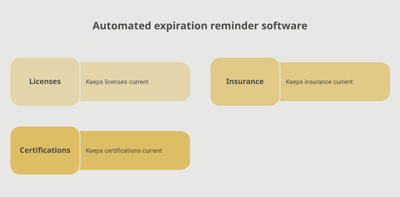
For organizations using a separate compliance tracker, a platform like Expiration Reminder stores each worker with their residence permit category, country, expiration date, dependent permits, supporting documents, and renewal lead times. Reminders fire automatically before each renewal.
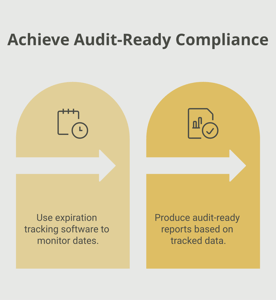
Key features include automated reminders at multiple intervals (180, 90, 60 days — international renewals often need long lead times), document storage for permits with appropriate confidentiality, dashboard views by country, worker, or expiry window, audit-ready reports for global mobility and compliance, and the ability to log renewals in one step.
Key Takeaways
- A residence permit is a government-issued document authorizing a non-citizen to live in a country for a specified period.
- Different from a visa (entry authorization) and from a work permit (employment authorization), though often combined.
- EU Single Permit combines residence and work authorization.
- Validity typically 1-5 years depending on basis (work, study, family, investor).
- Most countries allow permanent residence application after 5 continuous years of legal residence.
- Renewal typically requires 60-90 days lead time and demonstration of continued eligibility.
- Lapses cascade across linked work permits and dependent permits.
Frequently Asked Questions
How long is a residence permit valid?
Typically 1-5 years depending on country and basis. EU residence permits commonly 1-2 years initially with renewal options. UAE expat residence permits typically 1-3 years (longer for Golden Visa).
What is the difference between a residence permit and a work permit?
A residence permit authorizes living in the country; a work permit authorizes employment. Many jurisdictions combine the two into a single document (EU Single Permit, US H-1B status, etc.).
What is the EU Single Permit?
A combined residence and work authorization document issued by EU member states under EU Directive 2011/98. Designed to simplify legal migration for non-EU workers.
How do I obtain permanent residence?
Typically through 5 continuous years of legal residence under a qualifying permit type, with additional requirements (income, language, knowledge, clean record) varying by country.
What is a Biometric Residence Permit (BRP)?
The UK's residence permit document for non-EU workers — being transitioned to e-Visas in the current UK immigration framework.
Can residence permits be transferred between countries?
Generally no. Each country issues its own permits under its own rules. Some long-term resident statuses (EU long-term resident, GCC residence) offer limited reciprocity.
What happens to my dependents if my residence permit expires?
Dependent residence permits are typically tied to the primary worker's permit. A lapse in the primary permit cascades into dependent permits, affecting schooling, healthcare, banking, and travel.
How do organizations track residence permits across many countries?
Combinations of country-specific portals, global mobility platforms, and dedicated tracking systems. The system that actively reminds before each renewal is the one that prevents most lapses.
Conclusion
Residence permits are the foundation of expatriate life in any host country — and the calendar around them affects not just employment but every aspect of the worker's and family's daily life. The substantive work — sponsorship, applications, biometric appointments, country-specific renewals — sits with HR, global mobility, and immigration counsel. The administrative work — knowing every worker's residence permit expiration, sequencing 60+-day renewal lead times, and managing dependent-permit cascades — is where most global programs need help.
If your team tracks residence permits through country portals or global mobility software, you already know how easy it is for one worker's permit to slip past the renewal window. A purpose-built tracking platform like Expiration Reminder centralizes every worker's residence permit and linked documents, sends reminders before each renewal, stores the supporting documents, and produces audit-ready reports the moment anyone asks.
Authorize the residence, plan the renewals, and let the system handle the calendar.