Introduction
If your organization owns or leases buildings, equipment, inventory, fixtures, or other physical assets, commercial property insurance is the financial protection layer covering loss or damage from fire, theft, weather, vandalism, and other perils. Coverage rules — named perils vs all-risk, replacement cost vs actual cash value, business income coverage — affect every loss outcome, and lapses leave the business funding losses from operating cash.
This article explains what property insurance is, the named perils vs all-risk distinction, replacement cost vs ACV valuation, business income coverage, typical annual policies, and the most practical way to track property insurance across a multi-location operation.
For most finance, operations, and risk teams, individual renewals are well understood. The hard part is the calendar across multiple locations, multiple policy types, and multiple coverage extensions.
What Is Property Insurance?
Commercial property insurance is coverage for physical damage to (or loss of) business property. Covered property typically includes:
- Buildings — owned or in some cases leased buildings.
- Business personal property — furniture, fixtures, equipment, inventory.
- Tenant improvements — improvements made by the tenant to leased premises.
- Property of others — bailee coverage for property in the insured's care.
- Outdoor property — signs, fences, exterior structures (often limited).
Coverage forms:
- Named perils — covers only the specific perils listed in the policy (typically fire, lightning, explosion, windstorm, hail, smoke, vehicle, riot, civil commotion, vandalism, sprinkler leakage, sinkhole collapse, and volcanic action).
- All-risk / Special form — covers all causes of loss except those specifically excluded. More common in modern commercial policies.
Valuation:
- Replacement Cost (RC) — pays the cost of replacing damaged property with new property of similar kind and quality, without deduction for depreciation.
- Actual Cash Value (ACV) — pays replacement cost minus depreciation. Less common for modern commercial policies.
- Functional Replacement Cost — modified replacement cost for older buildings where exact replication is impractical.
Extensions and related coverage:
- Business Income / Business Interruption — covers loss of income and continuing expenses during property restoration.
- Extra Expense — covers additional costs to continue operations during restoration.
- Equipment Breakdown — covers mechanical/electrical breakdown not covered by standard property forms.
- Ordinance or Law — covers costs of rebuilding to current code.
- Flood and Earthquake — typically excluded from standard property; separate coverage required where exposure exists.
Most commercial property policies run on annual terms. Multi-location operations typically have schedules of insured property listing each location and value.
The Insurance Services Office (ISO) commercial property forms are widely used industry-standard policies.
Why Property Insurance Tracking Matters for Your Organization
Property insurance currency protects against three concrete risks: uncovered loss, lender/contract violations, and operating-continuity gaps.
From a loss standpoint, fires, severe weather events, theft, and vandalism are well-documented commercial property losses. Without insurance, even mid-size losses can be catastrophic for smaller operators.
From a lender/contract standpoint, commercial mortgages, leases, and many customer contracts require specific property insurance with named additional insureds. Lapses can trigger lender notices and contract default.
From a business-continuity standpoint, property insurance plus business income coverage funds operations during loss recovery. Lapses leave the business absorbing both repair costs and lost revenue.
For multi-location organizations, the property insurance calendar across the portfolio is one of the most consequential risk-management controls.
Common Scenarios for Tracking Property Insurance Dates
Multi-Location Operators
Restaurant chains, retail chains, hotel groups, and multi-unit organizations manage policies across all locations. Schedules of insured property require regular updating as locations are added, sold, or modified.
Real Estate Owners and Investors
Real estate owners manage property insurance across portfolios — multifamily, commercial office, retail, industrial.
Manufacturers and Industrial Operators
Manufacturers manage property insurance covering buildings, production equipment, inventory, and raw materials.
Hospitality
Hotels and restaurants manage property insurance with significant inventory and building values.
Healthcare
Hospitals and clinics manage property insurance covering buildings, medical equipment, and pharmaceutical inventory.
How Property Insurance Tracking Benefits Your Organization
A reliable program produces measurable benefits.
For the company, current coverage maintains protection, supports lender and lease compliance, and preserves business-continuity capability.
For risk, finance, and operations teams, the insurance calendar becomes predictable. Renewals are coordinated with broker reviews and (in many cases) appraisal updates.
For lenders and contract counterparties, current Certificates of Insurance can be produced on demand.
How to Track Property Insurance Dates
Insurance brokers typically send renewal notices 60-90 days before expiration. Multi-location schedules and Certificate of Insurance management may use dedicated tools.
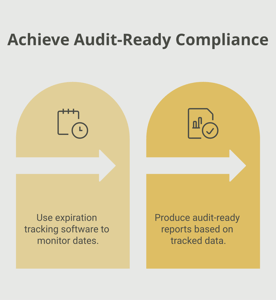
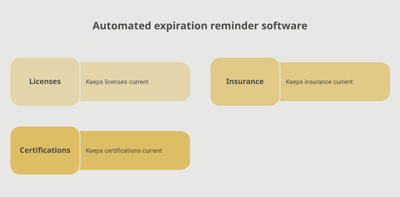
For organizations using a separate compliance tracker, a platform like Expiration Reminder stores each policy with carrier, broker, locations, limits, expiration date, supporting documents, and scheduled property values. Reminders fire automatically before each renewal.
Key features include automated reminders at multiple intervals (90, 60, 30 days), document storage for policies, schedules, COIs, and appraisals, dashboard views by location, line, or expiry window, audit-ready reports for lenders, lease counterparties, and finance, and the ability to log renewals in one step.
Key Takeaways
- Commercial property insurance covers physical damage to or loss of business property.
- Covered property: buildings, business personal property, tenant improvements, property of others, outdoor property (limited).
- Coverage forms: named perils (specific listed perils) or all-risk / special form (covers all except excluded).
- Valuation: Replacement Cost, Actual Cash Value, or Functional Replacement Cost.
- Common extensions: Business Income, Extra Expense, Equipment Breakdown, Ordinance or Law.
- Flood and earthquake typically require separate coverage where exposure exists.
- Most policies are annual; multi-location schedules require regular updating.
- Lapses cause uncovered losses, lender/contract violations, and business-continuity gaps.
Frequently Asked Questions
What is the difference between named perils and all-risk coverage?
Named perils covers only the specific perils listed in the policy. All-risk (special form) covers all causes of loss except those specifically excluded. All-risk is more common in modern commercial policies.
What is replacement cost coverage?
Coverage paying the cost of replacing damaged property with new property of similar kind and quality, without deduction for depreciation. Preferable to Actual Cash Value for most commercial property.
What is business income coverage?
Coverage for loss of income and continuing expenses during the period of property restoration following a covered loss. Essential for businesses that depend on operating in a specific location.
Are floods covered by standard property insurance?
Generally no. Flood is typically excluded from standard commercial property policies and requires separate coverage (NFIP or private flood insurance) where exposure exists.
Are earthquakes covered?
Generally no. Earthquake is typically excluded from standard commercial property policies and requires separate coverage or endorsement where exposure exists.
How long is a commercial property policy?
Most run on annual terms, matching other commercial property and casualty cycles.
What is the difference between fully insured property and a Schedule of Insured Property?
A Schedule of Insured Property lists specific locations and values insured under a single policy — common for multi-location operators. Policy terms apply to all scheduled locations.
How do organizations track property insurance across many locations?
Combinations of broker portals, insurance management platforms (Riskonnect, Origami Risk, others), and dedicated tracking platforms. The system that actively reminds before each renewal and supports COI production is the one that prevents most lapses.
Conclusion
Commercial property insurance is the financial protection layer for every business with physical assets. The substantive work — placing coverage, scheduling property, working with brokers, managing claims — sits with risk, finance, and operations. The administrative work — knowing every policy expiration, managing multi-location schedules, and producing COIs on demand — is where most multi-location operators need help.
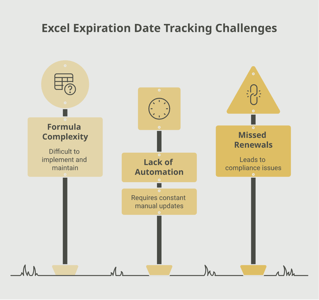
If your team tracks property insurance through broker portals or spreadsheets, you already know how easy it is for one policy to slip past renewal. A purpose-built tracking platform like Expiration Reminder centralizes every policy, sends reminders before each renewal, stores the supporting documents, and produces audit-ready reports the moment anyone asks.
Cover the property, support the operations, and let the system handle the calendar.