Introduction
If your workforce includes commercial drivers, safety-sensitive roles, or any position requiring fitness-for-work evaluation, physical exams sit at the center of medical compliance. The DOT physical (also called the CMV physical) is the most familiar — required of commercial drivers every two years or less. Beyond DOT, pre-employment, return-to-work, and periodic medical-surveillance physicals are part of many regulated and high-risk-role workforces.
This article explains what a physical exam is in employment context, the DOT physical specifically, the difference between the physical exam and the resulting Medical Examiner's Certificate (Medical Card), and the most practical way to track physical exams across a workforce.
For most fleet, occupational health, and HR teams, scheduling individual physicals is well understood. The hard part is the calendar — knowing whose physical is due, who is approaching the 24-month DOT limit, and which categories of physical apply to which roles.
What Is a Physical Exam?
In employment contexts, a physical exam is a medical evaluation conducted by a licensed healthcare provider to assess an individual's fitness for a specific job, role, or regulatory requirement. Common categories include:
- Pre-employment physical — conducted after a conditional offer of employment (under the ADA) to assess fitness for the role.
- Return-to-work physical — conducted before an employee returns from injury, illness, or extended leave.
- Periodic surveillance physical — required under OSHA medical surveillance standards (1910.95 hearing, 1910.134 respiratory protection, 1910.1001 asbestos, 1910.120 HAZWOPER, 1910.1025 lead, and others).
- DOT physical — required of commercial drivers under FMCSA 49 CFR Part 391, conducted by a medical examiner on the FMCSA National Registry.
- Other regulatory physicals — FAA medical examinations for pilots, Coast Guard medical examinations for mariners, public-safety physicals for police and firefighters.
The DOT physical specifically:
- Required for drivers operating CMVs with GVWR over 10,000 lbs in interstate commerce, hazmat drivers, and drivers of passenger vehicles above specified thresholds.
- Conducted by an FMCSA-listed medical examiner using Form MCSA-5875 (Medical Examination Report).
- Results in a Medical Examiner's Certificate (Form MCSA-5876 — the "Medical Card") valid up to 24 months.
- May be shortened to 3, 6, or 12 months when the examiner determines monitoring is needed for conditions like hypertension, diabetes, or sleep apnea.
The DOT physical assesses vision, hearing, blood pressure, cardiovascular health, respiratory function, neurological status, musculoskeletal status, and other systems specified in FMCSR § 391.41.
The physical exam is the encounter; the Medical Card is the documentation. Both are tracked separately in most fleet safety programs because the exam is scheduled in advance while the card is the verification document.
Why Physical Exam Tracking Matters for Your Organization
Physical exam tracking protects against three concrete risks: driver/worker disqualification, regulatory compliance findings, and worker placement issues.
From a driver-qualification standpoint, an expired DOT physical immediately disqualifies the commercial driver. The carrier cannot legally allow the driver to operate the CMV.
From a regulatory standpoint, OSHA medical surveillance, FAA medical, USCG medical, and other regulatory physical requirements have specific cadences that align with the underlying exposure or role. Missed exams can lead to citations and program-level findings.
From a workforce placement standpoint, employers placing workers in roles requiring physical fitness without current evaluation create both safety and liability exposure.
For motor carriers, regulated industries, and any organization with significant safety-sensitive workforces, the physical exam calendar is a foundational operational and compliance control.
Common Scenarios for Tracking Physical Exam Dates
DOT-Regulated Motor Carriers
Long-haul, regional, last-mile, bus, and other CMV operators schedule DOT physicals for every driver — every 24 months for most, more frequently for monitored conditions.
OSHA Medical Surveillance Programs
Industrial workforces under OSHA surveillance (respirator users, hearing conservation, asbestos workers, lead workers, HAZWOPER workers) follow standard-specific physical cadences.
Pre-Employment Physicals
Construction, manufacturing, healthcare, and other industries commonly require pre-employment physicals after a conditional offer for physically demanding or safety-sensitive roles.
Return-to-Work Programs
HR and occupational health programs schedule return-to-work physicals after injury, illness, surgery, or extended leave to assess fitness and identify needed accommodations.
Aviation and Maritime
FAA pilots and USCG mariners follow industry-specific physical schedules — pilots from 6 to 60 months depending on class and age; mariners on STCW or US Coast Guard schedules.
How Physical Exam Tracking Benefits Your Organization
A reliable program produces measurable benefits.
For the company, current physical exam records support DOT and other regulatory compliance, reduce workforce-placement risk, and prepare the organization for incident investigations.
For occupational health, fleet, HR, and operations teams, the exam calendar becomes a predictable activity. Scheduling lead times allow for examiner appointments, follow-up testing, and accommodation discussions.
For workers, predictable physical scheduling reduces last-minute appointment friction and ensures they remain qualified for their roles.
How to Track Physical Exam Expiration Dates
Driver qualification file (DQF) software is standard for DOT-regulated motor carriers. Occupational health management systems track surveillance physicals in industrial workforces.
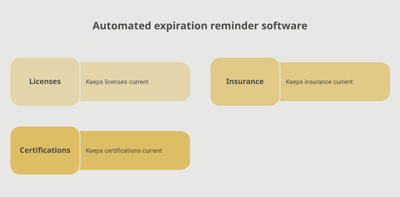
For organizations using a separate compliance tracker, a platform like Expiration Reminder stores each worker with their physical exam history, next-due date, restrictions or accommodations, examiner information, and supporting documents. Reminders fire automatically before each scheduled exam.
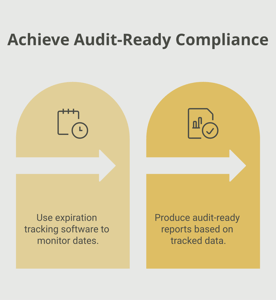
Key features include automated reminders at multiple intervals (90, 60, 30 days), document storage for examination reports and medical certificates with appropriate confidentiality controls, dashboard views by site, role, or exam type, audit-ready reports for DOT and OSHA, and the ability to log new exams in one step.
Key Takeaways
- A physical exam in employment context is a medical evaluation by a licensed healthcare provider to assess fitness for a specific role or regulatory requirement.
- Common categories: pre-employment, return-to-work, periodic surveillance, DOT, aviation/maritime, public-safety.
- The DOT physical is required for CMV drivers under FMCSR Part 391, conducted by an FMCSA-listed medical examiner.
- DOT physical results in a Medical Examiner's Certificate (Medical Card) valid up to 24 months; shorter when monitoring is required.
- OSHA medical surveillance standards (1910.95, 1910.134, 1910.1001, 1910.120, others) impose specific physical cadences.
- The physical exam (encounter) and the Medical Card (documentation) are tracked separately in most fleet programs.
- Automated tracking with reminders is the reliable approach for regulated workforces.
Frequently Asked Questions
How often is a DOT physical required?
Every 24 months for most commercial drivers. The medical examiner may issue a Medical Card for a shorter period (3, 6, or 12 months) when monitoring conditions like hypertension, diabetes, or sleep apnea.
Who can perform a DOT physical?
A healthcare provider listed on the FMCSA National Registry of Certified Medical Examiners. The registry is searchable at the FMCSA website.
What is the difference between the DOT physical and the Medical Card?
The DOT physical is the medical examination itself. The Medical Card (Medical Examiner's Certificate, Form MCSA-5876) is the documentation issued after a passing exam.
What does a DOT physical cover?
Vision, hearing, blood pressure, cardiovascular health, respiratory function, neurological status, musculoskeletal status, and other systems specified in FMCSR § 391.41.
What is a pre-employment physical?
A medical examination conducted after a conditional offer of employment to assess the candidate's fitness for the role. Under the ADA, pre-employment medical exams must be applied uniformly to all candidates for the position.
What is a return-to-work physical?
A medical examination conducted before an employee returns from injury, illness, surgery, or extended leave to verify fitness and identify any needed accommodations.
Are FAA and USCG physicals different from DOT?
Yes. Each regulatory framework has its own medical examination standards, examiner qualifications, and validity periods. FAA medical certificates run 6-60 months depending on class and age; USCG mariners follow STCW or US-specific schedules.
How long should physical exam records be kept?
OSHA medical records under 1910.1020 must be kept for the duration of employment plus 30 years. DOT medical examination records under FMCSR 391.51 are kept in the driver qualification file for at least 3 years after expiration.
Conclusion
Physical exams are the medical-evaluation foundation of any safety-sensitive or regulated workforce. The substantive work — conducting exams, interpreting results, applying accommodations — sits with occupational health providers, examiners, and clinical staff. The administrative work — knowing every worker's exam status, scheduling appointments in advance, and producing the records on demand — is where most programs need help.
If your team tracks physical exams through DQF software or HRIS, you already know how easy it is for one worker's exam date to slip past — particularly for drivers on shorter monitoring cycles. A purpose-built tracking platform like Expiration Reminder centralizes every worker's exam history, sends reminders before each due date, stores the supporting documents with appropriate confidentiality controls, and produces audit-ready reports the moment anyone asks.
Examine the workforce, document the fitness, and let the system handle the calendar.