Introduction
If your organization employs pharmacists — retail pharmacies, hospital pharmacies, long-term care pharmacies, specialty pharmacies, mail-order, telepharmacy, health plans, or any setting providing pharmaceutical care — pharmacist license currency is one of the most consequential workforce-compliance controls. Each state issues its own license, renewal is typically annual or biennial, and Continuing Pharmacy Education (CPE) requirements add their own deadlines.
This article explains what a pharmacist license is, the state board of pharmacy framework, NAPLEX and MPJE examinations, typical renewal cycles, CPE requirements, the NABP eLicensure program, and the most practical way to track pharmacist licenses across a pharmacy workforce.
For most pharmacy managers and chain-pharmacy HR teams, license verification at hire is well understood. The hard part is the calendar — knowing every pharmacist's renewal date and CPE progress.
What Is a Pharmacist License?
A pharmacist license is a state-issued authorization permitting an individual to practice pharmacy — dispensing prescriptions, counseling patients, compounding medications, and (in many states) administering immunizations, prescribing for specified conditions, and providing other pharmaceutical care. Licensure is administered by state boards of pharmacy under state-specific pharmacy practice acts.
Initial licensure typically requires:
- PharmD degree from an ACPE-accredited school of pharmacy.
- Practical experience hours during pharmacy school (typically 1,500-2,000 hours).
- NAPLEX (North American Pharmacist Licensure Examination) — the national pharmacist competency exam administered by NABP.
- MPJE (Multistate Pharmacy Jurisprudence Examination) — state-specific law exam administered by NABP, taken in each state of licensure.
- Background check and good moral character.
Renewal requirements:
- Renewal cycle — varies by state; annual or biennial are most common.
- Continuing Pharmacy Education (CPE) — most states require 15-30 hours per year (often supplemented with specific topic requirements: immunization, opioid stewardship, patient safety, others).
- Renewal fees — vary by state, typically $100-$400 per cycle.
CPE must be delivered through ACPE-accredited providers and reported via the NABP CPE Monitor for most states. CPE Monitor automatically transmits accredited CPE credits to state boards for licensure verification.
Pharmacy technicians are typically certified (PTCB or ExCPT) and licensed or registered separately under state-specific rules — distinct from pharmacist licensure.
Pharmacy intern licensure (during pharmacy school and post-graduation pending NAPLEX) is also issued by state boards for trainees.
Multi-state practice has become more common with telepharmacy, mail-order, and chain pharmacy operations. Pharmacists practicing in multiple states need separate state licenses in each state of practice.
Why Pharmacist License Tracking Matters for Your Organization
Pharmacist license currency protects against three concrete risks: practice without authority, payer-claim issues, and significant state-board enforcement.
From a practice standpoint, an unlicensed pharmacist cannot legally dispense or counsel. Continuing operations without a current pharmacist-in-charge violates pharmacy law.
From a payer standpoint, Medicare Part D, Medicaid, and commercial PBMs verify licensure as part of network credentialing. Claims submitted by unlicensed pharmacists can be denied or recouped.
From an enforcement standpoint, state boards of pharmacy conduct compliance audits and investigations. Lapsed licensure, missing CPE, or other violations can lead to fines, license suspension, or revocation.
For pharmacy chains, hospital pharmacies, and other pharmacy employers, the pharmacist license calendar across the workforce is one of the most consequential operational and compliance controls.
Common Scenarios for Tracking Pharmacist License Expiration Dates
Retail Pharmacy Chains
National retail chains (CVS, Walgreens, Rite Aid, regional chains) manage licenses across tens of thousands of pharmacists working in multiple states.
Hospital Pharmacy
Hospital pharmacies manage licenses for staff pharmacists, clinical pharmacists, residency programs, and the pharmacist-in-charge designation.
Specialty and Mail-Order Pharmacy
Specialty pharmacies and mail-order pharmacies often require pharmacists licensed in multiple states based on the patient population served.
Long-Term Care Pharmacy
LTC pharmacies serving nursing homes manage pharmacist licenses alongside DEA registrations and other regulatory requirements.
Telepharmacy
Telepharmacy operations require state-specific licensure for each state in which patients receive services.
How Pharmacist License Tracking Benefits Your Organization
A reliable program produces measurable benefits.
For the company, current licenses support PBM credentialing, board compliance, and pharmacy operations.
For pharmacy operations, HR, and credentialing teams, the license calendar becomes predictable. CPE deadlines align with renewal cycles. New-hire credentialing fits into a structured process.
For pharmacists, predictable tracking supports their continued practice.
How to Track Pharmacist License Expiration Dates
State boards of pharmacy provide license verification through their respective sites. NABP eLicensure and the NABP CPE Monitor support multi-state license management and CPE reporting.
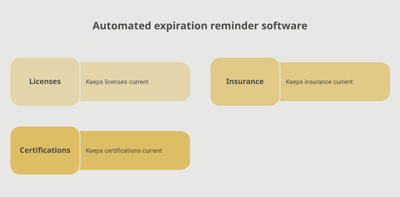
For organizations using a separate compliance tracker, a platform like Expiration Reminder stores each pharmacist with their state licenses, expiration dates, CPE progress, DEA registration, supporting documents, and immunization certifications. Reminders fire automatically before each renewal and CPE milestone.
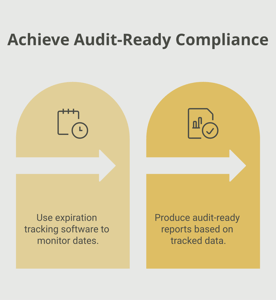
Key features include automated reminders at multiple intervals (180, 90, 60, 30 days), document storage for licenses and CPE certificates, dashboard views by state, location, or expiry window, audit-ready reports for state-board audits, and the ability to log renewals in one step.
Key Takeaways
- A pharmacist license is a state-issued authorization permitting an individual to practice pharmacy.
- Administered by state boards of pharmacy under state pharmacy practice acts.
- Initial licensure: PharmD, NAPLEX, MPJE, practical experience hours, background check.
- Renewal cycle: annual or biennial varies by state.
- Continuing Pharmacy Education (CPE): typically 15-30 hours per year through ACPE-accredited providers reported via NABP CPE Monitor.
- Pharmacy technicians and pharmacy interns have their own licensure structures.
- Multi-state practice (chains, mail-order, telepharmacy) requires separate state licenses.
- Lapses prevent practice, affect PBM network status, and trigger state-board enforcement.
Frequently Asked Questions
Who issues a pharmacist license?
The state board of pharmacy in the state where the pharmacist practices.
How long is a pharmacist license valid?
Varies by state — annual or biennial cycles are most common.
What are NAPLEX and MPJE?
NAPLEX (North American Pharmacist Licensure Examination) is the national pharmacist competency exam. MPJE (Multistate Pharmacy Jurisprudence Examination) is a state-specific law exam taken in each state of licensure. Both are administered by NABP.
What is CPE Monitor?
A NABP service that tracks ACPE-accredited continuing pharmacy education credits and automatically transmits them to participating state boards of pharmacy.
How many CPE hours do I need?
Varies by state — typically 15-30 hours per year, often with specific required topics (immunization, opioid stewardship, patient safety, others).
What is the difference between a pharmacist and a pharmacy technician?
Pharmacists hold a PharmD and a state pharmacist license. Pharmacy technicians typically hold a national certification (PTCB or ExCPT) and state-specific licensure or registration; they work under pharmacist supervision.
How do pharmacists practice in multiple states?
By obtaining licensure in each state of practice. Each requires passing the state-specific MPJE and meeting other state requirements.
What happens if a pharmacist license expires?
The pharmacist cannot legally practice. The pharmacy may be in violation of pharmacy-in-charge requirements. Reinstatement requires application, fees, and (depending on lapse length) possibly remedial CPE or testing.
Conclusion
Pharmacist licensure is the foundation of every pharmacy operation. The substantive work — completing CPE, passing exams, maintaining good standing — sits with the pharmacists themselves. The administrative work — knowing every pharmacist's license status, CPE progress, and renewal cycles across states — is where most pharmacy employers need help.
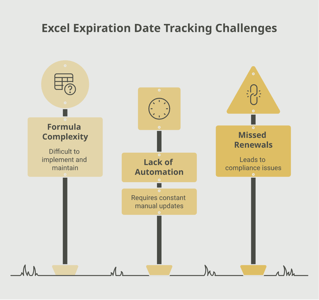
If your team tracks pharmacist licenses through state-board sites or spreadsheets, you already know how easy it is for one pharmacist's renewal to slip past. A purpose-built tracking platform like Expiration Reminder centralizes every pharmacist's licensure record, sends reminders before each renewal and CPE deadline, stores the supporting documents, and produces audit-ready reports the moment anyone asks.
License the pharmacy, complete the CPE, and let the system handle the calendar.