Introduction
If your business performs pest control — termites, rodents, structural pests, wood-destroying organisms, vector control, lawn and ornamental, or fumigation — both the company and the individual applicators need state-issued licenses. Validity ranges from annual to 5-year cycles depending on jurisdiction, and continuing education (CE) requirements layer on top. Missed renewals or insufficient CEUs can suspend the license and shut down operations.
This article explains what a pest control license is, the company-vs-applicator license structure, the state-by-state validity ranges, continuing education requirements, insurance obligations, and the most practical way to track licenses across a pest control business.
For most pest control owners and office managers, individual renewals are well understood. The hard part is the calendar across multiple license types, multiple states, and multiple technicians, each with their own CE deadlines.
What Is a Pest Control License?
A pest control license is a state-issued authorization to perform pest control activities. Most states issue licenses at multiple levels:
- Business / Operator License — for the pest control company. Often requires designation of a licensed certified applicator as the responsible party.
- Certified Applicator License — for the individual who is responsible for the application of restricted-use pesticides and supervises non-certified technicians.
- Registered Technician / Non-Certified Applicator License — for technicians working under the supervision of a certified applicator.
Categories within these licenses vary by state — typical categories include:
- General pest (residential and commercial).
- Termite / wood-destroying organisms.
- Rodent control.
- Lawn and ornamental.
- Fumigation.
- Public health / vector control.
- Aquatic pest control.
Licensing is primarily state-administered, with federal guidance under EPA's Federal Insecticide, Fungicide, and Rodenticide Act (FIFRA). State Departments of Agriculture (or equivalent agencies) administer the licenses.
Validity periods vary significantly:
- California — annual renewal required.
- North Carolina — annual renewal with 5-year recertification.
- Illinois — 3 years.
- Most other states — 1, 2, 3, or 5-year cycles with CE requirements.
Continuing education (CE) requirements typically include a specified number of CEUs per renewal cycle, earned through state-approved courses, workshops, seminars, and online training. CEUs must be tied to pest management and safety topics.
Insurance is commonly required — pest control businesses typically must carry liability coverage as a condition of licensure. California, for example, requires proof of insurance as part of the licensing process.
Why Pest Control License Tracking Matters for Your Organization
License currency protects against three concrete risks: regulatory enforcement, operational disruption, and customer-contract issues.
From a regulatory standpoint, performing pest control with a lapsed license exposes the company to state enforcement, fines, and license suspension or revocation. Continued violation can disqualify the company from licensure entirely.
From an operational standpoint, a suspended license means no legal work. Technicians cannot apply pesticides. Customer accounts remain unserviced. Revenue stops.
From a customer-contract standpoint, commercial customers (retail chains, healthcare facilities, food service, schools) commonly require proof of licensure and insurance as a condition of contract. Lapsed credentials affect contract eligibility.
For pest control companies, the license calendar across the business and all licensed technicians is a foundational operational and compliance control.
Common Scenarios for Tracking Pest Control License Expiration Dates
Multi-Location Pest Control Companies
Companies operating in multiple states face overlapping state-specific renewal cycles. Each state's CE requirements must be met separately.
Specialty Service Companies
Termite, fumigation, and vector control specialists face additional category-specific licenses with their own CE requirements.
Lawn and Landscape Care
Lawn and ornamental pest control overlaps with broader landscape services. Many landscape companies hold L&O pest control licenses alongside their core services.
Food Service and Healthcare Pest Control
Companies serving food service and healthcare customers face additional contract-required documentation including insurance certificates and license verification.
Solo Operators and Small Businesses
Smaller pest control businesses with one or two licensed applicators face the same calendar with fewer resources to manage it.
How Pest Control License Tracking Benefits Your Organization
A reliable program produces measurable benefits.
For the company, current licenses maintain operating authority, customer-contract eligibility, and regulatory compliance.
For owners and office managers, the license calendar becomes predictable. CE deadlines are met with adequate lead time. Renewal applications are filed on schedule.
For technicians, predictable certification cycles support continued employment and licensure.
How to Track Pest Control License Expiration Dates
State Department of Agriculture portals (or equivalent licensing authorities) provide license-status verification. Pest control business management software (FieldRoutes, GorillaDesk, PestPac, ServSuite, and others) often includes license tracking.
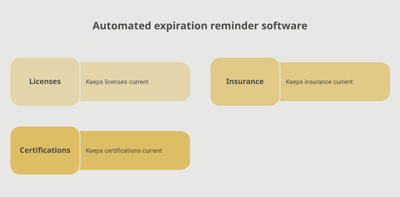
For organizations using a separate compliance tracker, a platform like Expiration Reminder stores each license with its category, state, expiration date, CE requirements, supporting documents, and insurance certificates. Reminders fire automatically before each renewal and CE deadline.
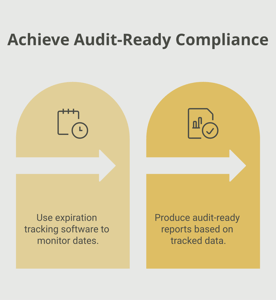
Key features include automated reminders at multiple intervals (180, 90, 60, 30 days — annual cycles need closer tracking), document storage for licenses, CE certificates, and insurance proofs, dashboard views by state, category, or expiry window, audit-ready reports for state regulators and commercial customers, and the ability to log new licenses in one step.
Key Takeaways
- A pest control license authorizes pest control activities, issued at multiple levels (business, certified applicator, registered technician).
- Licensing is primarily state-administered under federal FIFRA guidance.
- Validity ranges from annual to 5-year cycles depending on state.
- Continuing education requirements typically apply per renewal cycle.
- Liability insurance is commonly required as a condition of licensure.
- Lapses cause regulatory enforcement, operational shutdown, and customer-contract issues.
- Automated tracking with reminders is the reliable approach for any non-trivial pest control business.
Frequently Asked Questions
How long is a pest control license valid?
It varies by state — California is annual, North Carolina is annual with 5-year recertification, Illinois is 3 years, others range 1-5 years.
What types of pest control licenses are typically required?
A business/operator license for the company plus individual licenses for certified applicators and registered technicians. Categories vary by state and may include general pest, termite, rodent, lawn and ornamental, fumigation, vector control, and others.
What are continuing education units (CEUs)?
State-required hours of approved training that licensees must complete each renewal cycle to maintain certification. Courses cover pest management, safety, pesticide regulations, and related topics.
Do I need insurance to hold a pest control license?
Yes in many states. California, for example, requires proof of liability insurance as part of licensing. Insurance covers damages from pesticide applications and related operations.
What happens if a pest control license expires?
The company or applicator cannot legally perform pest control work. State enforcement can result in fines and license-suspension or revocation. Customer contracts may require notification.
Can I work in multiple states with a single license?
No, generally. Pest control licensing is state-specific. Operating in multiple states requires separate licenses in each state, with separate CE and renewal requirements.
What is FIFRA?
The Federal Insecticide, Fungicide, and Rodenticide Act — the federal law governing pesticide registration, labeling, and use. States administer FIFRA-based programs through their own licensing structures.
How do I track licenses across many states or technicians?
Combinations of state portals, pest control business management software, and dedicated tracking platforms. The system that actively reminds before each renewal and CE deadline is the one that prevents most lapses.
Conclusion
Pest control licensing is the operational and regulatory foundation of every pest control business. The substantive work — passing exams, completing CEUs, maintaining insurance, applying products safely — sits with applicators, technicians, and operations leadership. The administrative work — knowing every license's expiration, every CE deadline, and every insurance renewal — is where most pest control businesses need help.
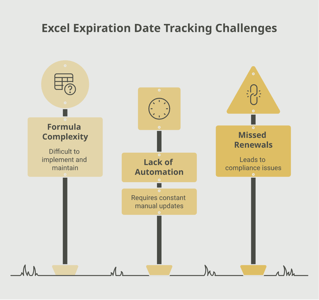
If your team tracks pest control licenses through state portals or spreadsheets, you already know how easy it is for one applicator's CEUs to fall short or for a business renewal to lapse. A purpose-built tracking platform like Expiration Reminder centralizes every license and supporting credential, sends reminders before each renewal date, stores the documents, and produces audit-ready reports the moment anyone asks.
License the business, certify the applicators, and let the system handle the calendar.