Introduction
If your workers operate in construction, general industry, maritime, or disaster-site environments, OSHA 10 and OSHA 30 outreach training cards are the credential most commonly requested by general contractors, owners, and (in some states) state law as a condition of site access. The training itself is voluntary at the federal level, but state and contractual requirements make it effectively mandatory for many workers.
This article explains what OSHA 10 and OSHA 30 are, the federal Outreach Training Program, the completion-card validity nuances, the state-specific mandates, and the most practical way to track cards across a workforce.
For most safety and HR teams, sending workers to the courses is well understood. The hard part is the calendar — knowing whose card is current under client and state rules, and managing the 5-year replacement window when cards are lost.
What Is OSHA 10/30 Certification?
OSHA 10 and OSHA 30 are courses delivered under OSHA's Outreach Training Program — voluntary safety and health training for workers and supervisors. The program offers four industry-specific versions:
- Construction — covers OSHA standards under 29 CFR 1926.
- General Industry — covers OSHA standards under 29 CFR 1910.
- Maritime — covers shipyard, marine terminals, and longshoring.
- Disaster Site Worker — covers safety at disaster recovery operations.
Within each industry, two duration tiers are offered:
- OSHA 10-Hour — entry-level course providing basic safety and health awareness. Aimed at workers in covered industries.
- OSHA 30-Hour — more comprehensive course providing in-depth safety training. Aimed at supervisors, safety personnel, and workers with safety responsibilities.
Students who complete an Outreach Training course receive an official OSHA completion card. Importantly:
- The cards themselves do not have a federal expiration date. Once issued, they do not expire under OSHA's program rules.
- However, replacement cards can only be issued within 5 years of the original course completion. After 5 years, a replacement is not available.
- Some states and some clients (particularly in construction) require a DOL-issued card within the last 5 years — effectively creating a 5-year practical validity.
- Employers may require periodic retraining on their own initiative, especially on contracts with retraining clauses.
The Outreach Training Program is explicitly not a substitute for OSHA training required under specific OSHA standards (fall protection, scaffolding, confined space, etc.). The cards do not certify or license workers; they document completion of an awareness-level program.
State-specific requirements include:
- New York (Local Law 196): requires OSHA 30 or specific equivalents for construction workers at most NYC sites; site safety supervisors require additional training.
- Connecticut: requires OSHA 10 for certain public-works projects.
- Massachusetts: requires OSHA 10 for construction workers on public-works projects.
- Missouri, New Hampshire, Nevada, Pennsylvania, Rhode Island, West Virginia, and others: state-specific OSHA 10/30 requirements on certain projects.
Why OSHA 10/30 Cards Matter for Your Organization
OSHA 10/30 currency protects against three concrete risks: state-law violations, site exclusion, and weak negligent-hiring defenses.
From a state-law standpoint, several states require OSHA 10 or OSHA 30 cards for specific construction work — particularly on public-works projects. Missing cards trigger fines, project shutdowns, and contractor disqualification.
From a site-access standpoint, many general contractors, owners, and project managers require OSHA 10 (workers) or OSHA 30 (supervisors) as a condition of site access. Workers without current cards may be removed; contractors without sufficient cards may lose work.
From a legal standpoint, documented OSHA Outreach training is a useful element of negligent-hiring and negligent-training defenses, though it does not replace the specific OSHA-standard training those programs typically require.
For multi-site, multi-state construction operations, the card calendar across the workforce is a meaningful compliance and operational control.
Common Scenarios for Tracking OSHA 10/30 Card Dates
Construction General and Specialty Contractors
GCs and specialty subs face the most concentrated state and client OSHA 10/30 requirements. New York Local Law 196 has driven near-universal adoption of OSHA 30 in NYC construction.
Public-Works Contractors
Public-works contractors in CT, MA, MO, NH, NV, PA, RI, WV, and other states face statutory OSHA 10/30 requirements on specific projects.
Industrial Contractors
Industrial contractors performing work at refineries, chemical plants, and similar sites often face client-required OSHA 30 for foremen and OSHA 10 for craft workers.
Manufacturing and General Industry
Manufacturers and general-industry employers may adopt OSHA 10 (General Industry) as part of standard onboarding for shop-floor workers.
Disaster Recovery Operations
FEMA-coordinated disaster recovery often requires OSHA 7600 Disaster Site Worker training plus OSHA 10 or 30 in construction or general industry.
How OSHA 10/30 Tracking Benefits Your Organization
A reliable tracking program produces measurable benefits.
For the company, current cards satisfy state and client requirements, preserve site access, and support clean compliance posture.
For safety, HR, and operations teams, the card calendar becomes a predictable activity. The 5-year replacement window is managed proactively. New hires can be onboarded with OSHA 10/30 built into the process.
For workers, predictable card management prevents the inconvenience of needing to retake a course because a card was lost outside the 5-year replacement window.
How to Track OSHA 10/30 Card Expiration Dates
Authorized OSHA Outreach Training Providers maintain records of issued cards within the 5-year window. Many construction-focused safety platforms integrate card data.
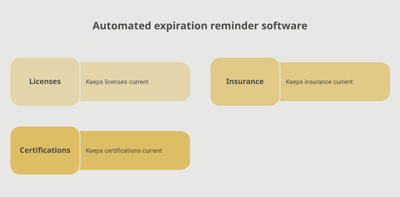
For organizations using a separate compliance tracker, a platform like Expiration Reminder stores each worker with their OSHA Outreach card type (10/30, Construction/General Industry/Maritime/Disaster Site), issue date, 5-year-replacement deadline, and supporting documents. Reminders fire automatically before each 5-year deadline.
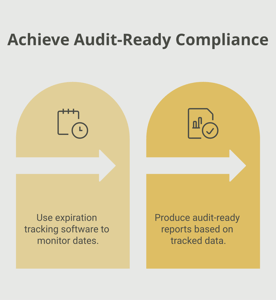
Key features include automated reminders at multiple intervals, document storage for card images and training certificates, dashboard views by site, role, or expiry window, audit-ready reports for state inspectors and clients, and the ability to log new cards in one step.
Key Takeaways
- OSHA 10 and OSHA 30 are voluntary safety and health training courses delivered under OSHA's Outreach Training Program.
- Four industry versions: Construction, General Industry, Maritime, Disaster Site Worker.
- OSHA 10 is entry-level for workers; OSHA 30 is comprehensive for supervisors and safety personnel.
- Federal cards do not have an expiration date, but replacement cards are only available within 5 years of the original course.
- Several states (NY, CT, MA, MO, NH, NV, PA, RI, WV, others) require OSHA 10/30 for specific construction work.
- The Outreach Training Program is not a substitute for specific OSHA-standard training.
- Automated tracking with reminders supports both state-law compliance and the 5-year card replacement window.
Frequently Asked Questions
Do OSHA 10 and OSHA 30 cards expire?
Federal OSHA cards do not have an expiration date. However, replacement cards can only be issued within 5 years of the original course. Some states and clients effectively require a card issued within the last 5 years.
What is the difference between OSHA 10 and OSHA 30?
OSHA 10 is a 10-hour entry-level course for workers. OSHA 30 is a 30-hour comprehensive course for supervisors, safety personnel, and workers with safety responsibilities.
Which industries are covered?
Four industry versions: Construction (1926), General Industry (1910), Maritime, and Disaster Site Worker.
Does OSHA 10/30 certify or license workers?
No. The cards document completion of an awareness-level training program but are not certifications or licenses. They do not replace OSHA-standard-specific training (fall protection, scaffolding, confined space, etc.).
What is New York Local Law 196?
A NYC law requiring construction workers at most NYC building sites to complete OSHA 30 (or specific equivalents). Site safety supervisors require additional training beyond OSHA 30.
Can OSHA 10/30 be taken online?
Yes, through OSHA-authorized online providers. The courses must meet OSHA's specific time-on-task and content requirements.
How long does it take to get an OSHA card after completing the course?
Authorized providers typically issue cards within 4–6 weeks of course completion. Replacement cards (within the 5-year window) are issued by the original training provider.
How long should OSHA 10/30 records be kept?
OSHA does not impose a federal retention period for Outreach Training records. Most employers retain card records for the duration of employment plus several years.
Conclusion
OSHA 10 and OSHA 30 cards are widely required credentials in construction and (less universally) general industry — driven by a patchwork of state laws, client requirements, and employer policy. The substantive work — sending workers to the course, applying the safety knowledge daily — sits with safety, HR, and field leadership. The administrative work — knowing every worker's card issue date and the 5-year replacement window — is where most programs need help.
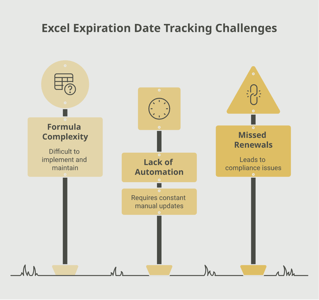
If your team tracks OSHA 10/30 cards through paper records or spreadsheets, you already know how easy it is for a worker's card to fall outside the 5-year replacement window. A purpose-built tracking platform like Expiration Reminder centralizes every card, sends reminders before the 5-year deadline, stores the supporting documents, and produces audit-ready reports the moment anyone asks.
Train the workforce, manage the cards, and let the system handle the calendar.