Introduction
If you work in healthcare compliance, the phrase "OIG check" lives at the top of your monthly task list — and it should. A single excluded employee on your payroll can trigger penalties of nearly $25,000 per violation, plus False Claims Act exposure, and the regulator does not consider "we forgot to screen this month" a defense.
This article explains what an OIG check is, the rules behind it, who must perform it, how often, and what happens when it lapses. You will also see the most practical way to keep monthly screening current across hundreds or thousands of employees and vendors without losing weekends to spreadsheets.
For most healthcare organizations, the screening itself is the easy part. The hard part is staying organized — building a system where every new hire is screened on day one and every existing person is screened every month, with documented evidence the auditor can see.
What Is an OIG Check?
An OIG check is the process of screening an individual or entity against the U.S. Department of Health and Human Services Office of Inspector General's List of Excluded Individuals/Entities (LEIE) — a federal database of people and organizations barred from participating in any federal healthcare program, including Medicare and Medicaid.
The OIG excludes individuals and entities for reasons that include criminal convictions related to healthcare fraud, patient abuse or neglect, controlled substance violations, license revocation, and felony convictions for fraud or financial misconduct. As of 2026, the LEIE contains over 82,000 entries and is updated monthly. The list is publicly searchable and available for bulk download.
A complete OIG screening program typically checks three databases:
- OIG LEIE — the federal list of excluded individuals and entities.
- GSA/SAM Excluded Parties List — the broader federal government-wide exclusion list (System for Award Management).
- State Medicaid exclusion lists — 44 U.S. states maintain their own state-specific exclusion databases for Medicaid program providers.
The screening result is recorded with the date checked, the source database, and confirmation that no match was found (or, if a match exists, documented investigation and response).
There is no fixed "expiration date" on an individual screening. Instead, the validity is built into the schedule: screen at hire, then at least monthly thereafter for every employee, contractor, vendor, and referring provider.
Why OIG Checks Matter for Your Organization
OIG screening sits at the center of every federally funded healthcare compliance program for one simple reason: hiring or contracting with an excluded person costs real money.
The penalty structure is harsh by design. Under the Civil Monetary Penalties Law, employers that employ or contract with excluded persons face civil monetary penalties of up to $24,947 per violation (2026 inflation-adjusted), plus repayment of any federal program payments tied to the excluded person's work, plus potential False Claims Act exposure that can multiply the damages.
Beyond penalties, organizations that fail to screen properly often surface the failure during routine Medicare or Medicaid audits, accreditation surveys, or False Claims Act investigations triggered by qui tam complaints. The audit is rarely the worst part — the corrective action plan, the back-billing review, and the reputational damage usually outlast the original finding.
Insurance carriers, payers, and accreditation bodies (such as Joint Commission and AAAHC) routinely review screening programs as part of standard reviews. A documented monthly screening process with current dates is the cheapest, most visible compliance evidence an organization can produce.
Common Scenarios for Tracking OIG Check Dates
Monthly OIG screening touches every kind of healthcare and healthcare-adjacent organization. Here are the contexts where keeping screening current matters most.
Hospitals and Health Systems
Large health systems may employ tens of thousands of clinicians, nurses, technicians, and administrative staff, plus thousands of contractors and vendors. Each must be screened at hire and monthly thereafter. Compliance officers in these settings need a system that can ingest a full employee roster, run it against the LEIE and state databases, and produce dated evidence — every month, every person.
Long-Term Care and Skilled Nursing Facilities
Long-term care has historically drawn intense OIG scrutiny. Skilled nursing facilities screen direct care staff, dietary workers, contracted therapists, and medical directors monthly. Many states impose additional screening requirements on top of the federal baseline.
Medical Groups, Clinics, and Practices
Smaller practices often struggle with OIG compliance because the screening burden is the same per-person but the staff to manage it is smaller. Practice managers and compliance leads frequently underestimate the scope until an audit surfaces months of missed screenings.
Pharmacy and DME Suppliers
Pharmacies, durable medical equipment suppliers, and home health agencies billing Medicare or Medicaid must screen every employee, contractor, and vendor with access to the federal program. Many also screen referring physicians as part of fraud-prevention programs.
Health Plans and Managed Care Organizations
Medicare Advantage (Part C) and Medicare Part D plans face explicit monthly screening requirements for downstream and delegated entities. Provider network teams must screen contracted providers, and the screening dates feed directly into network compliance reports.
How OIG Checks Benefit Your Company and Employees
A well-run OIG screening program produces measurable benefits.
For the company, current screening protects against civil monetary penalties, supports audit readiness, and demonstrates good-faith compliance — a factor in penalty mitigation when a problem surfaces. It also catches issues early, before a billing pattern develops.
For employees and contractors, knowing the organization screens consistently provides confidence that hiring and credentialing are handled professionally, and it removes ambiguity for anyone with a borderline background by surfacing issues at hire rather than years into employment.
For patients and payers, monthly screening contributes to the broader integrity of the federal healthcare program — fewer excluded individuals delivering care, fewer fraud opportunities, cleaner claims.
How to Track OIG Check Dates
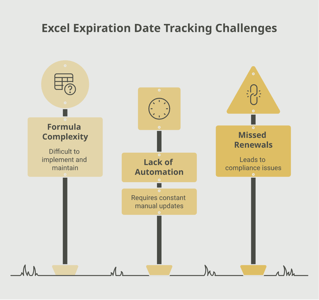
The most common approach is a compliance officer manually checking the LEIE on a fixed monthly date and recording results in a spreadsheet. This works for very small organizations but fails as the employee roster grows.
The next step is using the OIG's bulk download or batch matching tools, which let compliance teams compare entire employee files against the LEIE in one pass. This is faster but still requires someone to schedule the run, store the results, and produce evidence on demand.
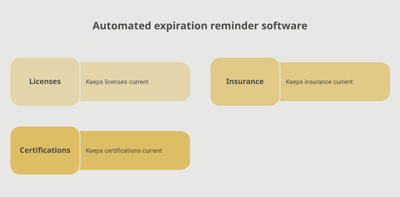
A dedicated tracking platform like Expiration Reminder stores each employee, contractor, vendor, and referring provider as a tracked record with monthly screening dates, evidence files, and responsible owners. Reminders fire automatically before each monthly screening date, and overdue items appear on a dashboard the moment they slip.
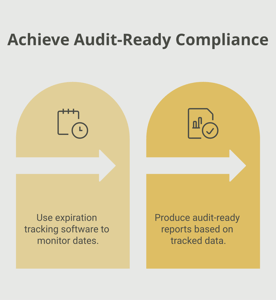
The features that matter most for OIG compliance include automated monthly reminders for each tracked person, document storage for screening evidence (PDF, screenshot, or batch export attached to each record), audit-ready reports showing screening status across the entire workforce by date range, the ability to log results and timestamp the next due date automatically, and dashboard filters by department, role, or facility for large multi-site organizations.
The goal is simple: every employee, every month, every database — with documented evidence ready the moment the auditor asks.
Key Takeaways
- An OIG check screens individuals and entities against the federal LEIE and other exclusion databases to identify people barred from federal healthcare programs.
- Screening must be performed at hire and monthly thereafter for every employee, contractor, vendor, and referring provider tied to federal program billing.
- Civil monetary penalties for employing excluded persons can reach $24,947 per violation in 2026, plus repayment and False Claims Act exposure.
- A complete program screens against the OIG LEIE, the GSA/SAM exclusion list, and applicable state Medicaid exclusion databases.
- Manual screening via the OIG website works for small teams; batch matching and dedicated tracking software are required at scale.
- Audit readiness depends on documented evidence — date, source, result — for every screening of every person.
Frequently Asked Questions
How often must OIG checks be performed?
OIG checks must be performed at the time of hire, contract, or enrollment, and at least monthly thereafter for every employee, contractor, vendor, and entity tied to federal healthcare program billing.
What databases must I check?
At minimum, you must check the OIG LEIE and the GSA/SAM Excluded Parties List. If your organization participates in state Medicaid programs, you should also check the applicable state Medicaid exclusion lists — 44 states maintain their own databases.
What happens if I employ someone on the LEIE?
Employing an excluded person can result in civil monetary penalties up to $24,947 per violation (2026), repayment of federal program payments tied to that person's work, and potential False Claims Act exposure.
Who is responsible for OIG screening?
The employer or contracting entity is responsible. Liability extends to anyone billing federal healthcare programs and to many entities downstream of those programs, including managed care plans, pharmacies, DME suppliers, and home health agencies.
Can I outsource OIG checks to a third party?
Yes, many organizations use third-party screening vendors. However, liability for employing an excluded person remains with the employer regardless of who performs the screening — the documented evidence must still be available on demand.
How do I document an OIG check?
Document the date checked, the database(s) searched, the result (no match, match investigated and resolved), and the name of the person performing the screening. Store the evidence so it can be retrieved during an audit.
What if a screening returns a possible match?
Investigate the match by comparing additional identifiers (date of birth, SSN, address) against the LEIE record. If the match is confirmed, take immediate action — typically termination or contract termination — and document the resolution.
Does FCRA apply to OIG checks?
OIG checks against the LEIE are publicly available and do not require Fair Credit Reporting Act compliance the way credit-based background checks do. However, if you use a third-party screening service, the FCRA may apply to the broader screening report.
Conclusion
OIG checks are one of the highest-leverage compliance activities in healthcare. The rules are clear, the schedule is fixed, and the penalty for missing a month is dramatically higher than the cost of the screening itself. The challenge is execution — building a system where every person on your roster is screened, every month, with evidence stored and ready for audit.
If your team is still running OIG checks one person at a time, storing results in scattered spreadsheets, or relying on memory for the monthly run, you already know how fragile that is. A purpose-built tracking platform like Expiration Reminder centralizes screening dates, sends reminders, stores evidence, and produces audit-ready reports the moment anyone asks.
Run the checks, document the results, and let the system handle the calendar work.