Introduction
If your business shares sensitive information with employees, contractors, vendors, partners, customers, or prospective acquirers, an NDA is almost certainly part of the relationship. The NDA defines what counts as confidential, what the recipient can do with it, and — critically — how long the obligation to keep it confidential lasts.
This article explains what an NDA is, the typical duration of confidentiality obligations, how trade-secret protection differs, and the most practical way to track NDA expiration dates across a portfolio.
For most legal and operations teams, drafting NDAs is well understood. The hard part is the calendar — knowing every NDA's end date, every survival-clause provision, and every renewal or extension event.
What Is a Non-Disclosure Agreement (NDA)?
A non-disclosure agreement — also called a confidentiality agreement — is a legal contract in which one or both parties agree to protect specified information from disclosure to third parties for a defined period. NDAs come in two main forms:
- Unilateral (one-way) — one party discloses confidential information to another, who agrees to protect it. Common in vendor relationships, M&A diligence, hiring.
- Mutual (two-way) — both parties exchange confidential information and both agree to protect what they receive. Common in partnership discussions, joint ventures.
Typical NDA terms include:
- Definition of confidential information — what counts as protected.
- Permitted use — what the recipient may do with the information.
- Standard of care — how the recipient must protect it.
- Term — how long the obligation lasts (often distinct from the underlying business relationship's duration).
- Exclusions — public information, independently developed, lawfully obtained from third parties.
- Return or destruction — what happens to the information at end of term.
- Trade secret carve-out — perpetual protection for trade-secret information.
- Remedies — injunctive relief, damages, attorneys' fees.
According to common NDA practice, most NDAs run 2 to 5 years of confidentiality obligation. Some include perpetual confidentiality clauses, particularly for trade-secret information. Some end on a trigger event (transaction closing, partnership termination).
Trade-secret information receives different treatment. Under the Defend Trade Secrets Act and state equivalents, trade secrets are protected for as long as they remain secret and derive value from being confidential — potentially indefinitely. Courts generally accept perpetual NDA obligations specifically for trade-secret information, while non-trade-secret confidential information may be subject to court skepticism if obligations are perpetual.
When an NDA expires, the receiving party is generally no longer obligated to keep the disclosed information confidential — unless a survival clause extends the obligation, or the information qualifies as a trade secret.
Why NDA Tracking Matters for Your Organization
NDA currency protects against three concrete risks: lapsed protection of sensitive information, gaps during ongoing relationships, and confusion at end of term.
From a protection standpoint, sensitive information shared under an NDA loses contractual protection at expiry unless renewed or covered by a survival clause. For information shared during ongoing relationships, the NDA needs to cover the full duration of disclosure plus any post-termination protection period.
From a relationship standpoint, NDAs signed at the start of a relationship sometimes expire while the relationship is still active. The active disclosure outpaces the original NDA's term, leaving the most recent information uncovered.
From an end-of-term standpoint, NDAs typically include return-or-destroy obligations and certifications. Missing the end date means missing the cleanup process.
For organizations with many active relationships — vendors, partners, employees, contractors, M&A targets — the NDA calendar can quickly become unmanageable.
Common Scenarios for Tracking NDA Expiration Dates
M&A and Strategic Transactions
Acquirers and targets execute NDAs at the start of every diligence process. These NDAs typically run 2–3 years and gate every subsequent disclosure.
Vendor and Partner Onboarding
NDAs are often the first agreement signed in any vendor or partner relationship — sometimes before the broader contract is in place.
Employment and Contractor Confidentiality
Employees and contractors typically sign NDAs (or NDA provisions within an employment agreement) at the start of the relationship. These often include survival clauses extending obligations beyond the relationship.
Joint Ventures and Partnerships
JV and partnership discussions often begin with mutual NDAs that gate the disclosure of business plans, technology, and customer data.
Legal and Regulatory Investigations
NDAs sometimes structure information sharing in litigation, regulatory inquiries, and investigations — with strict tracking requirements.
How NDA Tracking Benefits Your Organization
A reliable tracking program produces measurable benefits.
For the company, current NDAs maintain protection over sensitive information, support clean end-of-term cleanup processes, and prevent gaps in coverage during ongoing relationships.
For legal teams, the NDA calendar becomes a manageable inventory rather than a sprawling collection of one-off documents.
For business teams, knowing the NDA status before sharing new information prevents either accidental disclosure under an expired NDA or unnecessary delay re-papering an active relationship.
How to Track NDA Expiration Dates
Contract lifecycle management (CLM) platforms typically include NDA workflows alongside other contract types.
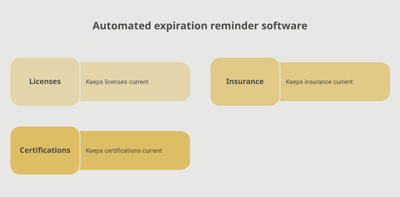
For organizations not running a dedicated CLM, a tracking platform like Expiration Reminder stores each NDA with its counterparty, type (unilateral/mutual), term, survival provisions, expiration date, trade-secret carve-out status, and supporting document. Reminders fire automatically before each expiration.
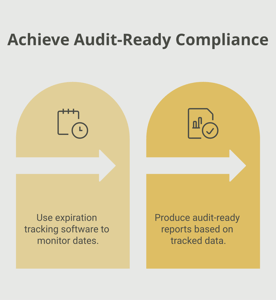
Key features include automated reminders at multiple intervals (120, 90, 60 days before expiry), document storage for executed NDAs and amendments, dashboard views by counterparty or expiry window, audit-ready reports for legal, and the ability to log renewal or extension events.
Key Takeaways
- An NDA is a legal contract obligating one or both parties to protect specified information from disclosure for a defined period.
- Common terms include 2–5 years of confidentiality obligation; some NDAs run longer or perpetually.
- Trade-secret information typically receives perpetual protection independent of the NDA's stated term.
- Survival clauses can extend specific obligations beyond NDA expiry.
- Lapsed NDAs leave information contractually unprotected unless a survival clause or trade-secret status applies.
- Centralized tracking is essential for organizations with many active confidential relationships.
Frequently Asked Questions
How long does an NDA last?
Most NDAs include confidentiality terms of 2–5 years, though specific durations vary based on the transaction or industry. Some include perpetual confidentiality clauses, particularly for trade secrets.
What is the difference between unilateral and mutual NDAs?
A unilateral NDA covers one-way disclosure — one party shares confidential information, the other agrees to protect it. A mutual NDA covers two-way disclosure — both parties share confidential information and both agree to protect what they receive.
Can an NDA be perpetual?
In some cases yes, particularly for trade secrets. Courts generally accept perpetual protection for trade-secret information but may be skeptical of perpetual obligations on non-trade-secret confidential information.
What is a survival clause?
A survival clause extends specific NDA obligations beyond the NDA's expiration. Common survival items include the duty of confidentiality, the duty to return or destroy materials, indemnification, and dispute-resolution provisions.
What happens when an NDA expires?
The receiving party is generally no longer contractually bound to keep the information confidential — unless a survival clause extends the obligation, or the information qualifies as a trade secret under applicable law.
Are trade secrets protected differently?
Yes. Trade secrets receive statutory protection under the Defend Trade Secrets Act and state equivalents for as long as they remain secret and derive value from being confidential — potentially indefinitely.
How do I track many NDAs?
Combinations of CLM platforms, contract repositories, and dedicated tracking systems. The system that actively reminds before expiry is the one that prevents most lapses.
What is the difference between an NDA and a confidentiality clause in another contract?
An NDA is a standalone confidentiality agreement. A confidentiality clause embedded in an employment contract, MSA, or vendor contract serves the same legal function within a broader agreement.
Conclusion
NDAs are the legal protection layer for every confidential disclosure a business makes. The substantive work — defining what is confidential, negotiating terms, deciding on duration — sits with legal. The administrative work — knowing every NDA's end date and survival provisions — is where most legal programs need help.
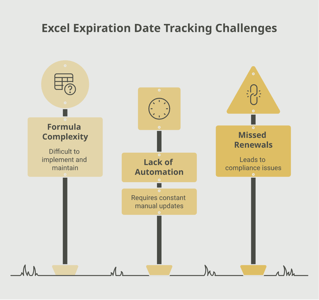
If your team tracks NDAs through document repositories or scattered email folders, you already know how easy it is for one to expire unnoticed. A purpose-built tracking platform like Expiration Reminder centralizes every NDA, sends reminders before each expiration, stores the supporting documents, and produces audit-ready reports the moment anyone asks.
Protect the confidential information, manage the obligations, and let the system handle the calendar.