Introduction
If you operate any vehicle over three years old on UK roads, the MOT test is the line between legally driving and committing an offence. The certificate is valid for exactly 12 months. There is no grace period — not even for one day — and the fine for driving without a current MOT can reach £1,000, with insurance coverage at risk on top.
This article explains what the MOT is, the rules behind it, who must pass it, how long the certificate stays valid, and what happens when an MOT lapses. You will also see the most practical way to track MOT expiration dates across a fleet, a household, or a leasing portfolio.
For most vehicle owners, booking the test is straightforward. The hard part is the calendar — knowing every vehicle's expiry and acting before the date passes, especially across multiple vehicles or shared keepers.
What Is the MOT Test?
The MOT test (originally named for the Ministry of Transport) is an annual test of vehicle safety, roadworthiness, and exhaust emissions, required for most vehicles over three years old in Great Britain and Northern Ireland.
The test covers items including:
- Lights, signaling, and electrical equipment
- Steering and suspension
- Brakes
- Tyres and wheels
- Seatbelts and seats
- Body, structure, and chassis
- Exhaust and emissions
- Mirrors, wipers, washers, and windscreen
- Fuel system
- Registration plates and VIN
The test is performed at an authorized MOT test centre by a qualified MOT tester. A pass results in a certificate (VT20) valid for 12 months. A fail (VT30) lists the defects; minor faults can be advisory, major faults must be repaired before the vehicle can return to the road.
The MOT is separate from servicing — a service is the manufacturer's recommended maintenance, while the MOT is the legal minimum roadworthiness check.
Most cars require their first MOT on the third anniversary of first registration, then annually thereafter. Some vehicle classes (taxis, ambulances, large passenger vehicles) require an MOT from the first anniversary. Heavy commercial vehicles operate under a different regulator (DVSA HGV testing) but follow a similar annual cadence.
Validity is fixed: the certificate is valid for exactly 12 months from the test date — unless the test is taken in the month before the previous certificate's expiry, in which case the new certificate runs from the previous expiry to preserve the original due-date cycle.
Why the MOT Matters for Your Organization
MOT compliance protects against three concrete risks: enforcement, insurance, and operational disruption.
From an enforcement standpoint, driving without a current MOT is an offence under Section 47 of the Road Traffic Act 1988. The fine can reach £1,000, rising to £2,500 with three points on the licence if the vehicle is in a dangerous condition. ANPR cameras and roadside checks can identify vehicles without a current MOT in real time.
From an insurance standpoint, most UK motor insurance policies require the vehicle to be in a roadworthy condition. A claim involving a vehicle without a current MOT may be reduced or denied, leaving the operator personally liable for damages.
From an operational standpoint, a vehicle without a current MOT cannot legally be used on the road (with very limited exceptions for travel directly to or from a pre-booked test or repair). For commercial fleets, even a single non-compliant vehicle is operationally and reputationally costly.
The MOT is also linked to road tax. The DVLA will not allow a vehicle's tax to renew (including via Direct Debit) if the MOT is not current — so an expired MOT can cascade into an expired road tax and compound the compliance problem.
Common Scenarios for Tracking MOT Expiration Dates
MOT tracking touches every UK vehicle operator. Here are the contexts where keeping the calendar current matters most.
Commercial Fleets and Logistics
Delivery fleets, service fleets, and small commercial vehicle operations run vehicles that fall under the standard MOT scheme. Each vehicle has its own anniversary date, and the test must be booked, completed, and any defects rectified before the certificate expires.
Company Car Schemes
Fleet and HR teams managing company cars are responsible for MOT compliance even when the vehicle is being driven by an employee at home. The employee may handle the test, but the company carries the operational risk if the date passes.
Hire Car, Rental, and Leasing Fleets
Lessors and hire companies must keep every vehicle MOT-compliant across constant rotation. A vehicle handed to a customer with a soon-to-expire MOT creates both customer-experience and compliance risks.
Service Vehicle and Light Commercial Fleets
Plumbers, electricians, HVAC technicians, and similar tradespeople depend on their service vehicles for daily revenue. An expired MOT grounds the vehicle and the day's work with it.
Multi-Vehicle Households
Families with multiple cars, second-vehicle households, and collectors face the same calendar problem at smaller scale. A car parked through winter is exactly the kind of vehicle whose MOT slips by unnoticed.
How MOT Tracking Benefits Your Organization and Drivers
A reliable MOT tracking program produces measurable benefits.
For the company, current MOT certificates keep every vehicle road-legal, preserve insurance validity, prevent enforcement action, and avoid operational downtime. They also support the road-tax renewal chain, since tax renewal depends on a current MOT.
For drivers, knowing the vehicle is MOT'd removes personal exposure. The driver, not just the registered keeper, can face penalty for driving a vehicle without a current MOT.
For customers, lessees, and passengers, MOT-compliant vehicles deliver the basic safety standard expected of any vehicle on the road. In commercial settings, MOT compliance is part of the brand promise — a delivery van or service truck breaking down due to a missed safety check is a memorable customer experience for the wrong reasons.
How to Track MOT Expiration Dates
The most common tracking method is the test centre's reminder card or a calendar entry made by the owner. This works for a single vehicle with a stable owner. It breaks down quickly with multiple vehicles, shared drivers, or any handoff between keeper and operator.
The DVSA's free MOT history service lets anyone check a vehicle's MOT status by registration. This is useful as a verification tool but does not actively prompt anyone before the expiry.
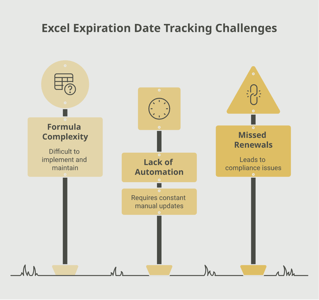
Spreadsheet trackers centralize data but rarely include reminders and become unwieldy past 20–30 vehicles.
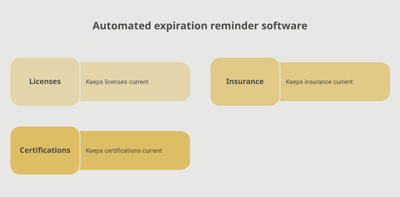
A dedicated tracking platform like Expiration Reminder stores each vehicle with its registration, MOT expiry, road tax expiry, insurance dates, service intervals, and supporting documents. Reminders fire automatically before each MOT expiry, vehicles approaching expiry appear on a dashboard, and the test certificate can be attached as the supporting record.
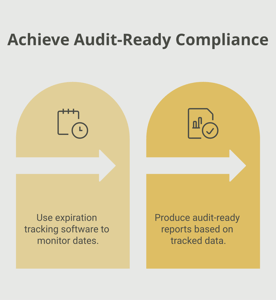
The features that matter most for MOT tracking include automated reminders at configurable intervals (60, 30, 7 days, and day-of), document storage for MOT certificates and V5C log books, dashboard views by vehicle status (current, due soon, expired), audit-ready reports for fleet compliance, and the ability to record the new MOT date in one step after each test.
The aim is straightforward: every vehicle tested before the date, every certificate filed, every renewal a planned event rather than a fire drill.
Key Takeaways
- The MOT is an annual UK vehicle safety, roadworthiness, and emissions test required for most vehicles over three years old.
- Certificates are valid for exactly 12 months; there is no statutory grace period.
- Driving a vehicle without a current MOT is an offence under Section 47 of the Road Traffic Act 1988, with fines up to £1,000 (or £2,500 if the vehicle is dangerous).
- The MOT is linked to road tax — an expired MOT prevents tax renewal, cascading the compliance issue.
- Most cars require the first MOT on the third anniversary of registration; some classes (taxis, ambulances, large passenger vehicles) require an MOT from year one.
- The test can be booked up to a month before expiry without losing the renewal date.
- Manual tracking via reminder cards or spreadsheets fails at fleet scale; automated tracking with reminders is the reliable approach.
Frequently Asked Questions
When does my MOT expire?
The expiry is exactly 12 months from the date of the test (with a small adjustment if the test is taken in the month before the previous expiry). You can check any UK vehicle's MOT status free of charge on the GOV.UK MOT history service.
Is there a grace period for an expired MOT?
No. From 00:01 on the day after expiry, using the vehicle on a public road is an offence. The only real exception is travelling directly to or from a pre-booked MOT test or repair appointment, with proof of the booking.
What is the penalty for driving without an MOT?
Up to £1,000 in fines under Section 47 of the Road Traffic Act 1988. If the vehicle is found to be in a dangerous condition, the fine rises to £2,500 with three points on the licence.
How early can I book my MOT?
You can book a test up to a month minus a day before the previous certificate expires and keep the same due-date cycle for next year. Booking earlier than that resets the cycle to the new test date.
What happens if my vehicle fails the MOT?
The tester issues a VT30 listing the failure items. Major faults must be repaired before the vehicle can return to the road. Minor and advisory faults are noted but do not prevent the vehicle from being driven (subject to general roadworthiness requirements).
Does my MOT affect my road tax?
Yes. The DVLA will not allow road tax to renew (including via Direct Debit) if the MOT is not current. An expired MOT therefore cascades into an expired tax if the renewal date is reached.
Do I need an MOT for a vehicle declared off-road (SORN)?
No. A SORN'd vehicle does not require an MOT or road tax while it remains off the public road. The MOT (and tax) must be in place before the vehicle returns to the road.
How is the MOT different from a service?
The MOT is the legal minimum safety, roadworthiness, and emissions test. A service is the manufacturer's recommended maintenance schedule. Both are useful; only the MOT is a legal requirement.
Conclusion
The MOT is one of the most predictable compliance obligations any UK vehicle operator faces — annual, fixed-date, with clear consequences. The rules and the test itself are well-understood. The failure mode is almost always administrative: a date that passes without anyone catching it.
If your team is tracking MOT expiries through reminder cards, spreadsheets, or the keeper's memory, you already know how fragile that is across multiple vehicles. A purpose-built tracking platform like Expiration Reminder centralizes every vehicle, sends reminders before each expiry, stores the certificates, and produces audit-ready reports the moment anyone asks.
Book the tests, keep the vehicles compliant, and let the system handle the calendar.