Introduction
If your organization credentials or employs physicians — hospitals, health systems, medical groups, telehealth platforms, locum agencies, payers, or any healthcare employer — the medical license is the foundational authority to practice. Each state issues its own medical license, renewal is typically biennial with CME requirements, and a lapsed license immediately disqualifies the physician from patient care.
This article explains what a medical license is, the state medical board framework, the typical 2-year renewal cycle, CME requirements, the Interstate Medical Licensure Compact (IMLC), and the most practical way to track medical licenses across a physician workforce.
For most medical staff offices and credentialing teams, primary-source verification at appointment is well understood. The hard part is the calendar — knowing every physician's renewal status, every CME deadline, and which state licenses are tied to which practice locations.
What Is a Medical License?
A medical license is a state-issued authorization permitting an individual to practice medicine. Licensure is administered by state medical boards (sometimes called Boards of Medical Examiners, Boards of Medicine, or Boards of Healing Arts), each with its own statutes and rules.
Initial licensure typically requires:
- Graduation from an accredited medical school (MD) or osteopathic school (DO).
- USMLE (United States Medical Licensing Examination) for MDs, or COMLEX-USA for DOs.
- Postgraduate training — at least one year of accredited residency (more for some states).
- Background check, fingerprinting, and good moral character documentation.
Renewal requirements vary by state but typically include:
- 2-year renewal cycle is most common (some states use annual or 3-year cycles).
- Continuing Medical Education (CME) — typically 20-50 hours per renewal cycle, with specific topics (opioid prescribing, suicide prevention, cultural competency, implicit bias, and others depending on state).
- Renewal fees — vary by state, typically $200-$1,000+ per cycle.
- Disclosure of malpractice claims, disciplinary actions, criminal history affecting good standing.
- Practitioner Data Bank (NPDB) queries in some contexts.
The Interstate Medical Licensure Compact (IMLC) streamlines licensure for physicians seeking licensure in multiple states. Physicians designate a State of Principal License (SPL) and apply for additional state licenses through the compact, with abbreviated processing. As of recent IMLC reporting, 39+ states (plus DC and Guam) are compact members.
A medical license is distinct from board certification (which is voluntary specialty credentialing — see the Board Certification article). A physician must hold an active state license to practice; board certification is a separate credential demonstrating specialty training.
Why Medical License Tracking Matters for Your Organization
Medical license currency protects against three concrete risks: practice without authority, payer-claim denials, and significant credentialing audits.
From a practice standpoint, an unlicensed physician cannot legally practice medicine. Hospital privileges, clinical activities, and prescribing authority all immediately cease.
From a payer standpoint, Medicare, Medicaid, and commercial payers verify licensure as part of provider credentialing and ongoing claims review. Claims submitted by unlicensed providers can be denied or recouped.
From a credentialing standpoint, Joint Commission, NCQA, CMS Conditions of Participation, and state regulators all expect primary-source verification of medical licensure at appointment, reappointment, and on an ongoing basis.
For healthcare organizations of any size, the medical license calendar across the credentialed physician workforce is one of the most consequential operational and compliance controls.
Common Scenarios for Tracking Medical License Expiration Dates
Hospital Medical Staff Offices
Medical staff offices manage credentialing files for every appointed physician, including primary-source verification of all state medical licenses where the physician practices.
Large Medical Groups and Networks
Multi-specialty medical groups and large primary care networks credential hundreds or thousands of physicians.
Telehealth Platforms
Telehealth providers credentialing physicians for multi-state practice face concentrated complexity. Many leverage the IMLC to simplify multi-state licensure.
Locum Tenens and Staffing Agencies
Locum agencies and physician staffing firms manage rapid credentialing across states with rapidly turning over physician rosters.
Health Plans
Health plans credentialing network physicians manage initial and ongoing licensure verification.
How Medical License Tracking Benefits Your Organization
A reliable program produces measurable benefits.
For the company, current licenses support hospital privileges, payer reimbursement, accreditation, and credentialing compliance.
For medical staff and credentialing teams, the license calendar becomes predictable. CME deadlines are tracked alongside renewals. Reappointment cycles align with verification.
For physicians, predictable tracking supports their continued ability to practice and prescribe.
How to Track Medical License Expiration Dates
State medical board databases provide primary-source verification. The Federation of State Medical Boards (FSMB) and NPDB support broader verification and adverse-action history.
Credentialing platforms (Cactus, Symplr, MD-Staff, Echo, Verge, others) manage license tracking as part of broader credentialing workflows.
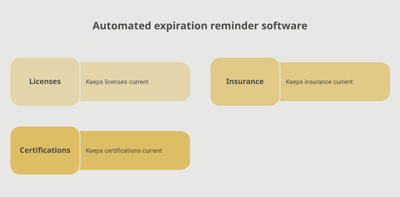
For organizations using a separate compliance tracker alongside credentialing software, a platform like Expiration Reminder stores each physician with their state medical licenses, expiration dates, CME progress, DEA registrations, and supporting documents. Reminders fire automatically before each renewal and CME deadline.
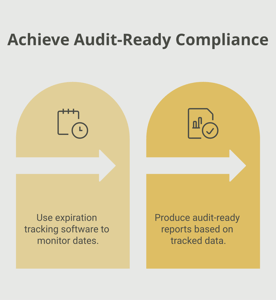
Key features include automated reminders at multiple intervals (180, 90, 60, 30 days), document storage for licenses, CME certificates, and verification documents with HIPAA-compliant access, dashboard views by state, specialty, or expiry window, audit-ready reports for credentialing committees and surveys, and the ability to log renewals in one step.
Key Takeaways
- A medical license is a state-issued authorization permitting an individual to practice medicine.
- Administered by state medical boards under state-specific statutes and rules.
- Initial licensure: medical school graduation, USMLE/COMLEX, postgraduate training, background check, good moral character.
- Renewal cycle most commonly 2 years with state-specific CME requirements.
- The Interstate Medical Licensure Compact (IMLC) streamlines multi-state licensure for qualifying physicians.
- A medical license is required to practice; board certification is voluntary specialty credentialing.
- Lapses immediately disqualify the physician from practice.
- Automated tracking is essential for medical staff offices, large groups, and telehealth platforms.
Frequently Asked Questions
Who issues a medical license?
The state medical board (variously called Board of Medical Examiners, Board of Medicine, or Board of Healing Arts) in the state where the physician practices.
How long is a medical license valid?
Most states issue 2-year licenses; some use annual or 3-year cycles. Specific validity varies by state.
What are CME requirements?
State-required continuing medical education hours per renewal cycle, typically 20-50 hours covering specialty practice and specific topics (opioids, suicide prevention, cultural competency, implicit bias, others depending on state).
What is the IMLC?
The Interstate Medical Licensure Compact — an agreement among participating states streamlining licensure for physicians seeking practice in multiple states. The physician designates a State of Principal License (SPL); additional state licenses through the compact have abbreviated processing.
What is the difference between a medical license and board certification?
A medical license is the state authority to practice (required). Board certification is voluntary specialty credentialing demonstrating training in a specialty area (e.g., ABMS).
What is primary-source verification?
The credentialing process of confirming licensure status directly with the state medical board (not relying on copies of certificates).
What happens if a medical license expires?
The physician cannot legally practice medicine. Hospital privileges, clinical activities, and prescribing authority cease. Reinstatement requires application, fees, and (depending on length of lapse) possibly additional documentation or remediation.
How long does initial medical licensure take?
Initial licensure typically takes 60-180 days depending on state. IMLC applications for additional states are often faster.
Conclusion
Medical licensure is the gatekeeper credential for every practicing physician — and the calendar across multiple state licenses, CME deadlines, and renewal cycles is one of the most consequential operational controls in any healthcare organization. The substantive work — completing CME, maintaining good standing, applying for renewals — sits with the physicians themselves. The administrative work — knowing every license's expiration, scheduling renewals, and producing primary-source verification on demand — is where most medical staff and credentialing teams need help.
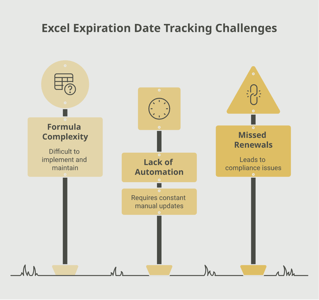
If your team tracks medical licenses through credentialing platforms or spreadsheets, you already know how easy it is for one physician's renewal to slip past. A purpose-built tracking platform like Expiration Reminder centralizes every physician's licensure record, sends reminders before each renewal and CME deadline, stores the supporting documents, and produces audit-ready reports the moment anyone asks.
License the physicians, support the renewals, and let the system handle the calendar.