Introduction
If your organization employs or credentials physicians, dentists, nurse practitioners, allied health practitioners, or any licensed clinician providing patient care, malpractice insurance is the financial protection layer between the clinician's professional judgment and the cost of an adverse outcome. Coverage rules are complex — claims-made vs occurrence, tail vs nose coverage, state-specific patient compensation funds — and lapses can leave clinicians and employers personally exposed to multimillion-dollar claims.
This article explains what malpractice insurance is, the claims-made vs occurrence distinction, tail (extended reporting) coverage, typical limits, state-specific overlays, and the most practical way to track malpractice insurance across a clinician workforce.
For most medical staff offices and practice managers, individual policy verification at credentialing is well understood. The hard part is the calendar — knowing every clinician's policy expiration, tail coverage status for departing clinicians, and the cascade with hospital privileges.
What Is Malpractice Insurance?
Medical malpractice insurance is professional liability coverage for healthcare practitioners providing patient care. Coverage pays for the defense and (within limits) the indemnification of claims alleging professional negligence in clinical practice.
The two primary policy forms:
- Claims-Made — covers claims made during the policy period for incidents that occurred after the retroactive date. Most common for physicians. Requires tail or nose coverage to maintain protection when the policy ends.
- Occurrence — covers incidents that occurred during the policy period, regardless of when the claim is made. Less common but provides continuing coverage even after policy termination.
Critical concepts:
- Retroactive date (claims-made) — the earliest date for which incidents are covered. Established at the start of the first claims-made policy.
- Tail coverage / Extended Reporting Period (ERP) — extends the time during which claims for prior incidents can be reported after the policy ends. Essential for departing clinicians or those switching from claims-made to occurrence.
- Nose coverage / Prior Acts — when starting a new claims-made policy, coverage extending back to the prior retroactive date. Negotiated at policy inception.
Typical limits:
- Per claim — commonly $1M-$3M.
- Aggregate annual — commonly $3M-$6M.
- State-specific overlays — some states have Patient Compensation Funds that cap individual practitioner liability and require participation.
Renewal is typically annual, with policy reviews coordinated with hospital credentialing cycles.
Beyond medical malpractice, professional liability variants cover:
- Dental malpractice.
- Nursing malpractice (RN, NP, LPN).
- Allied health (PT, OT, ST, social work, mental health).
- Veterinary (sometimes called "veterinary malpractice" or "veterinary professional liability").
Hospital and group-practice employers typically maintain enterprise malpractice coverage; individual practitioners may have personal coverage in addition (or for moonlighting, locum tenens, or expert witness work).
Why Malpractice Insurance Tracking Matters for Your Organization
Malpractice insurance currency protects against three concrete risks: uncovered claim exposure, hospital-privilege issues, and clinician personal financial exposure.
From an uncovered-claim standpoint, a malpractice claim during a lapsed policy can leave the clinician and employer personally responsible for defense and settlement costs that can run into millions.
From a credentialing standpoint, hospital medical staff bylaws and credentialing committees typically require proof of current malpractice insurance at appointment and reappointment.
From a clinician personal standpoint, especially for claims-made policies, failing to obtain tail coverage when leaving employment can leave the departing clinician personally exposed for claims arising from prior practice.
For hospitals, large medical groups, and practitioners managing personal coverage, the malpractice calendar across the credentialed clinician workforce is one of the most consequential risk-management controls.
Common Scenarios for Tracking Malpractice Insurance Dates
Hospitals and Health Systems
Hospitals manage malpractice coverage for employed physicians and (through credentialing) verify coverage for independent practitioners with privileges.
Large Medical Groups and Networks
Medical groups manage enterprise coverage across employed physicians and (in some cases) provide tail coverage at departure.
Telehealth Platforms
Telehealth providers managing multi-state practitioner coverage face complexity from state-specific malpractice rules.
Locum Tenens and Travel Clinicians
Locum agencies and travel clinicians manage policies that move with assignments — often with specific occurrence-form policies or carefully managed tail coverage.
Solo Practitioners and Small Practices
Solo practitioners manage personal malpractice insurance with carefully timed renewals tied to other practice insurance.
How Malpractice Tracking Benefits Your Organization
A reliable program produces measurable benefits.
For the company, current coverage maintains credentialing, supports clean payer relationships, and reduces uncovered-claim exposure.
For medical staff and risk-management teams, the insurance calendar becomes predictable. Tail coverage decisions at clinician departures are handled with adequate lead time. Coverage limit reviews align with reappointment cycles.
For clinicians, predictable insurance tracking supports their personal protection and continued credentialing.
How to Track Malpractice Insurance Dates
Medical staff offices and credentialing platforms typically integrate malpractice insurance verification into credentialing workflows. Insurance brokers send renewal notices 60-90 days before expiration.
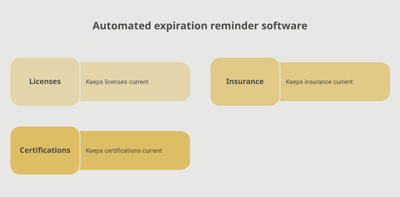
For organizations using a separate compliance tracker, a platform like Expiration Reminder stores each clinician with their policy carrier, type (claims-made or occurrence), retroactive date, limits, expiration date, tail coverage status, and supporting documents. Reminders fire automatically before each renewal and at clinician departures.
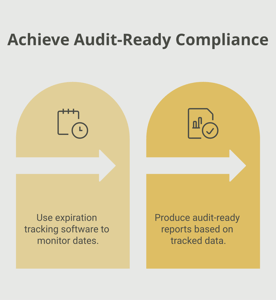
Key features include automated reminders at multiple intervals (90, 60, 30 days), document storage for policies and Certificates of Insurance, dashboard views by specialty, practitioner, or expiry window, audit-ready reports for credentialing committees and surveys, and the ability to log renewals and tail decisions in one step.
Key Takeaways
- Malpractice insurance is professional liability coverage for healthcare practitioners providing patient care.
- Two primary forms: claims-made (covers claims made during policy period after retroactive date) and occurrence (covers incidents during policy period regardless of when claimed).
- Tail coverage / Extended Reporting Period extends coverage for prior incidents after a claims-made policy ends.
- Nose coverage extends a new policy back to a prior retroactive date.
- Typical limits: $1M-$3M per claim, $3M-$6M aggregate.
- Some states have Patient Compensation Funds with their own rules.
- Lapses create significant personal financial exposure for clinicians and employers.
Frequently Asked Questions
What is the difference between claims-made and occurrence coverage?
Claims-made covers claims made during the policy period for incidents after the retroactive date. Occurrence covers incidents during the policy period, regardless of when the claim is made.
What is tail coverage?
An Extended Reporting Period (ERP) attached to a claims-made policy at its termination, allowing claims for prior incidents to be reported for an extended period (often unlimited).
When do I need tail coverage?
When a claims-made policy ends — whether due to leaving employment, switching to occurrence coverage, switching carriers, or retiring. Without tail coverage, claims arising from prior practice become personally uninsured.
What is nose coverage?
When starting a new claims-made policy, prior-acts coverage extending the new policy back to a previous retroactive date. Negotiated at policy inception as an alternative to tail coverage on the prior policy.
How much coverage do I need?
State minimums vary; typical commercial limits are $1M-$3M per claim with $3M-$6M aggregate. Hospital medical staff requirements may set higher minimums.
What is a Patient Compensation Fund?
A state-administered fund in some states (Indiana, Wisconsin, others) that caps individual practitioner liability and covers excess judgments above the underlying policy limit. Participation may be mandatory or elective.
Are nurses covered by employer malpractice insurance?
In most employment contexts, yes — the employer's policy typically covers nursing practice. Many nurses also carry personal nursing malpractice insurance for additional protection.
How do organizations track many malpractice policies?
Combinations of credentialing platforms, insurance broker portals, and dedicated tracking platforms. The system that actively reminds before each renewal and at clinician departures is the one that prevents most lapses.
Conclusion
Malpractice insurance is the financial protection layer for every clinician providing patient care. The substantive work — placing coverage, evaluating limits, managing claims — sits with risk-management, brokers, and individual practitioners. The administrative work — knowing every clinician's policy status, managing tail coverage at departures, and verifying coverage at credentialing — is where most healthcare programs need help.
If your team tracks malpractice insurance through credentialing software or paper records, you already know how easy it is for one clinician's policy to slip past renewal or for a tail-coverage decision to be missed at departure. A purpose-built tracking platform like Expiration Reminder centralizes every policy, sends reminders before each renewal and key milestone, stores the supporting documents, and produces audit-ready reports the moment anyone asks.
Cover the clinicians, manage the tails, and let the system handle the calendar.