Introduction
If your business occupies any commercial space — office, retail, warehouse, manufacturing, lab, mixed-use — the lease agreement is the legal foundation of that occupancy. Commercial leases tend to be long, complex, and unforgiving of missed dates. Missing a renewal-notice deadline can lock you into another full term; missing the end date can land you on holdover rent at 125%–200% of your normal rate.
This article explains what a commercial lease agreement is, the typical term and renewal structures, the holdover trap, and the most practical way to track lease expirations across a real estate portfolio.
For most real estate, finance, and operations teams, signing the lease is well understood. The hard part is the calendar — knowing every lease's end date, every renewal-notice window, and every option-exercise deadline.
What Is a Lease Agreement?
A commercial lease agreement is a legal contract between a property owner (landlord) and a business tenant covering the right to occupy and use space for a defined period in exchange for rent. Commercial leases differ significantly from residential leases — they are typically longer, more heavily negotiated, less protected by consumer law, and more consequential for the tenant's operations.
Typical commercial lease elements include:
- Premises — specific space leased, with floor plan and square footage.
- Term — start date, end date, renewal options.
- Rent — base rent, escalators (typically annual, often CPI or fixed-percentage).
- Additional rent — operating expenses, real estate taxes, common area maintenance (CAM).
- Use — permitted uses, exclusions, restrictions.
- Improvements — tenant improvements (TI), landlord work, build-out allowances.
- Maintenance and repairs — division of responsibilities.
- Insurance — required coverage from each party.
- Assignment and subletting — when and how the tenant may transfer the lease.
- Default and remedies — what triggers default, what each party can do.
- Holdover — what happens if the tenant stays past the term.
- Renewal options — exercise periods, mechanism, rent reset rules.
Renewal options typically require formal written notice 6 to 12 months before the lease expires. Missing the notice window means losing the option entirely — the tenant cannot exercise the renewal even if they want to, and must either negotiate a new lease (with no leverage) or vacate.
Holdover provisions define what happens if the tenant remains in the space after lease expiration without a new agreement. Holdover rent is typically 125%–200% of the previous rate, and most leases allow the landlord to terminate the tenancy with short notice during holdover.
Why Lease Agreement Tracking Matters for Your Organization
Lease agreement tracking protects against three concrete risks: holdover rent penalties, missed renewal options, and unfavorable renegotiation positions.
From a holdover standpoint, the 125%–200% premium is substantial — and many leases have shorter cure periods for late renewal than tenants realize. A few months of holdover rent can easily exceed the cost of a full lease year at normal rates.
From a renewal-option standpoint, options are valuable contractual rights negotiated at the start of the lease. Missing the exercise window forfeits the option and the locked-in renewal terms that came with it.
From a renegotiation standpoint, 6–12 months of lead time is generally what brokers, attorneys, and finance teams need to evaluate alternatives, negotiate effectively, and secure favorable terms. Starting late means accepting terms set by the landlord's timeline.
For organizations with multi-location footprints — retail chains, healthcare networks, professional services firms with multiple offices — the lease calendar is one of the most consequential operational systems they run.
Common Scenarios for Tracking Lease Agreement Expiration Dates
Multi-Location Retail and Hospitality
Retail chains, restaurants, hotels, and similar multi-location operators run dozens to thousands of leases. Each location has its own end date and renewal-option exercise window.
Healthcare Networks
Hospitals, clinic networks, and dental and veterinary practice groups operate from leased clinical space. Each lease interacts with provider contracts, build-out investments, and regulatory location requirements.
Office and Professional Services
Single-office and multi-office professional services firms (law, accounting, consulting) lease space that often includes significant tenant improvements amortized over the lease term.
Warehousing, Logistics, and Distribution
3PLs and distribution operations lease warehouse and distribution space — often large footprints with long lease terms and complex operating-expense structures.
Manufacturing and Lab Space
Manufacturing and life-sciences tenants lease specialized space (lab build-outs, clean rooms, heavy power). The investment in the space typically aligns with longer lease terms.
How Lease Tracking Benefits Your Organization
A reliable lease tracking program produces measurable benefits.
For the company, current visibility into lease end dates and renewal-option windows preserves negotiating leverage, prevents holdover penalties, and supports informed location decisions.
For real estate and finance teams, the lease calendar becomes a planned activity. Renewal negotiations and relocations are evaluated with 6–18 months of lead time rather than under deadline pressure.
For executive leadership, accurate lease visibility supports portfolio strategy — consolidation, expansion, relocation, and footprint optimization.
How to Track Lease Agreement Expiration Dates
Lease administration platforms (Visual Lease, LeaseQuery, Nakisa, MRI Software, others) provide deep lease accounting and tracking capabilities, particularly important under ASC 842 / IFRS 16 lease accounting standards.
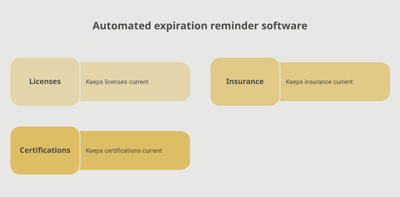
For organizations not running a dedicated lease admin platform, a tracking platform like Expiration Reminder stores each lease with its property, term, end date, renewal-option exercise window, holdover terms, and supporting documents. Reminders fire automatically before each milestone.
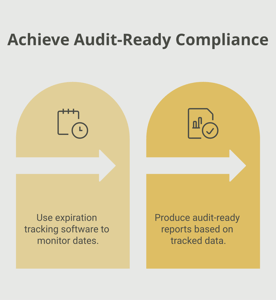
Key features include automated reminders at multiple intervals (24, 18, 12, 6 months before lease end — lease decisions need long lead times), document storage for the lease and amendments, dashboard views by location, business unit, or expiry window, audit-ready reports for finance and real estate, and the ability to log new dates after each renewal or amendment.
Key Takeaways
- A commercial lease agreement is a legal contract between landlord and business tenant covering occupancy and use of space.
- Terms typically run 3–10 years; complex leases include base rent, escalators, additional rent (CAM, taxes), and tenant improvement provisions.
- Renewal options typically require 6–12 months written notice to exercise.
- Holdover rent is typically 125%–200% of the prior rate if the tenant remains past the lease end without a new agreement.
- Multi-location portfolios make centralized lease tracking essential.
- Lease admin platforms and dedicated tracking systems both serve different needs; combinations are common.
Frequently Asked Questions
How long is a commercial lease?
Typical commercial leases run 3–10 years, with 5-year terms common in office and retail. Industrial and warehouse leases often run longer; pop-up and short-term retail can run as short as 6–12 months.
What is a renewal option?
A renewal option is a contractual right giving the tenant the choice to extend the lease for a defined additional term, typically at predetermined or formula-based rent. Options must be formally exercised within a specified window (often 6–12 months before lease end).
What is holdover?
Holdover is the situation where the tenant remains in the space after the lease expires without a new agreement in place. Holdover rent is typically 125%–200% of the previous rate, and the tenancy can usually be terminated by either party with short notice.
When should I start the lease renewal process?
12–18 months before lease end for larger spaces or complex negotiations; 9–12 months for smaller standard leases. Lease decisions interact with build-out, broker engagement, and budget cycles — earlier is generally better.
What happens if I miss the renewal-option notice deadline?
You lose the option. The renewal terms negotiated at the start of the lease are no longer available; you must either negotiate a new lease (often at market rates) or vacate.
What is CAM?
Common Area Maintenance — the tenant's share of expenses for common areas (corridors, lobbies, parking, exterior). CAM is typically billed as additional rent on top of base rent.
What is the difference between gross and net lease structures?
Gross leases include operating expenses in the base rent. Net leases (single-net, double-net, triple-net or NNN) separate base rent from operating expenses, with the tenant paying defined categories on top.
How does ASC 842 / IFRS 16 affect lease tracking?
These accounting standards require most leases to be recognized as assets and liabilities on the balance sheet. Accurate lease data (term, rent, options, end dates) is essential for compliance.
Conclusion
Commercial lease agreements are among the most consequential contracts any business signs — and the calendar around them gates everything from holdover penalties to portfolio strategy. The substantive work — site selection, negotiation, build-out — sits with real estate, finance, and operations. The administrative work — knowing every lease's end date, renewal-option window, and holdover trigger — is where most real estate programs need help.
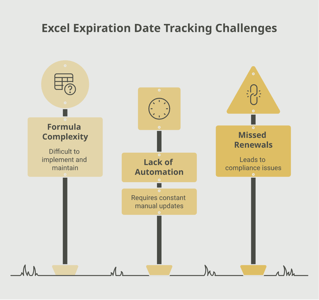
If your team tracks leases through lease admin platforms or spreadsheets, you already know how easy it is for an option deadline to slip past. A purpose-built tracking platform like Expiration Reminder centralizes every lease, sends reminders before each milestone, stores the supporting documents, and produces audit-ready reports the moment anyone asks.
Manage the footprint, plan the renewals, and let the system handle the calendar.