Introduction
If your organization employs workers in the UAE, Saudi Arabia, or other GCC countries, the labor card (sometimes called the work permit, residency card, or work visa) is the foundation of legal employment for expatriate workers. Validity is typically two years, renewal must start well before expiry, and fines for late renewal compound monthly per employee. The labor-card calendar is one of the most consequential HR-compliance controls in any Gulf-region operation.
This article explains what a labor card is, the typical 2-year validity, the renewal process, the regional differences across UAE, Saudi Arabia, and other GCC countries, and the most practical way to track labor cards across an expatriate workforce.
For most regional HR and PRO (Public Relations Officer) teams, individual renewals are well understood. The hard part is the calendar — knowing whose card is approaching expiry, ensuring renewals start 60+ days before, and managing the fines that accumulate for missed deadlines.
What Is a Labor Card?
A labor card is a government-issued document permitting an expatriate worker to be legally employed in a Gulf Cooperation Council (GCC) country. The specific name varies by country:
- UAE — Labour Card (also called the MoHRE Work Permit), administered by the Ministry of Human Resources and Emiratisation (MoHRE).
- Saudi Arabia — Iqama (residency permit) combined with the work permit issued by the Ministry of Human Resources and Social Development (HRSD).
- Qatar — Residence permit (RP) issued by the Ministry of Interior.
- Kuwait, Bahrain, Oman — country-specific work permits.
The UAE labour card framework is typical:
- Validity — most labour cards are valid for 2 years, aligned with the employee's work permit and residency visa.
- Sponsored employment — the labour card is sponsored by the employer (the "Mahnah" / labour-card holder) and tied to a specific employment relationship.
- Renewal — must begin 60 days before expiry. The renewal includes medical fitness testing, Emirates ID renewal (in UAE), and residency visa renewal.
- Penalties for late renewal — vary by country. UAE imposes fines of AED 200/month per employee for late renewal.
- Cancellation — required when the employment relationship ends, before the worker can transfer to a new sponsor or exit the country.
GCC nationals working in another GCC country face simpler processes — many GCC labour cards for GCC nationals are valid for 2 years with reduced documentation requirements.
The labour card is closely linked to other documents: the Emirates ID (UAE), Iqama (Saudi Arabia), residency visa, work permit, employment contract, and (for many roles) medical fitness certificate. A lapse in one cascades into others.
Why Labor Card Tracking Matters for Your Organization
Labor card currency protects against three concrete risks: illegal employment, compounding fines, and worker disruption.
From a legal-employment standpoint, an expatriate working with a lapsed labour card is not legally employed in the country. The employer faces enforcement action and fines; the worker can face deportation.
From a fines standpoint, UAE and other GCC countries impose monthly fines per worker for late renewal. For a workforce of any size, these fines accumulate quickly.
From a worker-experience standpoint, lapsed documents disrupt banking, telecom services, healthcare, schooling for dependents, and travel. Even brief lapses cause significant personal disruption.
For Gulf-region operations of any size, the labour card calendar across the expatriate workforce is a foundational HR-compliance control. Larger employers typically maintain dedicated PRO teams whose primary work is government-document management.
Common Scenarios for Tracking Labor Card Expiration Dates
Construction and Infrastructure
Gulf construction megaprojects employ large expatriate workforces with concentrated labour-card renewal cycles tied to project phases.
Hospitality and Tourism
Hotels, restaurants, and tourism operators employ large expatriate workforces with high turnover and continuous onboarding/offboarding.
Oil, Gas, and Petrochemicals
Energy operators in Saudi Arabia, UAE, Qatar, Kuwait, and Oman manage large technical and craft workforces with role-specific medical and work-permit requirements.
Healthcare
Hospitals and clinics in the Gulf employ expatriate clinicians whose labour cards interact with medical licensing and credentialing requirements.
Financial Services and Professional Services
International banks, professional services firms, and corporate offices in GCC financial centers (DIFC, ADGM, QFC, others) manage labour cards for white-collar expatriate workforces.
How Labor Card Tracking Benefits Your Organization
A reliable program produces measurable benefits.
For the company, current labor cards maintain legal employment, prevent compounding fines, and support smooth operations across the expatriate workforce.
For HR, PRO, and operations teams, the renewal calendar becomes predictable. Medical-fitness appointments, Emirates ID renewals, and visa transactions can be sequenced 60+ days before expiry.
For workers, predictable renewals prevent disruption to banking, schooling, healthcare, and travel.
How to Track Labor Card Expiration Dates
UAE MoHRE and Saudi HRSD provide employer portals showing labour card status for the sponsored workforce. Tas-heel and Qiwa platforms support transaction-level processing.
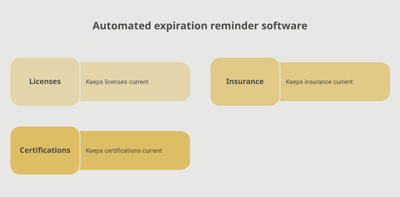
For organizations using a separate compliance tracker, a platform like Expiration Reminder stores each worker with their labour card details, expiration date, residency visa expiration, Emirates ID expiration, medical fitness certificate date, and supporting documents. Reminders fire automatically 90, 60, 30 days before each expiration.
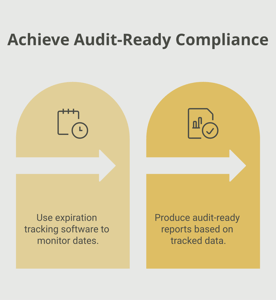
Key features include automated reminders at multiple intervals (90, 60, 30, 7 days — the 60-day lead time matters most), document storage for labour cards, visas, Emirates IDs, medical certificates, dashboard views by site, role, or expiry window, audit-ready reports for internal compliance and government audits, and the ability to log renewals in one step.
Key Takeaways
- A labor card is a government-issued document permitting expatriate employment in GCC countries.
- Country-specific names: UAE Labour Card, Saudi Iqama/work permit, Qatar Residence Permit, others.
- Most labour cards are valid for 2 years, aligned with residency visa and work permit cycles.
- Renewal must begin 60 days before expiry; UAE imposes AED 200/month fines for late renewal.
- The labour card is sponsored by the employer and tied to a specific employment relationship.
- Lapsed cards cause illegal employment, compounding fines, and cascading disruption to other documents (Emirates ID, residency visa, medical fitness).
- Automated tracking with reminders is essential for any Gulf-region operation.
Frequently Asked Questions
How long is a UAE labour card valid?
Most UAE labour cards are valid for 2 years, aligned with the residency visa and work permit cycle.
What is the difference between an Iqama and a labour card?
The Iqama is the Saudi residency permit. It is combined with the work permit to constitute legal employment. The UAE labour card is the work-permit document under MoHRE. Conceptually similar; specific documents and processes differ by country.
What happens if my UAE labour card expires?
The employer faces fines (AED 200/month per worker), the worker is not legally employed, and other linked documents (Emirates ID, residency visa) may also lapse. Renewal becomes more expensive and time-consuming.
How early should I start the renewal process?
At least 60 days before expiry — the UAE specifically allows renewal beginning 60 days before. Larger organizations typically start earlier (90 days) to allow time for medical fitness, ID renewal, and document collection.
Who can sponsor a labour card?
A licensed employer with valid trade license and the right to sponsor expatriate workers. Sponsorship arrangements vary by country and free-zone vs onshore.
What documents are needed to renew?
Typically include passport, current labour card, current Emirates ID (UAE), employment contract, medical fitness certificate (renewed), photographs, and government fees. Free zones may have specific document requirements.
What is a PRO?
Public Relations Officer — a regional HR role focused on managing government documents (labour cards, visas, IDs) on behalf of the company. Most mid-sized and larger employers have dedicated PROs.
Are GCC nationals subject to labour cards in other GCC countries?
GCC nationals working in another GCC country face simplified procedures — many have 2-year labour cards with reduced documentation requirements compared to non-GCC expatriates.
Conclusion
The labour card calendar is one of the most consequential HR-compliance controls in any Gulf-region operation. The substantive work — sponsorship, medical fitness, government document processing — sits with HR, PRO teams, and government-relations functions. The administrative work — knowing every worker's labour card expiry, sequencing 60+-day renewal lead times, and managing the cascade of linked documents — is where most regional operations need help.
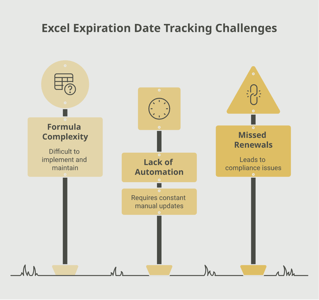
If your team tracks labour cards through government portals or spreadsheets, you already know how easy it is for one worker's card to slip past the 60-day window. A purpose-built tracking platform like Expiration Reminder centralizes every worker's labour card and linked documents, sends reminders before each renewal date, stores the supporting documents, and produces audit-ready reports the moment anyone asks.
Sponsor the workforce, renew the documents, and let the system handle the calendar.