Introduction
If your business operates in Saudi Arabia and employs expatriate workers, the Iqama is the foundation of every employment relationship. Without a valid Iqama, the worker cannot legally live or work in the Kingdom — and the employer cannot legally retain them. Iqama renewal is a recurring HR-compliance activity that touches every expatriate hire, and the calendar matters because lapses can cascade across multiple linked documents.
This article explains what the Iqama is, the renewal options (quarterly through annual), the Absher platform, sponsor obligations, and the most practical way to track Iqama expirations across an expatriate workforce.
For most Saudi HR and government-relations teams, individual renewals are well understood. The hard part is the calendar across hundreds or thousands of expatriate workers, each with their own renewal date and quarterly options.
What Is the Iqama?
The Iqama is Saudi Arabia's residence permit for expatriate workers and their dependents. Issued by the Saudi Ministry of Interior, the Iqama proves that the holder is lawfully present in the Kingdom and (combined with the work permit issued by the Ministry of Human Resources and Social Development, HRSD) authorized to work.
The Iqama is tied to the employer (the sponsor, or "Kafeel") and to the specific employment relationship. The Iqama and work permit together constitute the legal foundation of expatriate employment in Saudi Arabia.
Renewal options:
- Annual renewal — historical standard, valid for 12 months from renewal date.
- Quarterly options — Saudi authorities now allow renewal for 3, 6, 9, or 12 months, providing flexibility for employers managing diverse contract terms.
- Domestic worker exception — domestic workers are excluded from the quarterly option and typically renew yearly.
Renewal fees (representative 2026 figures):
- Annual Iqama renewal: SAR 650.
- 3-month renewal: approximately SAR 163 (pro-rated from annual) plus SAR 51.75 Absher processing fee.
- Work permit fee paid by employer: SAR 800/month per foreign worker.
- Dependent fee paid by sponsor (the employee): SAR 400/month per dependent.
The Absher platform is the Saudi government's e-services portal for residents. Absher Individuals supports personal Iqama management; Absher Business supports employer transactions. Sponsors can renew Iqamas through Absher or Muqeem, including for dependents currently outside Saudi Arabia (provided the sponsor is physically present in the Kingdom and all fees are paid).
The Iqama is closely linked to:
- Work permit (HRSD).
- Exit/re-entry visa (required for travel outside Saudi Arabia).
- Vehicle and driver licensing (linked to Iqama validity).
- Banking and telecom services (Iqama is the primary identifier).
- Schooling for dependents (linked to dependent Iqamas).
Why Iqama Tracking Matters for Your Organization
Iqama currency protects against three concrete risks: illegal residence, fines and penalties, and cascading service disruption.
From a legal-residence standpoint, an expatriate with an expired Iqama is not legally present in Saudi Arabia. The sponsor (employer) faces fines; the worker can face deportation. Repeated violations can affect the employer's ability to sponsor future workers.
From a financial standpoint, Saudi authorities impose fines for late renewal. The structure varies but generally compounds the cost of an avoidable delay.
From a worker-experience standpoint, an expired Iqama disrupts banking, schooling, telecom, travel, and routine services. The downstream impact ripples into productivity and morale.
For Saudi-region operations of any size, the Iqama calendar across the expatriate workforce is one of the most consequential HR-compliance controls.
Common Scenarios for Tracking Iqama Expiration Dates
Construction and Infrastructure
Saudi megaprojects (Vision 2030 giga-projects, Red Sea developments, NEOM, oil and gas infrastructure) employ large expatriate workforces with concentrated Iqama renewal cycles.
Healthcare
Hospitals and clinics employ expatriate clinicians whose Iqamas interact with medical licensing and credentialing requirements.
Hospitality and Retail
Hotels, restaurants, and retail operators employ large expatriate workforces with continuous onboarding/offboarding.
Oil, Gas, and Petrochemicals
Saudi Aramco and downstream petrochemical operators manage large technical and craft expatriate workforces with role-specific certifications layered onto Iqama renewals.
Financial Services and Professional Services
International firms in Riyadh, Jeddah, and Eastern Province financial centers manage Iqamas for white-collar expatriate workforces.
How Iqama Tracking Benefits Your Organization
A reliable program produces measurable benefits.
For the company, current Iqamas maintain legal employment, prevent fines, and support smooth operations across the expatriate workforce.
For HR and government-relations teams, the renewal calendar becomes predictable. Quarterly renewal options can be selected strategically. Linked-document renewals (work permit, exit/re-entry visa) can be sequenced.
For workers, predictable renewals prevent disruption to banking, schooling, healthcare, and travel.
How to Track Iqama Expiration Dates
Absher and Muqeem portals provide employer-level visibility into the sponsored workforce.
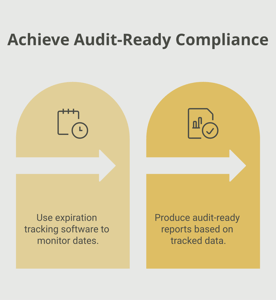
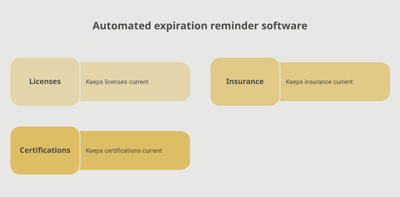
For organizations using a separate compliance tracker, a platform like Expiration Reminder stores each worker with their Iqama details, expiration date, work permit expiration, dependent Iqamas, and supporting documents. Reminders fire automatically before each renewal milestone.
Key features include automated reminders at multiple intervals (90, 60, 30 days), document storage for Iqamas and linked documents, dashboard views by site, role, or expiry window, audit-ready reports for internal compliance and government audits, and the ability to log renewals in one step.
Key Takeaways
- The Iqama is Saudi Arabia's residence permit for expatriate workers, tied to the employer (sponsor).
- Renewal options: 3, 6, 9, or 12 months (domestic workers limited to annual).
- Annual Iqama renewal fee: SAR 650, plus separate SAR 800/month work permit fee paid by employer and SAR 400/month dependent fees paid by sponsor.
- The Absher platform is the primary e-services interface for Saudi residents.
- The Iqama is linked to work permit, exit/re-entry visa, banking, telecom, and dependent services.
- Lapses cause illegal residence, fines, and cascading service disruption.
Frequently Asked Questions
How long is an Iqama valid?
Renewable for 3, 6, 9, or 12 months at the employer's discretion. Domestic workers typically renew annually.
What does it cost to renew an Iqama?
Annual renewal fee: SAR 650, plus SAR 800/month work permit fee paid by the employer per worker, plus SAR 400/month dependent fees paid by the sponsor per dependent.
What is Absher?
The Saudi Ministry of Interior's e-services portal for residents. Absher Individuals handles personal Iqama management; Absher Business handles employer transactions.
What is Muqeem?
A separate Saudi government platform supporting sponsor transactions including Iqama renewals for dependents outside Saudi Arabia.
What happens if my Iqama expires?
You are not legally present in Saudi Arabia. The sponsor faces fines; you may face deportation. Linked services (banking, telecom, school enrollment) may also be affected.
Can my employer change my Iqama validity period?
Yes — the sponsor can select 3, 6, 9, or 12-month renewals when paying renewal fees. Many employers align Iqama validity with the employment contract.
What is the relationship between Iqama and Saudi labor card?
The Iqama is the residence permit issued by the Ministry of Interior; the work permit is issued by the Ministry of Human Resources and Social Development (HRSD). Together they constitute the legal authorization for expatriate employment.
Can I have multiple Iqamas if I work for multiple employers?
No. The Iqama is tied to a specific sponsor. Working for additional employers requires either transferring sponsorship or specific authorization under the Saudi labor framework.
Conclusion
The Iqama is the foundation of expatriate life in Saudi Arabia — and the calendar around it is one of the most consequential HR-compliance controls in any Saudi operation. The substantive work — sponsorship, fee payments, government document processing — sits with HR, government-relations, and the broader PRO function. The administrative work — knowing every worker's Iqama expiration, sequencing renewal options, and managing linked-document cascades — is where most regional operations need help.
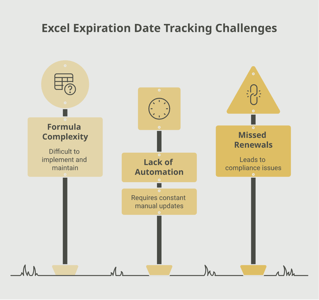
If your team tracks Iqamas through Absher/Muqeem or spreadsheets, you already know how easy it is for one worker's renewal to slip past — particularly when quarterly options are in use. A purpose-built tracking platform like Expiration Reminder centralizes every worker's Iqama and linked documents, sends reminders before each renewal date, stores the supporting documents, and produces audit-ready reports the moment anyone asks.
Sponsor the workforce, renew the documents, and let the system handle the calendar.