Introduction
If your business carries insurance — and almost every business does — the contracts behind those policies are what stand between the company and a long list of expensive risks. A lapsed insurance contract creates an immediate gap in coverage, may invalidate claims, and can trigger licensing or contract-of-record findings. The reinstatement path is often longer and more expensive than the renewal you missed.
This article explains what a commercial insurance contract is, the common renewal cycles, the state-level notice rules around renewal, and what happens when policies lapse. You will also see the most practical way to track insurance contracts across a portfolio of policies.
For most finance, operations, and risk teams, working with a broker on annual renewals is well understood. The hard part is the calendar across multiple lines of coverage, multiple entities, and multiple renewal dates.
What Is an Insurance Contract?
An insurance contract is a legal agreement between an insured (the policyholder) and an insurer in which the insurer agrees to provide coverage for specified risks in exchange for premium payments, subject to defined terms, conditions, limits, deductibles, and exclusions.
Commercial businesses typically maintain multiple insurance contracts:
- General Liability — covers third-party bodily injury, property damage, and personal injury claims.
- Property Insurance — covers physical assets against fire, theft, weather damage, and similar perils.
- Workers' Compensation — required in most jurisdictions, covers employee injuries and illnesses.
- Commercial Auto / Fleet Insurance — covers business vehicles.
- Professional Liability / Errors & Omissions — covers professional negligence claims.
- Cyber Liability — covers data breaches, ransomware, business interruption from cyber events.
- Directors & Officers (D&O) — covers leadership decisions.
- Employment Practices Liability (EPLI) — covers employment-related claims.
- Umbrella / Excess Liability — provides additional limits over primary policies.
Business insurance policies typically last one year, with renewal options at term end. Some specialty lines run on multi-year terms; some lines (such as construction project policies) run for the duration of a project.
State insurance regulations govern renewal notice requirements. Many states require insurers to provide 60–120 days' written notice of non-renewal or material change before the policy expires. Some carriers send renewal notices as little as 14–21 days before expiration, creating artificial urgency for policyholders.
When an insurance contract lapses, the policyholder has no coverage for incidents occurring after the lapse — even if the lapse is brief. Claims made for events occurring during the gap are typically denied.
Why Insurance Contract Currency Matters for Your Organization
Insurance contract currency protects against three concrete risks: uncovered losses, contractual non-compliance, and licensing or regulatory findings.
From a loss standpoint, even a brief insurance gap can be catastrophic. A workplace injury, customer slip-and-fall, vehicle accident, or data breach during a coverage gap can leave the business funding the entire loss out of operating cash.
From a contract standpoint, customer contracts, lease agreements, vendor agreements, lender requirements, and project agreements routinely require specific insurance coverage at specific limits. A lapsed policy can be a material breach of those contracts, with downstream effects ranging from contract termination to lender default declarations.
From a regulatory standpoint, certain industries (construction with state-required general liability, healthcare with malpractice, transportation with cargo and liability) have direct regulatory requirements for active insurance. Lapses can suspend licenses, void permits, and trigger investigations.
For multi-entity organizations and franchise systems, insurance contract calendars can quickly become unmanageable without a central tracker.
Common Scenarios for Tracking Insurance Contract Expiration Dates
Mid-Market and Enterprise Risk Programs
Mid-market and enterprise businesses typically run a dozen or more insurance contracts across general liability, property, workers' compensation, auto, cyber, D&O, EPLI, professional liability, and umbrella coverage. Each has its own term and renewal date.
Multi-Entity Organizations
Holding companies, franchise systems, and multi-subsidiary organizations often run separate insurance programs for each entity, with each program having its own renewal cycle.
Contract Compliance and Vendor Management
Compliance and vendor management teams often need to confirm that internal insurance is current and that vendor and contractor insurance is current. Expired vendor certificates of insurance (COIs) are a recurring vendor-management gap.
Construction and Project-Based Industries
Construction firms run project-specific policies alongside their corporate program. Project completion, defects-liability periods, and bond requirements all interact with the insurance calendar.
Healthcare, Legal, and Professional Services
Practice insurance (malpractice, professional liability) is fundamental to most professional services. State licensing boards often require active coverage as a condition of practice.
How Insurance Contract Tracking Benefits Your Organization
A reliable tracking program produces measurable benefits.
For the company, current insurance contracts maintain continuous coverage, satisfy contractual and regulatory requirements, and prevent the catastrophic exposure of uncovered losses.
For risk, finance, and operations teams, the renewal calendar becomes predictable. Brokers can be engaged 60–90 days before each renewal. Coverage reviews can happen on a structured cadence rather than under deadline pressure.
For customers, lenders, and contractual counterparties, current Certificates of Insurance can be produced on demand — an increasingly common procurement and compliance requirement.
How to Track Insurance Contract Expiration Dates
Most organizations rely on the broker to remind them — and most brokers do remind, typically 60–90 days before renewal. This works as long as the broker relationship is active and the right people are on the notification list.
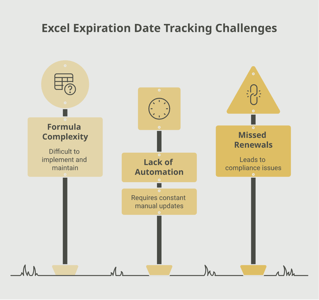
Spreadsheets centralize policy data but rarely actively prompt anyone.
Broker portals provide consolidated views for accounts managed by that broker, less useful when multiple brokers handle different lines.
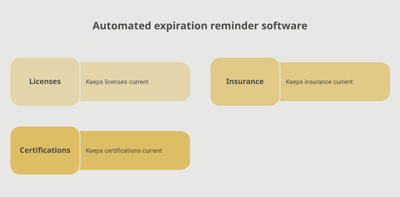
A dedicated tracking platform like Expiration Reminder stores each policy with its carrier, broker, type, limits, premium, expiration date, supporting documents (policy, COI, declarations page), and responsible owner. Reminders fire automatically before each renewal.
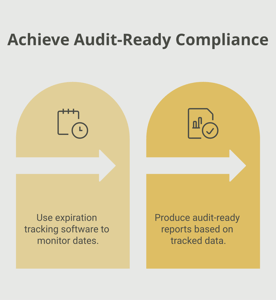
Key features include automated reminders at multiple intervals (90, 60, 30 days before expiry — insurance renewals need lead time for broker shopping and underwriter review), document storage for policies and COIs, dashboard views by entity, line, or expiry window, audit-ready reports for contract compliance and lender requests, and the ability to log new dates in one step after each renewal.
Key Takeaways
- An insurance contract is a legal agreement between insured and insurer providing coverage in exchange for premiums.
- Most commercial policies run on annual terms; some specialty lines run multi-year or project-length terms.
- State regulations typically require 60–120 days notice of non-renewal; carrier renewal notices may arrive much later.
- Lapsed coverage means no protection for losses during the gap and may breach customer, lender, or vendor contracts.
- Multi-entity organizations face multiplied tracking complexity.
- Manual tracking via broker reminders or spreadsheets fails at scale; automated tracking with reminders is the reliable approach.
Frequently Asked Questions
How long is an insurance contract valid?
Most commercial policies run on annual terms. Some specialty lines (project policies, multi-year property) run longer; some lines have shorter terms or month-to-month options.
What happens when an insurance contract expires?
If renewed before expiry, coverage continues without gap. If allowed to lapse, the policyholder has no coverage for incidents during the gap, and claims for events occurring during that time are typically denied.
When do insurance carriers send renewal notices?
State regulations vary but commonly require 60–120 days notice of non-renewal or material change. Carriers may send renewal quotes 14–21 days before expiration in practice, even when more notice is required for non-renewal.
Can a customer contract be breached by an insurance lapse?
Yes. Many customer contracts, lease agreements, lender agreements, and vendor agreements require specific coverage at specific limits. A lapsed policy can be a material breach.
What is a Certificate of Insurance (COI)?
A COI is a one-page summary of an insurance policy showing the carrier, insured, coverage types, limits, and expiration date. COIs are routinely required by customers, landlords, and contract counterparties as proof of active coverage.
How far in advance should I renew insurance?
Start the renewal process 60–90 days before expiration. Larger or specialty placements may need 90–120 days for underwriting, broker negotiation, and policy comparison.
What is the difference between claims-made and occurrence coverage?
Claims-made policies cover claims made during the policy period. Occurrence policies cover incidents that occurred during the policy period, regardless of when the claim is made. Each has different renewal and tail-coverage implications.
How do organizations track insurance across many policies?
Brokers, broker portals, and dedicated tracking platforms all play roles. The most reliable combination is a tracking platform that sends reminders, stores documents, and produces COIs on demand.
Conclusion
Insurance contracts are the financial protection layer for every commercial business — and they only protect when they are current. The substantive work — placing the coverage, negotiating limits, comparing carriers — sits with brokers and risk teams. The administrative work — knowing every policy's expiration date and acting before any gap can open — is where most programs need help.
If your team tracks insurance through broker emails, spreadsheets, or accordion folders of paper policies, you already know how easy it is for one line to slip past. A purpose-built tracking platform like Expiration Reminder centralizes every policy, sends reminders before each renewal, stores the supporting documents, and produces audit-ready reports the moment anyone asks.
Keep the coverage active, plan the renewals, and let the system handle the calendar.