Introduction
If your operations involve property in transit, equipment moving between locations, contractors' tools, builders' risk during construction, or specialized property not typically covered by standard property policies, inland marine insurance fills the gap. Despite the name, inland marine insurance has nothing to do with watercraft — it covers property that moves or is otherwise difficult to insure under standard real-property forms.
This article explains what inland marine insurance is, what it covers, the major sub-categories (contractors equipment, builders risk, cargo, fine arts), typical annual policies, and the most practical way to track inland marine policies across an operation.
For most risk and finance teams, obtaining initial coverage is well understood. The hard part is the calendar — knowing every policy renewal and ensuring critical movable property remains covered.
What Is Inland Marine Insurance?
Inland marine insurance is a class of commercial property coverage for property that moves, is in transit, is in someone's care for repair or processing, or has unique characteristics not well-handled by standard commercial property forms. The "marine" name reflects historical origins — ocean marine insurance covered cargo at sea; inland marine extended coverage to cargo and property on land.
Common sub-categories:
- Contractors Equipment Floater — coverage for mobile equipment owned by contractors (excavators, bulldozers, generators, scaffold, tools) wherever it operates.
- Builders Risk — coverage for buildings under construction, covering the structure, materials, and (in some cases) soft costs from project start through completion.
- Motor Truck Cargo / Cargo Insurance — coverage for goods in transit by truck or other land transport.
- Bailees' Coverage — coverage for property in the care of the insured for service (dry cleaners, repair shops, warehouses).
- Installation Floater — coverage for property being installed at a job site.
- Fine Arts — coverage for artwork, antiques, collectibles in transit or at exhibition.
- Computer / Electronic Data Processing (EDP) Coverage — for movable computer equipment.
- Equipment Breakdown — sometimes combined with inland marine for mechanical/electrical equipment.
Inland marine policies typically include:
- All-risk coverage — covers all causes of loss except those specifically excluded.
- Replacement cost or actual cash value valuation.
- Per-item or per-conveyance limits.
- Coverage extensions — newly acquired property, debris removal, emergency removal.
Most inland marine policies run on annual terms with renewal patterns similar to other commercial insurance.
The framework includes the Nationwide Marine Definition — an industry agreement defining what classes of property qualify as inland marine, distinct from standard property and from ocean marine.
Why Inland Marine Tracking Matters for Your Organization
Inland marine insurance currency protects against three concrete risks: uncovered theft and damage, project-shutdown exposure, and contract-required coverage gaps.
From a property-loss standpoint, theft and damage to mobile contractor equipment, in-transit cargo, and under-construction buildings can total hundreds of thousands or millions of dollars. Without specific inland marine coverage, these losses typically fall outside standard commercial property policies.
From a project standpoint, builders risk coverage is typically required for the duration of construction. A lapse mid-project can be catastrophic if a loss occurs.
From a contract standpoint, customer contracts, lender requirements, and project agreements routinely require specific inland marine coverages.
For construction, transportation, art and entertainment, and similar industries with significant movable property exposures, the inland marine calendar is a foundational risk-management control.
Common Scenarios for Tracking Inland Marine Expiration Dates
Construction Contractors
GCs and specialty contractors manage Contractors Equipment Floaters covering mobile equipment plus Builders Risk on active projects.
Transportation and Logistics
Trucking companies and freight brokers manage Motor Truck Cargo coverage for goods in transit.
Art Galleries, Museums, and Auction Houses
Fine arts coverage for art in transit, on loan, on exhibition, and at premises.
Manufacturing and Equipment Operators
Manufacturers managing movable production equipment with Contractors Equipment Floater-style coverage.
Service Providers Holding Customer Property
Dry cleaners, repair shops, warehouses, and similar businesses holding customer property require bailees' coverage.
How Inland Marine Tracking Benefits Your Organization
A reliable program produces measurable benefits.
For the company, current coverage maintains protection against significant uncovered losses, satisfies contract-required coverage, and supports clean lender and customer relationships.
For risk, finance, and operations teams, the insurance calendar becomes predictable. Renewals coordinate with broker, carrier, and policy reviews.
For project managers and operations, the coverage status of active projects (Builders Risk) is always visible.
How to Track Inland Marine Insurance Expiration Dates
Insurance brokers and carriers typically send renewal notices 60-90 days before expiration.
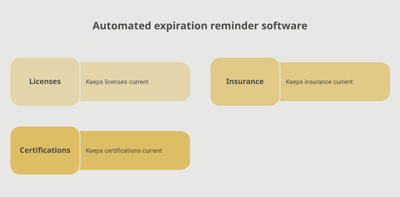
For organizations using a separate compliance tracker, a platform like Expiration Reminder stores each policy with carrier, broker, type (contractors equipment, builders risk, cargo, etc.), limits, expiration date, scheduled property, and supporting documents. Reminders fire automatically before each renewal.
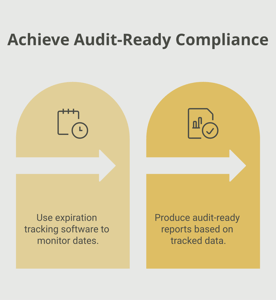
Key features include automated reminders at multiple intervals (90, 60, 30 days), document storage for policies, schedules of property, and Certificates of Insurance, dashboard views by entity, project, or expiry window, audit-ready reports for lenders, customers, and contract compliance, and the ability to log renewals in one step.
Key Takeaways
- Inland marine insurance covers property that moves, is in transit, is in care of others for service, or has unique characteristics not well-handled by standard commercial property forms.
- Despite the name, inland marine has nothing to do with watercraft.
- Common sub-categories: Contractors Equipment, Builders Risk, Motor Truck Cargo, Bailees, Installation Floater, Fine Arts, EDP.
- Most policies provide all-risk coverage with annual terms.
- Customer contracts, lender requirements, and project agreements commonly require specific inland marine coverages.
- Multi-policy portfolios in construction, transportation, and art industries make tracking essential.
Frequently Asked Questions
Why is it called "inland marine"?
Historical naming. Ocean marine insurance covered cargo at sea; inland marine extended coverage to cargo and property on land. The name persists despite having nothing to do with watercraft.
What is a Contractors Equipment Floater?
Inland marine coverage for mobile equipment owned by contractors — excavators, bulldozers, generators, scaffold, tools, and other equipment that moves between job sites.
What is Builders Risk insurance?
Inland marine coverage for buildings under construction. Covers the structure, building materials on site or in transit, and (in some cases) soft costs during construction.
What is Motor Truck Cargo?
Insurance covering goods in transit by truck. The truck owner or freight broker is typically the insured; the cargo is the covered property.
Is inland marine insurance required?
Not by law in most cases, but typically required by customer contracts, lender requirements, and project agreements. Some jurisdictions require cargo insurance for certain transportation operations.
What is a Nationwide Marine Definition?
An industry agreement defining what classes of property qualify as inland marine — distinct from standard property and ocean marine. Helps clarify which carrier and policy form should cover a given property.
How long are inland marine policies typically?
Annual terms are most common, matching other commercial property and casualty cycles. Builders Risk policies may align with the construction project timeline.
How do organizations track inland marine policies?
Combinations of broker portals, commercial insurance management systems, and dedicated tracking platforms. The system that actively reminds before each renewal is the one that prevents most lapses.
Conclusion
Inland marine insurance fills critical coverage gaps for property that moves, transits, or has unique characteristics. The substantive work — placing coverage, scheduling property, working with brokers — sits with risk and finance. The administrative work — knowing every policy expiration, managing scheduled property, and producing COIs on demand — is where most multi-policy programs need help.
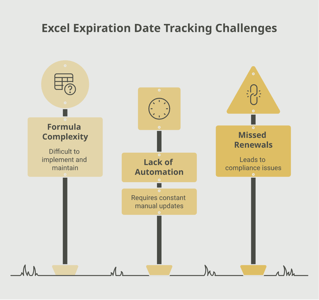
If your team tracks inland marine policies through broker emails or spreadsheets, you already know how easy it is for one policy to slip past renewal. A purpose-built tracking platform like Expiration Reminder centralizes every policy, sends reminders before each renewal, stores the supporting documents, and produces audit-ready reports the moment anyone asks.
Cover the movable property, support the operations, and let the system handle the calendar.