Introduction
If your organization needs to verify identity or work authorization across a workforce — I-9 employment verification, age-restricted roles, security clearance, or any context requiring government-issued identification — state-issued ID cards sit alongside driver's licenses as the primary documents most workers present. With REAL ID enforcement now in effect for domestic flights and federal facility access, the calendar around ID cards matters more than it did historically.
This article explains what a state ID card is, the REAL ID Act framework, the 4–10 year state-by-state validity ranges, the renewal process, and the most practical way to track ID card status across a workforce.
For most HR and operations teams, capturing ID card data at hire is well understood. The hard part is the calendar — knowing whose card is approaching expiry, ensuring renewals happen before TSA or federal-facility access becomes an issue, and managing reverification when worker documents lapse.
What Is an ID Card?
An ID card, in this context, refers to a state-issued identification card — a government identity document for individuals who do not drive or do not need a driver's license. Most US states issue both driver's licenses and non-driver ID cards from the same Department of Motor Vehicles (DMV) or equivalent agency.
ID cards function as primary identity documents for:
- I-9 employment verification — state ID cards are List B documents (establishing identity) and must be combined with a List C document (establishing work authorization).
- Domestic flight boarding — TSA requires REAL ID-compliant identification (since May 7, 2025) for domestic flights.
- Federal facility access — REAL ID required for entry to most federal facilities.
- Age-restricted purchases and venues — alcohol, tobacco, certain venues.
- Banking and account opening — identity verification under Know Your Customer (KYC) requirements.
- Voting — in states with voter ID requirements.
The REAL ID Act of 2005 established minimum security standards for state-issued IDs. After multiple enforcement extensions, REAL ID enforcement began May 7, 2025 for TSA and federal-facility purposes. Workers without REAL ID-compliant identification must use a passport or other federally-acceptable ID for these purposes.
Validity varies dramatically by state:
- Illinois — driver's licenses 4 years, ID cards 5 years.
- Arizona — non-REAL ID driver's licenses issued to expire on holder's 65th birthday.
- Indiana — expires at midnight on the holder's birthday in the relevant year.
- Most states — ID validity ranges from 4 to 10 years; many tie expiration to the holder's birthday.
Renewal:
- Online renewal — many states allow it for non-REAL ID cards or non-initial renewals.
- In-person renewal — required for REAL ID-compliant cards (at least initial issuance) and many out-of-cycle renewals.
- Advance renewal — most states allow up to 6 months early; some up to 1 year.
Why ID Card Tracking Matters for Your Organization
ID card tracking protects against three concrete risks: I-9 paperwork violations, workforce disruption, and security-credentialing gaps.
From an I-9 standpoint, an expired ID card creates reverification obligations under federal immigration law if the worker presented the ID as part of their original Form I-9 documentation.
From a workforce-experience standpoint, expired ID cards disrupt the worker's ability to travel, access financial services, and (in some cases) perform their job. The downstream impact ripples into productivity and morale.
From a security and access standpoint, security badges, building access, and travel programs often depend on a current government-issued ID. Lapses cause access denials.
For employers with workforces requiring identity verification, age-restricted roles, or frequent travel, the ID card calendar is a meaningful component of broader HR-compliance and operational tracking.
Common Scenarios for Tracking ID Card Expiration Dates
General HR and I-9 Compliance
Any employer running structured I-9 verification benefits from tracking the expiration of documents presented at hire.
Travel-Heavy Workforces
Consultants, salespeople, executives, and other workforce members who travel frequently for business need TSA-acceptable ID. REAL ID compliance now matters at every domestic flight.
Federal Contractors and Federal Facility Workers
Workers entering federal facilities need REAL ID-compliant identification.
Age-Restricted Industry Workforces
Hospitality, retail (alcohol, tobacco, firearms), and gaming workers may need current government ID as part of operational tracking.
Multi-State Operations
Multi-state employers manage workforce ID cards across varying state expiration rules, making centralized tracking essential.
How ID Card Tracking Benefits Your Organization
A reliable program produces measurable benefits.
For the company, current tracking supports I-9 compliance, ICE audit defense, and consistent workforce identity verification.
For HR and operations teams, the ID card calendar becomes predictable. Workers approaching expiration can be prompted to renew before workplace impacts (travel, building access, age-restricted roles) occur.
For workers, predictable tracking helps them manage personal renewals alongside work commitments and supports their ability to travel and access facilities.
How to Track ID Card Expiration Dates
I-9 management systems track the expiration of documents presented at I-9 verification. Many employer-portal HR systems include broader document tracking.
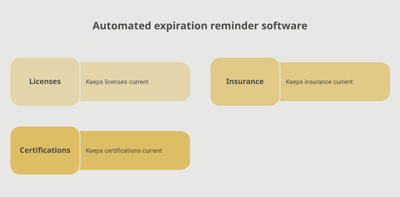
For organizations using a separate compliance tracker, a platform like Expiration Reminder stores each worker with their ID card type (state, REAL ID compliance status), expiration date, and supporting documents. Reminders fire automatically before each renewal date.
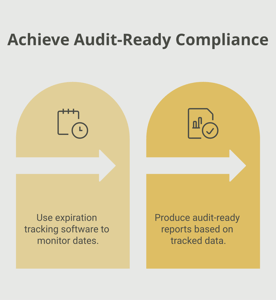
Key features include automated reminders at multiple intervals (6, 3 months), document storage for ID copies with appropriate confidentiality controls, dashboard views by site, expiry window, or REAL ID status, audit-ready reports for I-9 compliance, and the ability to log renewals in one step.
Key Takeaways
- A state ID card is a government-issued identification document for individuals who do not have or do not need a driver's license.
- Validity varies by state — typically 4-10 years; most tie expiration to the holder's birthday.
- The REAL ID Act sets minimum security standards; REAL ID-compliant cards are required for TSA and federal-facility purposes (since May 7, 2025).
- Workers without REAL ID can use a passport for federal purposes.
- ID cards are List B documents for I-9 employment verification (must be combined with a List C document for work authorization).
- Most states allow renewal up to 6 months (and sometimes 1 year) before expiration.
- Multi-state employers benefit from centralized tracking due to varying state rules.
Frequently Asked Questions
How long is a state ID card valid?
Varies by state — typically 4 to 10 years. Most states tie expiration to the holder's birthday.
What is a REAL ID?
A state-issued driver's license or ID card meeting the security standards of the REAL ID Act of 2005. REAL ID-compliant cards are marked with a star in the upper portion (specific symbol varies slightly by state).
When did REAL ID enforcement begin?
May 7, 2025, after multiple previous enforcement extensions. TSA now requires REAL ID-compliant identification for domestic flights; federal facility access also requires it.
What if I don't have REAL ID?
You can use a US passport, passport card, military ID, permanent resident card, or other federally acceptable identification for TSA and federal facility access purposes.
Can I renew an ID card online?
Many states allow online renewal for non-REAL ID renewals and out-of-cycle renewals. REAL ID-compliant cards typically require in-person initial issuance.
Does an expired ID card create I-9 problems?
Yes, if the ID card was presented as part of the original Form I-9 documentation. The employer must reverify employment authorization documents when they expire (though the underlying identity document expiration may not require reverification — consult I-9 guidance).
How long should employers retain copies of ID cards?
The Form I-9 must be retained for 3 years after hire or 1 year after termination, whichever is later. If the employer chose to retain copies of ID documents at I-9 verification, those copies follow the I-9 retention rule.
How do organizations track ID card expirations across workforces?
Combinations of I-9 management systems, HRIS modules, and dedicated tracking platforms. The system that actively reminds before expirations is the one that prevents most lapses.
Conclusion
State ID cards are quietly central to workforce identity verification, travel, and federal-facility access — and the REAL ID Act has raised the calendar's stakes. The substantive work — obtaining and renewing the ID — sits with the individual worker. The administrative work for the employer — knowing whose ID is approaching expiration, supporting I-9 reverification, and avoiding workforce disruption — is where most HR programs need help.
If your team tracks ID cards through I-9 systems or paper records, you already know how easy it is for one worker's card to lapse before a travel or facility-access need surfaces. A purpose-built tracking platform like Expiration Reminder centralizes every worker's identity document status, sends reminders before each renewal, stores the supporting documents with appropriate confidentiality controls, and produces audit-ready reports the moment anyone asks.
Verify the identity, support the renewals, and let the system handle the calendar.