Introduction
If your organization is a HIPAA-covered entity — healthcare providers, health plans, healthcare clearinghouses — or a business associate handling Protected Health Information (PHI), HIPAA compliance training is the foundational workforce control protecting patient data. Beyond training, HIPAA documentation, risk assessments, and policies must be maintained for six years. Lapses in any of these can trigger OCR enforcement actions and fines that scale into the millions.
This article explains what HIPAA compliance is, the training framework under the Privacy and Security Rules, the annual refresher norm, the documentation retention requirements, and the most practical way to track HIPAA-related dates across a workforce and policy portfolio.
For most compliance and privacy teams, delivering training is well understood. The hard part is the calendar — knowing whose training is current, when annual policy reviews are due, and when the six-year retention clock starts on each document.
What Is HIPAA Compliance?
HIPAA — the Health Insurance Portability and Accountability Act — is the U.S. federal law governing the privacy and security of Protected Health Information (PHI). HIPAA's regulatory framework is administered by the HHS Office for Civil Rights (OCR) and includes:
- Privacy Rule (45 CFR 164 Subpart E) — governs how PHI may be used and disclosed.
- Security Rule (45 CFR 164 Subpart C) — sets administrative, physical, and technical safeguards for electronic PHI (ePHI).
- Breach Notification Rule (45 CFR 164 Subpart D) — defines breaches and notification requirements.
- Enforcement Rule (45 CFR 160 Subparts C-E) — governs OCR investigations and penalties.
HIPAA compliance includes a substantial training requirement. Under the Privacy Rule 45 CFR § 164.530(b) and Security Rule [45 CFR § 164.308(a)(5)], covered entities and business associates must train all workforce members on their HIPAA policies and procedures.
Training requirements:
- Initial training at the time of employment or beginning of workforce membership.
- Training on policy changes — when the organization's HIPAA policies are materially changed.
- Periodic security reminders — the Security Rule includes security reminders as an addressable specification.
HIPAA does not explicitly mandate annual training. However, most compliance experts, attorneys, and OCR-experienced consultants recommend annual HIPAA refresher training as the practical baseline — both to reinforce good habits and to demonstrate "reasonable diligence" during OCR investigations.
Documentation requirements:
- Training records: must be maintained for 6 years from the date of creation or the date last in effect, whichever is later.
- Policies and procedures: same 6-year retention.
- Risk assessments, business associate agreements, breach notifications, and other HIPAA documentation: 6 years.
Risk assessments under the Security Rule are required, and must be reviewed and updated as needed. Most organizations conduct annual security risk assessments as best practice.
Why HIPAA Compliance Matters for Your Organization
HIPAA compliance protects against three concrete risks: OCR enforcement actions, patient harm from breaches, and reputational damage.
From an enforcement standpoint, OCR has imposed civil penalties from thousands to tens of millions of dollars per case. Settlements typically include Corrective Action Plans (CAPs) requiring documented training, risk assessments, and policy updates.
From a patient-harm standpoint, breaches of PHI expose patients to identity theft, insurance fraud, and (in some cases) discrimination. Even small breaches require notification to affected individuals and OCR.
From a reputational standpoint, OCR settlements and breach notifications are public. Healthcare organizations have lost customer trust, contract eligibility, and operating authority following major HIPAA failures.
For healthcare providers, health plans, clearinghouses, and business associates of any size, HIPAA compliance currency is a foundational regulatory control.
Common Scenarios for Tracking HIPAA Compliance Dates
Hospitals and Health Systems
Large health systems run HIPAA training across tens of thousands of workforce members — clinical, administrative, and support staff. Annual refreshers are widely adopted.
Physician Practices and Outpatient Clinics
Smaller clinical settings face the same training requirements. Compliance often falls to a practice manager or designated privacy officer.
Business Associates
Vendors, IT providers, billing services, and other business associates handling PHI must train their workforces and maintain a Business Associate Agreement (BAA) with each covered entity.
Health Plans and Insurance Carriers
Health plans face HIPAA workforce training requirements alongside other federal and state insurance regulation.
Health Tech, SaaS, and Health Information Exchanges
Modern health tech and SaaS providers — EHR vendors, telehealth platforms, patient-engagement tools, health information exchanges — are business associates and face HIPAA workforce training and documentation requirements.
How HIPAA Compliance Tracking Benefits Your Organization
A reliable tracking program produces measurable benefits.
For the company, current training records, risk assessments, and policies satisfy OCR expectations and reduce both enforcement risk and breach impact.
For privacy, security, and HR teams, the HIPAA calendar becomes predictable. Annual refreshers are scheduled with adequate lead time. Risk assessments are reviewed on a structured cadence. Policy reviews are tied to regulatory updates.
For workforce members, predictable training reinforces critical knowledge in roles that touch PHI daily.
How to Track HIPAA Compliance Expiration Dates
Learning management systems (LMS) — Relias, HealthStream, MedTrainer, KnowBe4, and others — track training completions for healthcare. GRC and compliance platforms (Compliancy Group, HIPAA One, others) integrate training with risk assessments and policy management.
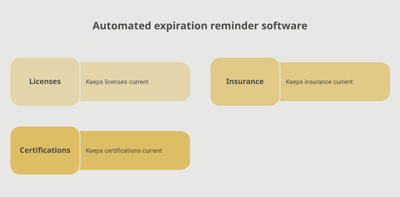
For organizations using a separate compliance tracker, a platform like Expiration Reminder stores each workforce member with their HIPAA training history, next-due date, and supporting documents — plus risk assessment dates, policy review dates, and BAA renewal dates. Reminders fire automatically before each annual refresher and review.
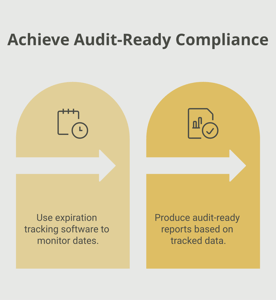
Key features include automated reminders at multiple intervals (90, 60, 30 days), document storage for training records, risk assessments, policies, and BAAs, dashboard views by site, department, or document type, audit-ready reports for OCR investigations, and the ability to log new training and review events in one step.
Key Takeaways
- HIPAA is the U.S. federal law governing privacy and security of Protected Health Information (PHI), administered by HHS Office for Civil Rights.
- Training is required under both the Privacy Rule and Security Rule.
- HIPAA does not explicitly require annual training but most compliance experts recommend it as best practice.
- Documentation (training, policies, risk assessments, BAAs, breach records) must be retained for 6 years.
- OCR civil penalties can reach tens of millions of dollars per case.
- Business associates are also covered and must train their workforces.
- Automated tracking with reminders is the reliable approach for any HIPAA-covered organization.
Frequently Asked Questions
Is HIPAA training required to be annual?
HIPAA does not explicitly mandate annual training. The regulations require training for new workforce members and when policies materially change. Annual refresher training is widely adopted as best practice.
How long must HIPAA training records be kept?
6 years from the date of creation or the date last in effect, whichever is later. This is the general HIPAA documentation retention rule.
Who is a "covered entity"?
Healthcare providers that transmit health information electronically in connection with specified HIPAA transactions, health plans, and healthcare clearinghouses.
What is a business associate?
A person or entity that performs functions or activities on behalf of a covered entity that involve the use or disclosure of PHI. Common examples: IT providers, billing services, EHR vendors, transcription services, attorneys, accountants handling PHI.
What is a Business Associate Agreement (BAA)?
A contract between a covered entity and a business associate (or between two business associates) establishing the permitted uses of PHI and the business associate's HIPAA obligations.
What is a HIPAA risk assessment?
A required Security Rule process to identify and assess risks to ePHI. Risk assessments must be conducted and reviewed/updated as needed. Most organizations conduct annual risk assessments.
What happens during an OCR investigation?
OCR may request documentation including policies, training records, risk assessments, and BAAs. Investigations may lead to corrective action plans, civil monetary penalties, or settlement agreements.
How long is a BAA valid?
BAAs do not have a fixed expiration; they remain in effect for the duration of the underlying relationship. However, BAAs should be reviewed and updated as needed — particularly when laws or regulations change.
Conclusion
HIPAA compliance is one of the highest-stakes regulatory frameworks in any healthcare-adjacent organization. The substantive work — implementing policies, training workforce, conducting risk assessments, managing BAAs, responding to incidents — sits with privacy, security, and compliance teams. The administrative work — knowing every workforce member's training date, every policy review date, every BAA in place — is where most HIPAA programs need help.
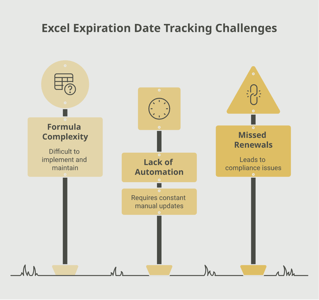
If your team tracks HIPAA dates through LMS, GRC tools, or spreadsheets, you already know how easy it is for one training cycle or one risk assessment to slip past. A purpose-built tracking platform like Expiration Reminder centralizes every training record, policy, and BAA, sends reminders before each due date, stores the supporting documents (with the 6-year retention HIPAA requires), and produces audit-ready reports the moment anyone asks.
Protect the PHI, document the compliance, and let the system handle the calendar.