Introduction
If your workforce includes healthcare workers, first responders, lab staff, custodial workers in medical settings, or anyone with reasonably anticipated occupational exposure to blood or other potentially infectious materials, the Hepatitis B vaccine is one of OSHA's most specific employer obligations. The standard requires employers to offer the vaccine at no cost within 10 working days of initial assignment, follow up with specific antibody testing, and maintain detailed records.
This article explains what the Hepatitis B vaccine is, the OSHA 1910.1030 healthcare worker offer requirement, the 3-dose series, the post-vaccination titer testing, and the most practical way to track Hep B status across a workforce.
For most occupational health and HR teams, ordering the vaccine series at hire is well understood. The hard part is the calendar — completing the 3-dose series on schedule, verifying immunity with the post-vaccination titer, and managing the documentation OSHA requires.
What Is the Hepatitis B Vaccine?
The Hepatitis B vaccine protects against Hepatitis B virus (HBV) — a serious viral infection of the liver that can cause acute illness, chronic infection, cirrhosis, liver cancer, and death. HBV is transmitted through contact with blood and other body fluids, making it an occupational hazard for healthcare workers and others with occupational exposure.
Under OSHA 29 CFR 1910.1030 (Bloodborne Pathogens Standard), employers must offer the Hepatitis B vaccine series to all employees with occupational exposure:
- At no cost to the employee.
- Within 10 working days of initial assignment to tasks with occupational exposure.
- During working hours (or with equivalent compensation).
- By a licensed healthcare professional following standard medical practice.
Employees who decline the vaccine must sign a specific OSHA-mandated declination form. Declination is reversible — the employee may receive the vaccine at any later time at the employer's expense.
The vaccine series consists of 3 doses on a 0, 1, and 6-month schedule (some products have alternative schedules):
- At least 4 weeks between doses 1 and 2.
- At least 8 weeks between doses 2 and 3.
- At least 16 weeks between doses 1 and 3.
Post-vaccination antibody testing — for anti-HBs (Hepatitis B surface antibody) — is required for healthcare workers and others at ongoing risk of percutaneous injuries. Testing should be done 1–2 months after the third dose. A protective antibody response is anti-HBs concentration of ≥10 mIU/mL.
Non-responders must be revaccinated with a second three-dose series and retested (unless they are HBsAg-positive, indicating existing infection).
OSHA does not require booster doses or routine serologic testing beyond the post-series titer. Once a worker has demonstrated immunity, the workforce record is essentially permanent.
Why Hepatitis B Vaccine Tracking Matters for Your Organization
Hep B vaccination tracking protects against three concrete risks: OSHA citations, worker infection, and inadequate post-exposure response.
From a regulatory standpoint, the Hepatitis B vaccine offer is one of OSHA's most specific 1910.1030 obligations. Missed offers, undocumented declinations, and incomplete series are common citations.
From a worker-health standpoint, HBV infection is serious — acute illness, chronic infection, and long-term liver disease are all documented outcomes of occupational exposure.
From an exposure-response standpoint, knowing every covered worker's vaccination and immunity status is essential when an exposure incident occurs. Time-sensitive post-exposure prophylaxis (HBIG and/or vaccine) depends on the worker's existing status.
For healthcare, dental, EMS, lab, and similar workforces, Hep B tracking is a foundational compliance and worker-safety control.
Common Scenarios for Tracking Hepatitis B Vaccine Dates
Healthcare and Dental Practices
Hospitals, clinics, and dental practices manage Hep B vaccination across the workforce, including ongoing onboarding for new hires.
First Responders
Police, fire, EMS, and other first responders typically receive Hep B vaccination as part of their occupational health program.
Laboratory and Research
Clinical labs, research labs, and academic labs with bloodborne pathogen exposure manage vaccination as part of their occupational health programs.
Tattoo, Body Piercing, and Body Art
Body-art practitioners face Hep B exposure risk and are typically covered under 1910.1030's vaccine offer requirement.
Custodial and Housekeeping in Medical Settings
Custodial workers in medical settings who may contact blood or OPIM are covered by 1910.1030's vaccine offer requirement.
How Hep B Tracking Benefits Your Organization
A reliable program produces measurable benefits.
For the company, current vaccination records satisfy OSHA's specific 1910.1030 offer requirement, support faster post-exposure response, and reduce occupational infection risk.
For occupational health and HR teams, the 3-dose series and post-vaccination titer schedule become a predictable activity. New-hire onboarding includes vaccine offer as a structured step.
For workers, predictable tracking supports their own immune status and ensures they are protected before they need it.
How to Track Hepatitis B Vaccine Expiration Dates
Employee health management systems and HRIS modules track immunization records. Many healthcare organizations run dedicated employee health platforms (Immuware, ReadySet, eMedical, others).
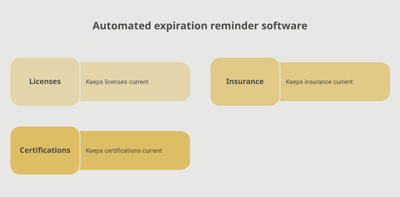
For organizations using a separate compliance tracker, a platform like Expiration Reminder stores each worker with their Hep B status — dose 1, dose 2, dose 3, titer result, immune status, declination on file — and supporting documents. Reminders fire automatically for the next scheduled dose during the series.
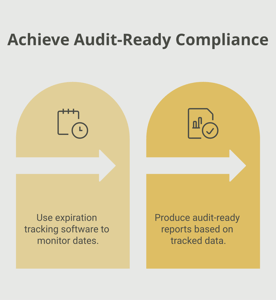
Key features include automated reminders at multiple intervals during the 3-dose series, document storage for vaccination records and declination forms with HIPAA-compliant access controls, dashboard views by site, role, or status, audit-ready reports for OSHA, and the ability to log new doses in one step.
Key Takeaways
- The Hepatitis B vaccine protects against HBV, a serious viral infection of the liver.
- OSHA 1910.1030 requires employers to offer the vaccine to workers with occupational exposure within 10 working days of initial assignment, at no cost.
- The series consists of 3 doses on a 0, 1, and 6-month schedule.
- Post-vaccination antibody testing (anti-HBs ≥10 mIU/mL) is required for ongoing-risk workers; testing should be done 1-2 months after dose 3.
- Non-responders are revaccinated with a second 3-dose series and retested.
- Once immunity is demonstrated, OSHA does not require boosters or routine titers.
- Employee declination requires a specific OSHA-mandated form; declination is reversible.
Frequently Asked Questions
Who needs the Hepatitis B vaccine under OSHA?
Workers with reasonably anticipated occupational exposure to blood or other potentially infectious materials. This includes healthcare workers, first responders, lab staff, body artists, custodial in medical settings, and many others.
How many doses are in the Hep B series?
Three doses on a 0, 1, and 6-month schedule. Some vaccine products have alternative schedules. Minimum intervals: 4 weeks between dose 1 and 2; 8 weeks between dose 2 and 3; 16 weeks between dose 1 and 3.
What is the post-vaccination titer?
Anti-HBs (Hepatitis B surface antibody) testing performed 1-2 months after the third dose. A protective response is ≥10 mIU/mL.
What happens if a worker doesn't respond to the first vaccine series?
OSHA requires revaccination with a second three-dose series and retesting (unless the worker is HBsAg-positive, indicating existing infection).
Are boosters required?
OSHA does not require routine boosters or serologic testing once immunity has been demonstrated through the post-vaccination titer.
Can a worker decline the vaccine?
Yes. The worker must sign a specific OSHA-mandated declination form. The declination is reversible — the worker may receive the vaccine at no cost at any later time.
How long should vaccination records be kept?
OSHA requires medical records (including immunization records) to be kept for the duration of employment plus 30 years under 1910.1020.
What is the difference between Hep A, B, and C vaccines?
Hepatitis A vaccine prevents HAV. Hepatitis B vaccine prevents HBV — the focus of OSHA 1910.1030. There is no Hepatitis C vaccine available; prevention relies on engineering controls and PPE.
Conclusion
The Hepatitis B vaccine is the foundational occupational protection for workers with bloodborne pathogen exposure. The substantive work — administering the vaccine series, post-vaccination titer testing, supporting workers through the program — sits with occupational health and clinical staff. The administrative work — knowing every worker's series status, scheduling subsequent doses, documenting OSHA-compliant declinations — is where most programs need help.
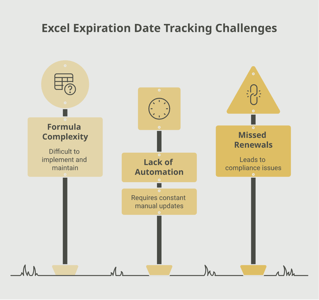
If your team tracks Hep B status through paper records or HRIS, you already know how easy it is for a dose to be missed or a titer to be overlooked. A purpose-built tracking platform like Expiration Reminder centralizes every worker's vaccination history, sends reminders before each scheduled dose, stores the supporting documents with appropriate confidentiality controls, and produces audit-ready reports the moment anyone asks.
Offer the vaccine, complete the series, and let the system handle the calendar.